Reissued after periodic review without changes.

Review the latest State Department Travel Advisory about Tuvalu. You can plan for safe travel by following the entry and exit requirements, reviewing local laws, and other travel guidance from the U.S. embassy or consulate.
Visit fj.usembassy.gov
Learn more about U.S. and Tuvalu relations at State.gov
Learn more about Travel Advisory levels
in Tuvalu.
Tuvalu is generally a safe destination for travelers.
Learn more about Travel Advisory levels
Tuvalu is located in Oceania, in the Southern and the Eastern Hemispheres. It has maritime borders with Kiribati, Fiji, Samoa, and Solomon Islands. It is about halfway between Hawaii and Australia.
It is significantly smaller than Washington, D.C. There is 1 time zone, Tuvalu Time (TVT). It does not observe daylight saving time. Tuvalu is 17 hours ahead of Washington, D.C. during Eastern Standard Time.
158 Princes Rd, Tamavua
Suva, Fiji Islands
Message failed to load
We are unable to load the message. Visit the main U.S. embassy or consulate website for updates.
Explore our travel guidance topics to prepare for your trip abroad.
Date issued: October 22, 2026
Always bring a copy of each child’s birth certificate or other evidence of your legal relationship to each child.
If your child is traveling to Tuvalu alone or with someone other than a parent, you must provide a notarized permission letter written in English.
Age |
Status |
5 to 11 |
Generally considered an unaccompanied minor |
8 to 11 |
Typically permitted to use unaccompanied minor service |
12 to 16 |
May travel alone or use the service |
The U.S. Department of State is unaware of any HIV and AIDS entry restrictions for visitors to or foreign residents of Tuvalu.
Local authorities are responsible for investigating and prosecuting crimes and providing emergency services.
Tuvalu has a low crime rate.
Follow the Department of State guidelines to protect yourself from scams.
If you are a victim of a scam, learn how the FBI can help.
Common scams include:
If using dating apps or websites in Tuvalu:
Local authorities are responsible for investigating and prosecuting crime. You may report crimes to the local police by dialing 911.
Review our information for Victims of Crime.
The U.S. embassy or consulate can:
U.S. citizen victims of sexual assault are encouraged to contact the U.S. embassy and local law enforcement for assistance.
U.S. citizen victims of domestic violence are encouraged to contact the U.S. embassy and local law enforcement for assistance.
Mobile devices are vulnerable to compromise, theft, and damage anywhere in the world. Follow these safe practices:
Drones are allowed in Tuvalu. However you must follow specific safety rules.
Contact the Pacific Aviation Safety Office (PASO) or Tuvalu's Civil Aviation Authority at +688-20725 for the most current information before traveling.
Prior to using GPS abroad:
The tourism industry is not well regulated:
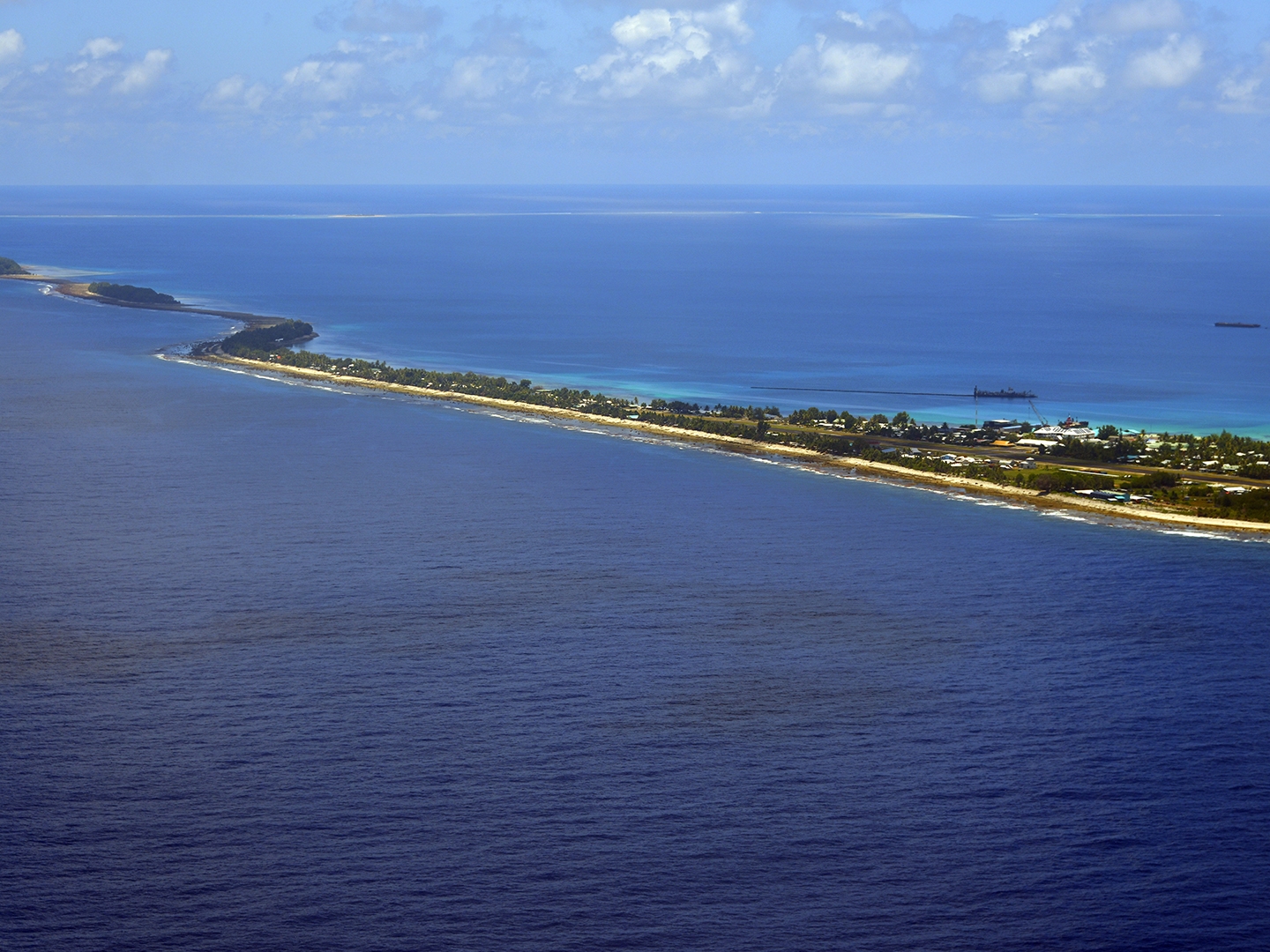
Tuvalu is extremely remote with minimal infrastructure. It has a fragile, low-lying ecosystem.
U.S. citizens must follow local laws. The population is small and polite. Respecting local customs is important.
If you are arrested or detained, ask officials to notify the U.S. embassy or consulate in Fiji immediately.
Due to a lack of consular presence in Tuvalu, the U.S. embassy cannot conduct routine prison visits.
Counterfeit and pirated goods are common in many destinations.
Learn more about U.S. restrictions on counterfeit and pirated goods:
Faith based travel includes pilgrimages, service projects, and mission work. Prepare for your travel using these resources:
Tuvalu is a remote Pacific nation with a deeply traditional, conservative, and Christian-influenced culture. Discretion is advised.
The law in Tuvalu prohibits discrimination against people with physical, sensory, psychosocial, intellectual or mental disabilities. The law is enforced.
Accessibility is limited across public transportation, lodging, communication/information services, and general infrastructure.
Organizations like the Fusi Alofa Association and the Tuvalu Red Cross Society (located on Fogafale Road, Funafuti) offer support for people with disabilities. They have advocacy, safe spaces, and access to spare parts or volunteer technicians for wheelchair repairs.
Professional wheelchair repair services are very hard to find in Tuvalu because of its remote location and limited medical supply chains. Contact these organizations before you travel.
Review the Department of State’s Human Rights Report for your destination prior to traveling.
Ambulance services are not widely available. Training and response time of emergency responders may be poor.
Make sure you know if your health insurance plan covers any medical expenses coverage abroad. Most U.S. plans do not.
Stay up to date with the vaccines recommended by the U.S. Centers for Disease Control and Prevention.
Health facilities are limited in Tuvalu. There are eight health centers spread across the outer islands of Tuvalu, each typically staffed by a nurse and a midwife.
Always carry your prescription medication in original packaging, along with your doctor’s prescription.
U.S. Customs and Border Protection (CBP) and the Food and Drug Administration (FDA) have rules for bringing medication back into the United States. If you buy medications abroad, the medications must meet CBP’s and the FDA’s requirements to bring them back legally.
The medications must also be for personal use and approved for use in the United States.
For more information:
U.S. citizens have had serious complications or died while getting care from non-traditional “healers” and practitioners in Tuvalu.
We strongly recommend against participating in these practices in Tuvalu. Make sure you have access to licensed emergency medical facilities in such cases.
Severe water shortages can occur and fresh water is limited. The main island's (Fongafale) lagoon is highly polluted. There is poor waste management and garbage on the shores. In many areas, tap water is not safe to drink.
Air pollution can be a significant problem in many destinations abroad.
The main island of Funafuti has a single paved road that runs nearly the length of the atoll.
Obtain an International Driver’s Permit before traveling to Tuvalu.
There are no taxis in Tuvalu. Visitors can rent a car or a motor scooter. While these are generally safe options, dogs sometimes chase motor scooters.
The U.S. Federal Aviation Administration (FAA) has not assessed Tuvalu’s Civil Aviation Authority for compliance with international standards for aviation safety oversight. FAA's website includes more information on its assessment program.
Maritime travel to Tuvalu is limited. As of 2026, you must travel first to Fiji and then book specialized transport. There is no regular commercial passenger ship service from international destinations.
Mariners and passengers planning travel to Tuvalu should check the following:
The U.S. Coast Guard determined Tuvalu ports do not have effective anti-terrorism measures. Vessels that arrive in U.S. ports from Tuvalu ports must meet additional U.S. Coast Guard conditions of entry as described in the current Port Security Advisory, International Port Security Program - Port Security Advisory. Mariners and passengers in Tuvalu ports should be careful and use stronger security measures.
The islands are subject to potential cyclones, earthquakes, and tsunamis.
If you live outside the United States for a long time, you or your family may experience various life events, wish to exercise U.S. citizenship rights, or need to meet U.S. legal obligations while abroad.
158 Princes Rd, Tamavua
Suva, Fiji Islands
Reissued after periodic review without changes.
Invalid Input
Last Updated: October 22, 2026
Owned by Overseas Citizens Services
An official website of the Department of State - Bureau of Consular Affairs