Skip to content

Naoero

Review the latest State Department Travel Advisory about Naoero. You can plan for safe travel by following the entry and exit requirements, reviewing local laws, and other travel guidance from the U.S. embassy or consulate.

Travel advisory levels

Learn more about Travel Advisory levels

  1. Exercise normal precautions
  2. Exercise increased caution
  3. Reconsider travel
  4. Do not travel

Travel advisory - Republic of Naoero

Level 1 - Exercise normal precautions

Date issued: December 02, 2024 -
  • Health (H)

Exercise normal precautions

in Nauru.

Advisory summary

Review the travel guidance section for additional information on travel to Nauru

If you decide to travel to Naoero:

Scroll to review full advisory
Travel advisory levels

Learn more about Travel Advisory levels

  1. Exercise normal precautions
  2. Exercise increased caution
  3. Reconsider travel
  4. Do not travel

About Naoero

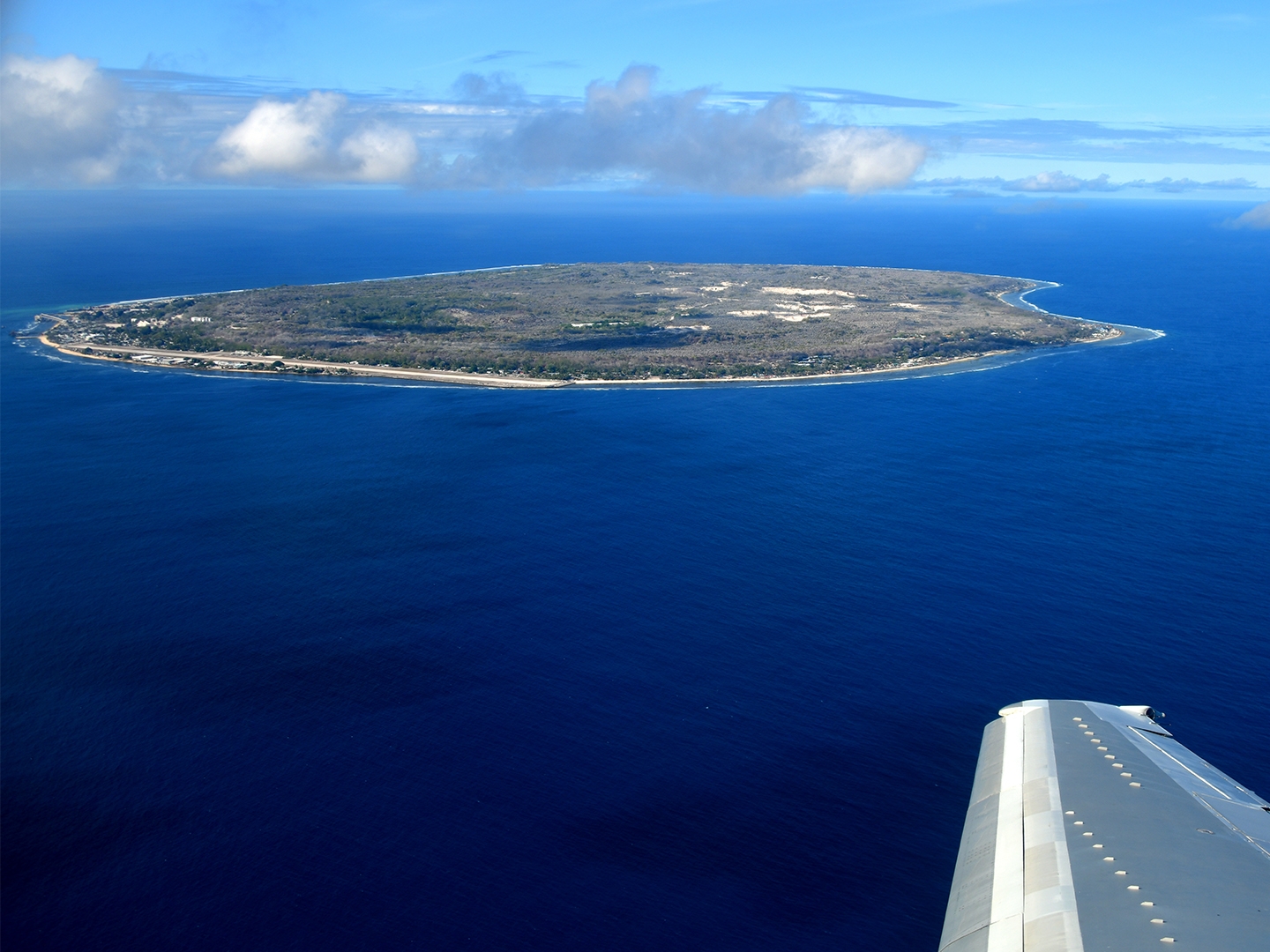
Naoero is located in Oceania, in the Southern and the Eastern Hemispheres. It has maritime borders with Kiribati and the Republic of the Marshall Islands.

Naoero is about the same size as Catalina Island in California. There is 1 time zone, Naoero Time (NRT). It does not observe daylight saving time. Naoero is 17 hours ahead of Washington, D.C. during Eastern Standard Time.

Travel requirements

Tourist visa requirements

A visa is required. You must apply for a visa before you travel. For your visa, please visit Nauru Visa Requirements page 

Complete the visa application form, scan a copy of your passport’s biographic data page, and a letter from your employer stating your reason for the trip.

Vaccinations

  • No vaccinations are required.

Valid passport requirements

  • Must have at least 6 months of validity beyond your arrival date.
  • 1 blank page available per stamp.

Currency on entry and exit

  • Entry maximum: None.
  • Exit maximum: A permit is required for amounts exceeding AUD 2,500 (Australian dollars).

Tips from the U.S. embassy

  • Complete the e-visa application before arriving. Border officials may not allow you to enter without pre-approval.
  • Naoero is divided into 14 administrative districts. Most people live in Denigomodu and Aiwo.
  • Buying, selling, or drinking alcohol in public is not allowed on Sundays or major holidays, such as Good Friday.
  • Cannabis, including CBD, is illegal in Naoero for both recreational and medical use.
  • It is illegal to bring guns, ammunition, and even spent shells or casings into Naoero. You could face prison sentences of up to 10 years.
  • Air travel to the island is inconsistent. Be prepared for delays.

Help for U.S. citizens

U.S. Embassy Suva

158 Princes Rd, Tamavua
Suva, Fiji Islands

Main telephone:

+679-331-4466

Emergency after-hours:

+679-772-8049

Get embassy updates right to your inbox
Enroll In Step
Review how STEP works

Travel guidance for Naoero

Explore our travel guidance topics to prepare for your trip abroad.

Date issued: October 22, 2026

Select a topic

Entry, exit, and visa requirements

Helpful resources 


Entry requirements

Immigration officials at the airport will take your passport for processing at the central office and return it to you later in the day or the following morning.

  • You must get a visa in advance. Visas are not issued on arrival.
  • Your passport must be valid at least 6 months beyond your stay.
  • You must have a confirmed hotel booking or local sponsorship, and onward or return travel tickets.

Transit rules

  • If you are transiting through Naoero, you do not need a visa if your connecting flight leaves within 3 hours (or up to 3 days depending on airline policies) and you have valid onward tickets.

Tourist visa

A tourist visa allows a maximum stay of up to 30 days.

You must have a completed visa application form, passport copy, proof of employment, confirmed return or onward tickets, and a hotel reservation. The standard tourist visa fee is about $50 AUD.


Business visa

  • A business visa requires a local sponsor and an approved business letter from a sending company.

Media or journalism visa

  • Strict application protocols apply, including a higher application fee.

Traveling with children


HIV and AIDS restrictions

  • The U.S. Department of State is unaware of any HIV and AIDS entry restrictions for visitors to or foreign residents of Naoero.

Currency

  • The Australian Dollar is the official currency of Naoero.
  • Credit cards are rarely accepted in Naoero and cannot be relied upon for daily expenses.
  • Major credit cards (Visa and Mastercard) are only accepted at a handful of the largest establishments, such as the Menen Hotel or Ewa Lodge. Be prepared to pay bills in cash.
  • Tap-to-pay systems like Apple Pay and Google Pay are not available on the island.
  • There are few ATMs, which frequently run out of cash or experience technical and connectivity outages.

Safety and security

Emergency phone numbers

Local authorities are responsible for investigating and prosecuting crimes and providing emergency services.


Crime

  • Naoero has a low crime rate. However, stay aware of your surroundings. Protect your passport, cash, and valuables.

Scams

Follow the Department of State guidelines to protect yourself from scams.

If you are a victim of a scam, learn how the FBI can help.  

Scams in Naoero primarily consist of online investment fraud, pyramid schemes, and government impersonation. The Naoero Financial Intelligence Unit (NFIU) and local police have issued multiple alerts for fraud targeting residents on the island.

Common scams include:

  • Cryptocurrency and Investment Fraud: Online scammers promote fraudulent trading platforms, such as DSJ Exchange and BG Wealth Sharing, on social media channels. These scams promise guaranteed daily returns or quick wealth but restrict withdrawals and steal deposited funds.
  • Double-your-money schemes: Fake social media accounts target locals, asking them to deposit money into bank accounts in exchange for double or triple the deposited amount in return.
  • Online and advance-fee scams: Fraudsters impersonate local banks, financial institutions, or foreign acquaintances offering courier packages containing money. Victims are asked to pay "fees" to process or release the package but receive nothing in return.

Victims of crime

Local authorities are responsible for investigating and prosecuting crime. You may report crimes to the local police by dialing 110 or +674 556 2060.

Review our information for Victims of Crime. 

The U.S. embassy in Fiji can:

  • Replace a stolen or lost passport.
  • Help you find medical care. 
  • Assist you in how to report a crime to the police.
  • Contact relatives or friends with your written consent.
  • Provide general information regarding the criminal justice system. 
  • Provide a list of local attorneys. We do not endorse or recommend any specific attorneys.
  • Provide an emergency loan for repatriation to the United States or limited medical support in cases of need.
  • Help you find accommodation and options to travel home.

Sexual assault and domestic violence

  • U.S. citizen victims of sexual assault are encouraged to contact the U.S. embassy in Fiji for assistance.
  • U.S. citizen victims of domestic violence are encouraged to contact the U.S. embassy in Fiji for assistance.

Technology use abroad

Mobile devices are vulnerable to compromise, theft, and damage anywhere in the world. Follow these safe practices:

  • Update all software (operating system and apps) before leaving the United States.
  • Use reputable, U.S.-based VPN or VoIP applications. 
  • Don’t connect to public Wi-Fi networks.
  • Research the safety of routes recommended by GPS. The fastest route is not always the safest.
  • For travelers, downloading offline maps is highly recommended.
  • Be cautious using dating apps abroad, as scammers often target U.S. citizens.
Drones

You don’t need a permit for recreational use of drones, but you must still follow general safety guidelines.

  • A permit is required for all commercial drone operations.
  • A permit is required to import a drone.
  • For exact import requirements or to apply for a commercial permit, you can consult Naoero’s local aviation authority or contact the Naoero Department of Civil Aviation.

Tourism safety

The tourism industry is not well regulated:

  • Safety inspections for equipment and facilities are rare.
  • Dangerous areas and activities are not always marked with signs.
  • Staff may not be trained or certified.
  • Medical facilities are severely limited.
  • For serious illnesses or injuries, urgent medical evacuation is required, making comprehensive Travel Insurance essential.
  • First responders cannot reach remote areas in case of emergencies.
  • Beaches are generally unmonitored by lifeguards. Tidal changes create strong, unpredictable currents and riptides. Always wear reef shoes to protect against stonefish and sharp coral cuts.
  • Tour operators may not meet safety standards.
  • Review our information on Travel Insurance.

Local laws and customs

Local customs

Despite the tropical heat, conservative clothing is expected.

  • Avoid wearing very short shorts, crop tops, or swimwear in public, administrative offices, or town areas.
  • Keep your shoulders and knees covered.
  • You may encounter traditional customs like papa, a celebratory practice where a host’s community visits their home, and guests may be invited to freely take items from the household to mark a milestone.

Criminal penalties

  • U.S. citizens must follow local laws.
  • If you break local laws, even by mistake, you could be deported, arrested, or imprisoned.
  • Travelers who accidentally break local laws have been detained. Sometimes, this can be for a long time. They may also face criminal charges and even be convicted of a crime.
  • You may be prosecuted in the United States for crimes committed abroad regardless of the local law. Review the information provided by the U.S. Department of Justice about crimes against minors abroad.
  • Before you start a business or a profession in Naoero seek information from the local authorities about what permits or licenses are required. 
Alcohol and illegal drugs

Naoero has strict rules for alcohol and recreational drugs.

  • Public drinking is prohibited unless you are inside a licensed bar or restaurant.
  • Police can take your alcohol if you are drinking in a public space. If you break this law, you could face a fine of up to $5,000 or up to 12 months in prison.
  • Cannabis, including CBD, is illegal in Naoero for both recreational and medical use. Do not bring it into the country. All cannabis possession, cultivation, manufacture, importation, and trafficking are criminal offenses. You could face fines reaching $50,000 and up to 10 years in prison.
Pornography
  • The importation and dissemination of pornographic materials are strictly illegal. Local internet service providers frequently block these websites.
Firearms
  • Firearms and explosives are strictly banned and carry severe penalties

Arrest notification

  • If you are arrested or detained, ask officials to notify the U.S. embassy in Fiji . There is no U.S. embassy on Naoero.

Counterfeit and pirated goods

Counterfeit and pirated goods are common in many destinations.

  • They may be illegal according to local laws. 
  • Counterfeit and pirated goods may pose significant risks to consumer health and safety. 
  • You may be subject to fines or have to surrender counterfeit and pirated goods to authorities if you bring them back to the United States. 

Learn more about U.S. restrictions on counterfeit and pirated goods:


Faith-based travelers

Faith based travel includes pilgrimages, service projects, and mission work. Prepare for your travel using these resources: 


Gay and lesbian travelers

  • There are no legal restrictions on consensual same-sex sexual relations, the provision of information or services to persons on the basis of real or perceived sexual orientation, or the organization of events focused on sexual orientation in Naoero.
  • Review our information for Gay and Lesbian Travelers.

Travelers with accessibility needs

  • The law in Naoero prohibits discrimination against people with physical, sensory, psychosocial, intellectual or mental disabilities. The law is enforced.
  • Accessibility is limited in public transportation, lodging, communication/information, and general infrastructure.
  • Naoero is divided into 14 administrative districts. Most people live in Denigomodu and Aiwo where disability accessibility is somewhat available.
  • Cultural norms and general public sentiment around disability are deeply rooted in close-knit, family-centered island traditions. Care is primarily communal and managed informally within the extended family structure, reflecting a traditional Pacific island ethos where individuals with disabilities are integrated into daily domestic life rather than institutionalized.
  • For local disability resources, travelers can refer to the Nauru Persons Disability Organization (NPDO) or government health initiatives.
  • The Department of Health and local community stakeholders handle clinical distribution on a need-basis rather than consumer-driven stock.
  • Contact the U.S. embassy in Fiji to receive a list of providers.
  • Review our information on Accessibility Needs.

Students


Women travelers

Naoero is a deeply Christian, tightly knit Pacific island nation where public attitudes emphasize modesty, respect, and community values and women and mothers are traditionally honored. Travelers should respect conservative local norms regarding dress and public behavior — women, in particular, are expected to dress modestly, keeping shoulders and knees covered, especially when visiting villages or churches.


Human rights

Review the Department of State’s Human Rights Report for Nauru prior to traveling.

There have been credible reports of:

  • Restrictions on freedom of expression and media freedom.
  • High rates of gender-based violence.

Health

Health Resources


Emergency numbers


Ambulance services

Ambulance services are not widely available. Training and response time of emergency responders may be poor.

For serious illnesses, specialized treatments, or medical emergencies that require care beyond basic medical stabilization, patients are evacuated by air to Brisbane, Australia.


Medical payments and insurance

Make sure you know if your health insurance plan covers any medical expenses coverage abroad. Most U.S. plans do not.

  • The U.S. government does not pay medical bills.
  • U.S. Medicare and Medicaid do not cover expenses or bills abroad.
  • Most hospitals and doctors abroad do not accept U.S. health insurance.
  • Medical care is not free in Naoero. If you require medical attention, you will incur expenses, even if you are treated in a public healthcare facility.
  • Lack of payment may bar future travel to Naoero.
  • Most care providers overseas only accept cash payments.
  • Credit card payment is not always available.
  • Most hospitals and medical professionals require cash payment.
  • Public hospitals often need payment up front or proof of good insurance before providing treatment or admitting a patient. 
  • Make sure you know if your health insurance plan provides coverage abroad or reimbursement of payments. The CDC provides more information on types of insurance.
  • We strongly recommend supplemental insurance to cover medical evacuation.
  • If you purchase supplemental insurance, you are responsible for seeking reimbursement from the insurance provider. Follow their instructions for filing claims.

Vaccinations

Yellow fever: A yellow fever vaccination certificate is required for anyone aged 1 year or older arriving from countries with risk of yellow fever transmission.

Stay up to date with the vaccines recommended by the U.S. Centers for Disease Control and Prevention.


Healthcare facilities

Health facilities are available in Denigomodu, Aiwo, and Meneng districts. Adequate health care in rural areas may be limited. Smaller district health centers provide basic primary care, family services, and wellness programs.

  • Medical facilities are severely limited. For serious illnesses or injuries, urgent medical evacuation is required. Having comprehensive Travel Insurance is essential.
  • Public medical clinics lack basic resources and supplies. 
  • Hospitals and doctors require payment upfront prior to service or admission. If you require medical attention, you will incur expenses, even if you are treated in a public healthcare facility.
  • Public hospitals generally have minimal staff available overnight. Consider hiring a private nurse, or having a family stay overnight with the patient, especially if the patient is a child.
  • Patients must cover all costs for transfer to or between hospitals.
  • Psychological and psychiatric services are limited, even in larger cities/districts.
  • Hospital-based care is only available through government institutions.
Republic of Naoero Hospital (RONH)

Naoero has a single central public hospital, the Republic of Naoero Hospital (RONH), located in the Denigomodu and Yaren districts.

  • ROHN is the primary healthcare facility for all acute medical, surgical, emergency, and dental care.
  • ROHN features a maternity ward, an intensive care unit (ICU), radiological services, laboratory diagnostics, and a newly upgraded dental clinic.
Naoero Public Health Centre

Located in Yaren, Naoero Public Health Centre specializes in diabetes and obesity-related conditions.


Prescription medications

Always carry your prescription medication in original packaging, along with your doctor’s prescription.

  • Check with the Republic of Naoero Hospital official site to ensure the medication is legal in Naoero.
  • Counterfeit medication is common and may not work, have the wrong strength, or have dangerous ingredients. You should buy medication with the help of a medical professional and from trusted places.

U.S. Customs and Border Protection (CBP) and the Food and Drug Administration (FDA) have rules for bringing medication back into the United States. If you buy medications abroad, the medications must meet CBP’s and the FDA’s requirements to bring them back legally.

The medications must also be for personal use and approved for use in the United States.

For more information:


Assisted Reproductive Technology (ART) and surrogacy

If you are considering traveling to Naoero to have a child through use of assisted reproductive technology (ART) or surrogacy, please review our information on ART and Surrogacy Abroad.

  • Surrogacy is largely unregulated in Naoero with no clear legal protections for foreign intended parents. 
  • Surrogacy agreements may not be enforced by Naoero courts. 
  • Naoero does not have a formal fertility clinic.

Water quality and food safety

  • In many areas, tap water is not safe to drink.
  • In some locations, tap water is not available every day.
  • Bottled water and beverages are generally safe. Use major brands and ensure the seal is intact.
  • Many restaurants and hotels serve tap water unless bottled water is specifically requested.
  • You may want to request no ice in your drinks since it may be made using tap water.
  • Eating uncooked vegetables and fruits can make you sick.
  • Make water safe by filtering, boiling, disinfecting, or distilling.
  • Impure water can cause diseases like typhoid, cholera, hepatitis, and dysentery.

Air quality

Air pollution can be a significant problem in many destinations abroad.

Transportation

Road conditions and safety

Driving is on the left-hand side of the road.

  • Night driving can be hazardous due to pedestrians, roaming animals, and unpaved roads outside the main paved ring road.
  • There is poor street lighting in many parts of the island. Avoid night driving.
  • Wild dogs roam the island and can pose a danger.
  • Avoid walking along dark roads at night.

Traffic laws

Drivers require an international driving license to drive in Naoero.

  • If you get into a car accident in Naoero, immediately call the Naoero Police Force emergency line by dialing 110 or 5562060. Then, ensure the safety of everyone involved, document the scene, and exchange information.

Taxis and ride-shares

  • There is no public transit or taxi system.

Public and commercial transportation

  • There is no public transit or taxi system.

Aviation safety oversight

  • The U.S. Federal Aviation Administration (FAA) has not assessed Naoero’s Civil Aviation Authority for compliance with international standards for aviation safety oversight. FAA's website includes more information on its assessment program.

Maritime travel

The U.S. Coast Guard determined Naoero ports do not have effective anti-terrorism measures.  Vessels that arrive in U.S. ports from Naoero ports must meet additional U.S. Coast Guard conditions of entry as described in the current Port Security Advisory, International Port Security Program - Port Security Advisory.

Mariners and passengers in Naoero ports should be careful and use stronger security measures.

Mariners and passengers planning travel to Naoero should check the following:

Weather and natural disasters

Weather conditions

Naoero has a tropical climate that is tempered by sea breezes. Temperatures range from 23°C to 32°C (75°F to 91°F). Naoero has not had issues with earthquakes or tsunamis in recent years and is rated low for these natural disasters. Tropical cyclones do not typically affect Naoero.

Wet season

Rain occurs all year round but is heaviest from November to February.

U.S. citizens living abroad

Living abroad resources

If you live outside the United States for a long time, you or your family may experience various life events, wish to exercise U.S. citizenship rights, or need to meet U.S. legal obligations while abroad.

Embassies and consulates

U.S. Embassy Suva

158 Princes Rd, Tamavua
Suva, Fiji Islands

Main telephone:

+679-331-4466

Emergency after-hours:

+679-772-8049