Skip to content

Marshall Islands

Review the latest State Department Travel Advisory about Marshall Islands. You can plan for safe travel by following the entry and exit requirements, reviewing local laws, and other travel guidance from the U.S. embassy or consulate.

Travel advisory levels

Learn more about Travel Advisory levels

  1. Exercise normal precautions
  2. Exercise increased caution
  3. Reconsider travel
  4. Do not travel

Travel advisory - Republic of the Marshall Islands

Level 1 - Exercise normal precautions

Date issued: May 21, 2026 -
  • Health (H)

Exercise normal precautions

in Marshall Islands.

Advisory summary

The Marshall Islands are generally a safe destination for travelers.

Review our Travel Guidance for the Marshall Islands to learn how to prepare for a safe trip.

If you decide to travel to the Marshall Islands:

Scroll to review full advisory
Travel advisory levels

Learn more about Travel Advisory levels

  1. Exercise normal precautions
  2. Exercise increased caution
  3. Reconsider travel
  4. Do not travel

About Marshall Islands

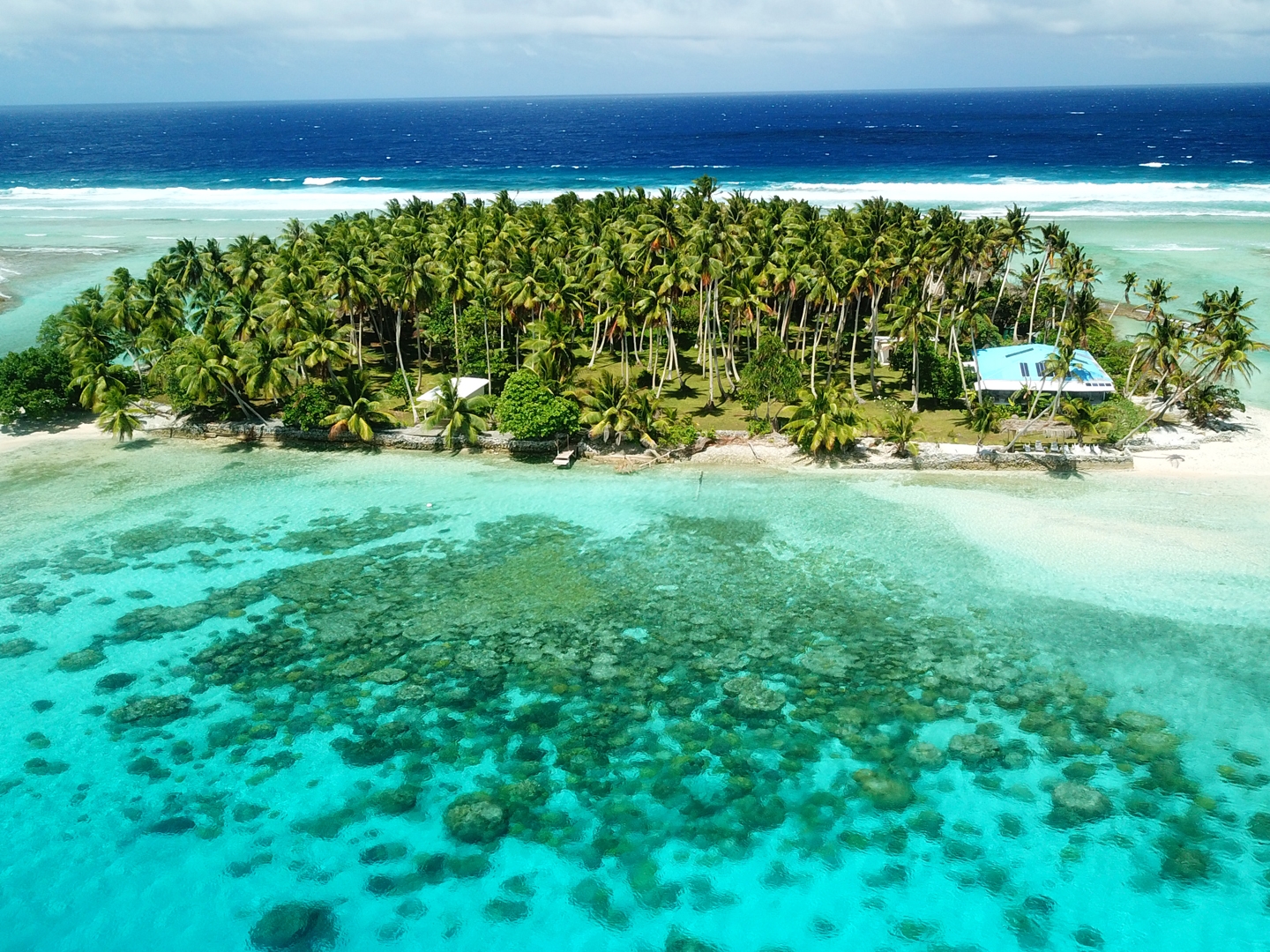
The Marshall Islands has 29 atolls and 5 remote islands. It is located in the North Pacific Ocean, in the Northern and Western Hemispheres. It is about halfway between Hawaii and Australia.  The total number of islands and islets is 1,225.  It does not share land borders with any neighboring countries and does not have any special regions or territories.  

It is slightly smaller than Rhode Island.  There is 1 time zone, Marshall Islands Time (MHT). It does not observe daylight saving time. Republic of Marshall Islands is 17 hours ahead of Washington, D.C. during Eastern Standard Time.

Travel requirements

Tourist visa requirements

  • A visa is not required for U.S. citizens.

Vaccinations

  • Measles: Required for visitors between 6 months of age and 62 years.
  • Yellow fever: Required if arriving from a country with risk of yellow fever transmission.

Valid passport requirements

  • Your passport is recommended to have 6 months’ validity beyond your arrival date. 
  • Your passport must have at least 1 blank page available per stamp.

Currency on entry and exit

  • Entry maximum: Approximately 10,000 USD 
  • Exit maximum: Approximately 10,000 USD

Tips from the U.S. embassy

  • Medical facilities are limited. Bring necessary prescription medications and basic medical supplies. 
  • Drink bottled or boiled water to avoid waterborne illnesses.
  • Domestic flights and boats connect the islands, but schedules can be highly irregular. Roads are limited and often in poor condition. Taxis are available in Majuro, the capital.

Help for U.S. citizens

U.S. Embassy Majuro

P.O. Box 1379
Majuro, MH 96960-1379

The embassy is located on the ocean-side of the island's major road, approximately two (2)  miles east of the airport. There is no street address.

Main telephone:

+692-247-4011

Emergency after-hours:

+692-455 8213

EMBASSY UPDATE
Previous messages

Message failed to load

We are unable to load the message. Visit the main U.S. embassy or consulate website for updates.

Get embassy updates right to your inbox
Enroll In Step
Review how STEP works

Travel guidance for Marshall Islands

Explore our travel guidance topics to prepare for your trip abroad.

Select a topic

Entry, exit, and visa requirements

Helpful resources


Visas

  • U.S. citizens do not need a visa to enter the Marshall Islands, under the Compact of Free Association.

Arriving by air

  • For international flights departing Amata Kabua International Airport in Majuro, there is a departure fee of $20 for anyone aged 13 through 59.  Diplomats are exempt from departure fees.  

  • For domestic flights within the Marshall Islands departing Amata Kabua International Airport in Majuro, there is a departure fee of $2 for anyone aged 13 through 59. Diplomats are exempt from departure fees.


Traveling with children

Always bring a copy of each child’s birth certificate or other evidence of your legal relationship to each child.

  • When 1 parent is traveling with a child, a notarized consent letter is required from the absent parent. Otherwise, you must show proof of sole custody. 
  • Parents and guardians should prepare a notarized, written permission letter to allow their minor children to travel to or from Republic of the Marshall Islands alone or with someone else. 
  • If you have concerns that your child may be abducted abroad by their other parent or guardian, review our information on how to prevent an international parental child abduction. You can also review our information on Parental Child Abduction in the Marshall Islands.
  • Review our information on Traveling with Minors

HIV and AIDS restrictions

You can verify entry rules for visitors and foreign residents with HIV and AIDS by contacting the nearest Embassy of the Marshall Islands before you travel.


Currency

  • The U.S. dollar is the official currency of the Marshall Islands.
  • Credit cards are accepted at some hotels and businesses, but cash is preferred in most places. 
  • ATMs are very limited, so bring sufficient cash.

Safety and security

Emergency phone numbers

Local authorities are responsible for investigating and prosecuting crimes and providing emergency services.


Unexploded Ordnance and landmines 

Unexploded ordnance (UXO) from World War II remains a problem in the Marshall Islands.

  • Underwater UXO may also present a threat.
  • Tourists are advised to heed all warnings on areas that might be affected.
  • Travelers are advised to use extreme caution when hiking or scuba diving.

Crime

The Marshall Islands has a low crime rate.

  • The most common crimes are break-ins and thefts from homes, hotel rooms, and vehicles, as well as occasional random acts of vandalism. Keep your hotel room or residence always locked.
  • Fights and assaults occur sometimes at nightclubs and bars. If you visit those establishments, especially late in the evening, stay aware of your surroundings.
  • Use caution when driving or walking on the roads late at night as drunk driving is common. There are no sidewalks and little to no room on the sides of roads for pedestrians to walk.
  • All taxis in Majuro are shared taxis that stop to pick up and drop off passengers frequently. There have been reports of taxi drivers or passengers sexually harassing women in shared taxis. Women and girls should avoid riding shared taxis, particularly after dark. Avoid walking around alone after dark.

Scams

  • Follow the Department of State guidelines to protect yourself from scams.
  • If you are a victim of a scam, learn how the FBI can help.

Victims of crime

Local authorities are responsible for investigating and prosecuting crime. You may report crimes to the local police by dialing 625-8666 or 625-3233

The U.S. embassy or consulate can:

  • Replace a stolen or lost passport.
  • Help you find medical care.
  • Assist you in how to report a crime to the police.
  • Contact relatives or friends with your written consent.
  • Provide general information regarding the criminal justice system. 
  • Provide a list of local attorneys. We do not endorse or recommend any specific attorneys.
  • Provide information on victim’s compensation programs in the United States. 
  • Provide an emergency loan for repatriation to the United States or limited medical support in cases of need.
  • Help you find accommodation and options to travel home.

Sexual assault and domestic violence

  • U.S. citizen victims of sexual assault are encouraged to contact the U.S. embassy and local law enforcement for assistance.  Local prosecutions can take a long time, even years.
  • U.S. citizen victims of domestic violence are encouraged to contact the U.S. embassy and local law enforcement for assistance. Local prosecutions can take a long time, even years.

Feral Dogs

  • There is a high number of roaming dogs in the Republic of the Marshall Islands. Few private properties have fences, so dogs chase cars or follow walkers when passing by. There is no rabies in the Marshall Islands; however, dog bites have been reported.

Technology use abroad

Mobile devices are vulnerable to compromise, theft, and damage anywhere in the world. Follow these safe practices:

  • Update all software (operating system and apps) before leaving the United States. 
  • Use reputable, U.S.-based VPN or VoIP applications.
  • Don’t connect to public Wi-Fi networks.
  • Research the safety of routes recommended by GPS. The fastest route is not always the safest.
  • Be cautious using dating apps abroad, as scammers often target U.S. citizens.
  • Drone use is restricted near the airport in Majuro and all of Kwajalein Atoll.
GPS

GPS coverage and mapping detail in the Republic of Marshall Islands may be limited, especially outside of Majuro an Ebeye.  

Prior to using GPS abroad:

  • Research the route recommended by the GPS to make sure it’s safe. 
  • The fastest path may not be the safest.

Tourism safety

The tourism industry is not well regulated:

  • Safety inspections for equipment and facilities are rare. 
  • Dangerous areas and activities are not always marked with signs. 
  • Staff may not be trained or certified.
  • If you get injured, you will likely need to travel to a major city for appropriate medical care.
  • First responders cannot reach remote areas in case of emergencies.
  • U.S. citizens are encouraged to have medical evacuation insurance. 
  • Review our information on Travel Insurance.

Adventure travel 

Scuba diving, snorkeling, kayaking, fishing, and island hopping are popular activities.

  • Infrastructure for adventure tourism is limited compared to more developed destinations.
  • Medical facilities are basic. Majuro does not have a decompression  or hyperbaric chamber.
  • Review the U.S. Centers for Disease Control and Prevention (CDC) tips for Adventure Travel.

Local laws and customs

Criminal penalties

  • U.S. citizens must follow local laws.
  • If you break local laws, even by mistake, you could be deported, arrested, or imprisoned.  
  • Travelers who accidentally break local laws have been detained. Sometimes, this can be for a long time. They may also face criminal charges and even be convicted of a crime.
  • You may be prosecuted in the United States for crimes committed abroad regardless of the local law. Review the information provided by the U.S. Department of Justice about crimes against minors abroad.
  • Before you start a business or a profession in Republic of Marshall Islands, seek information from the local authorities about what permits or licenses are required.

Arrest notification 


Counterfeit and pirated goods

Counterfeit and pirated goods are common in many destinations.

  • They may be illegal according to local laws.
  • Counterfeit and pirated goods may pose significant risks to consumer health and safety.
  • You may be subject to fines or have to surrender counterfeit and pirated goods to authorities if you bring them back to the United States.  

Learn more about U.S. restrictions on counterfeit and pirated goods:


Faith-based travelers

Faith based travel includes pilgrimages, service projects, and mission work. Prepare for your travel using these resources:  


Gay and lesbian travelers

There are no legal restrictions on consensual same-sex sexual relations, the provision of information or services to persons on the basis of real or perceived sexual orientation, or the organization of events focused on sexual orientation in the Marshall Islands.

  • Social acceptance may be limited.  Use discretion and respect local customs. 
  • Review our information for Gay and Lesbian Travelers.

Travelers with accessibility needs

The law in the Marshall Islands does not prohibit discrimination against people with disabilities.

  • There are all types of accessibility issues from accessible facilities, information, and communication, access to services, or ease of movement. 
  • Expect accessibility to be limited in transportation, lodging, communication, and general infrastructure.
  • General public sentiment around disability is disabled people exist, but little special accommodation is possible due to lack of resources.
  • There are no mandated rules for special support for people with disabilities.
  • There are few ramps, almost no sidewalks, and few operational elevators in the Marshall Islands.
  • Medical facilities are generally limited and inadequate accessibility. 
  • Review our information on Accessibility Needs.

Students


Women travelers

The Marshall Islands does not practice forced marriage or female genital mutilation. 

  • Domestic violence is a common problem in the country.
  • Women and girls should avoid riding shared taxis, particularly after dark. Avoid going out alone at night.
  • Be aware of local modesty customs. Dress conservatively while in public, with special care to cover shoulders and knees.
  • Review our information for Women Travelers.
  • Review our information for Victims of Crime.

Human rights

  • Review the Department of State’s Human Rights Report for your destination prior to traveling.

Health

Health resources


Emergency phone numbers

Dial 625-4543 or 625-4144 for emergency medical services.


Ambulance services

Ambulance services are not widely available. Training and response time of emergency responders may be poor. 

  • Ambulances have little or no advanced medical equipment.
  • They are not staffed with trained paramedics.
  • Injured or very ill travelers might prefer to take a taxi or their own car to the nearest major hospital. This option can be faster than waiting for an ambulance.

Medical payments and insurance

Make sure you know if your health insurance plan covers any medical expenses coverage abroad.  Most U.S. plans do not. 

  • The U.S. government does not pay medical bills.
  • U.S. Medicare and Medicaid do not cover expenses or bills abroad.
  • Medical evacuations from the Marshall Islands frequently exceed $100,000 and are subject to the availability of properly equipped aircraft.
  • Most hospitals and doctors abroad do not accept U.S. health insurance.
  • Medical care is not free in the Marshall Islands. If you require medical attention, you will incur expenses, even if you are treated in a public healthcare facility.
  • Most care providers overseas only accept cash payments.
  • Credit card payment is not always available.
  • Most hospitals and medical professionals require cash payment.
  • Make sure you know if your health insurance plan provides coverage abroad or reimbursement of payments. The CDC provides more information on types of insurance.
  • We strongly recommend supplemental insurance to cover medical evacuation.
  • If you purchase supplemental insurance, you are responsible for seeking reimbursement from the insurance provider. Follow their instructions for filing claims.

Vaccinations

  • Measles: Cases are rising in many countries around the world. All international travelers should be fully vaccinated against measles with the measles-mumps-rubella (MMR) vaccine, according to CDC's measles vaccination recommendations for international travel.
  • Yellow fever: You do not need a vaccine to enter Marshall Islands if you are traveling directly from the United States.  If you are arriving from a country where yellow fever is endemic, you may be asked to show proof of vaccination. 

Stay up to date with the vaccines recommended by the U.S. Centers for Disease Control and Prevention.


Healthcare facilities 

Health facilities are available in Majuro and Ebeye, but do not meet Western standards. Basic diagnostic tools including CT scans are sometimes available. In more rural areas, access to health care is even more restricted.

  • The U.S. embassy maintains a list of doctors and hospitals. We do not endorse or recommend any specific medical provider or clinic.
  • Public medical clinics lack basic diagnostic and treatment resources for any conditions beyond the most common ones.
  • When seeking medical care, especially via the emergency room or for hospital admissions, payment is expected upfront prior to services.
  • Hospital resource-restrictions result in staffing shortages, especially overnight. Having a family member meet basic needs for those who are hospitalized is a cultural expectation.
  • Hospitalizations for children require a family member attendant.
  • Psychological and psychiatric services are limited.

Prescription medications 

Always carry your prescription medication in original packaging, along with your doctor’s prescription.

  • Check with the Ministry of Health and Human Services at HR-Majuro@rmihealth.org to ensure the medication is legal in the Marshall Islands. 
  • Exercise caution when purchasing medication abroad. Pharmaceuticals are usually easy to buy with few controls.
  • Counterfeit medication is common and may not work, have the wrong strength, or have dangerous ingredients. You should buy medication with the help of a medical professional and from trusted places.

U.S. Customs and Border Protection (CBP) and the Food and Drug Administration (FDA) have rules for bringing medication back into the United States.  If you buy medications abroad, the medications must meet CBP’s and the FDA’s requirements to bring them back legally. 

The medications must also be for personal use and approved for use in the United States. 

For more information: 


Assisted Reproductive Technology (ART) and surrogacy

Surrogacy is not regulated under Marshallese law. 

  • If you are considering traveling to the Marshall Islands to have a child through use of assisted reproductive technology (ART) or surrogacy, please review our information on ART and Surrogacy Abroad.
  • Surrogacy is largely unregulated in the Marshall Islands with no clear legal protections for foreign intended parents.  Surrogacy agreements may not be enforced by Marshall Island courts.

Water quality and food safety 

  • Tap water is generally not safe to drink or use in cooking.
  • Bottled water and beverages are generally safe. Use major brands and ensure the seal is intact.
  • Majuro lagoon has tested positive for E. coli bacteria.
  • Use extra caution to avoid ingesting water when swimming in the lagoon.
  • Eating uncooked vegetables and fruits can make you sick.
  • Make water safe by filtering, boiling, disinfecting, or distilling.
  • Impure water can cause diseases like typhoid, cholera, hepatitis, and dysentery.

Air quality

Air pollution can be a significant problem in many destinations abroad.

Transportation

Road conditions and safety

There is 1 paved road on Majuro Island, but there are few traffic signs and no traffic lights.

  • While driving, you should be alert for animals roaming the street and children and adults darting into the road without looking for cars, especially after dark.
  • Drinking and driving is common and increases during holidays and weekends.
  • Walking beside the street can be dangerous due to poor lighting, no sidewalks, and drivers who may have been drinking.
  • Roads experience temporary flooding after heavy rains and during high tides.
  • Because there are few streetlights, visibility is poor. Night driving requires special caution.

Traffic laws  

  • The speed limit is 25 mph throughout the island. There are multiple speed bumps so caution is necessary particularly while driving at night.
  • For specific information concerning drivers’ permits, vehicle inspection, road tax, and mandatory insurance, please contact the Embassy of the Republic of the Marshall Islands.

Taxis and ride-shares

  • Shared public taxis are available in Majuro to pick up and drop off passengers frequently.

Public and commercial transportation 

There is no public transportation in the Marshall Islands

  • Travel between Majuro and the outer islands is by local air transport that is unreliable. 
  • Travel is also available by boat, but this can be particularly dangerous from December to April due to strong currents and potential storm surges.
  • Review our information on Driving and Transportation Safety Abroad.

Aviation safety oversight 

  • The U.S. Federal Aviation Administration (FAA) has not assessed the Marshall Island’s Civil Aviation Authority for compliance with international standards for aviation safety oversight.
  • FAA's website includes more information on its assessment program.

Maritime travel

Mariners and passengers planning travel to the Republic of the Marshalls Islands should check the following:  

Weather and natural disasters

Weather Conditions

The Republic of the Marshall Islands is vulnerable to several types of weather events and natural disasters.

  • Typhoons or tropical cyclones: The likelihood of occurring is moderate. Marshall Islands is on the edge of the main typhoon belt, so direct hits are less frequent than in some Pacific neighbors. But the risk remains, particularly from May to November.  
  • Flooding: The likelihood is high, especially in low-lying atolls and during periods of high king tides. 
  • Drought: It can occur at any time but is more likely during El Nino events. The RMI Weather Service issues drought advisories. The government may coordinate water rationing and distribution of emergency water supplies.

Storms and disaster preparedness

The Marshall Islands is in a region where storm surges are common.

U.S. citizens living abroad

Living abroad resources

If you live outside the United States for a long time, you or your family may experience various life events, wish to exercise U.S. citizenship rights, or need to meet U.S. legal obligations while abroad.

Embassies and consulates

U.S. Embassy Majuro

P.O. Box 1379
Majuro, MH 96960-1379

The embassy is located on the ocean-side of the island's major road, approximately two (2)  miles east of the airport. There is no street address.

Main telephone:

+692-247-4011

Emergency after-hours:

+692-455 8213