Skip to content

French Guiana

Review the latest State Department Travel Advisory about French Guiana. You can plan for safe travel by following the entry and exit requirements, reviewing local laws, and other travel guidance from the U.S. embassy or consulate.

Travel advisory levels

Learn more about Travel Advisory levels

  1. Exercise normal precautions
  2. Exercise increased caution
  3. Reconsider travel
  4. Do not travel

Travel advisory - Territorial Collectivity of Guiana

Level 1 - Exercise normal precautions

Date issued: July 08, 2026 -

Exercise normal precautions

in French Guiana.

Advisory summary

French Guiana is generally a safe destination for travelers.

There is no official U.S. consular representation in French Guiana.  Consular services are provided by the U.S. Embassy in Paramaribo, Suriname.

Review our Travel Guidance for French Guiana to learn how to prepare for a safe trip.

If you decide to travel to French Guiana:

Scroll to review full advisory
Travel advisory levels

Learn more about Travel Advisory levels

  1. Exercise normal precautions
  2. Exercise increased caution
  3. Reconsider travel
  4. Do not travel

About French Guiana

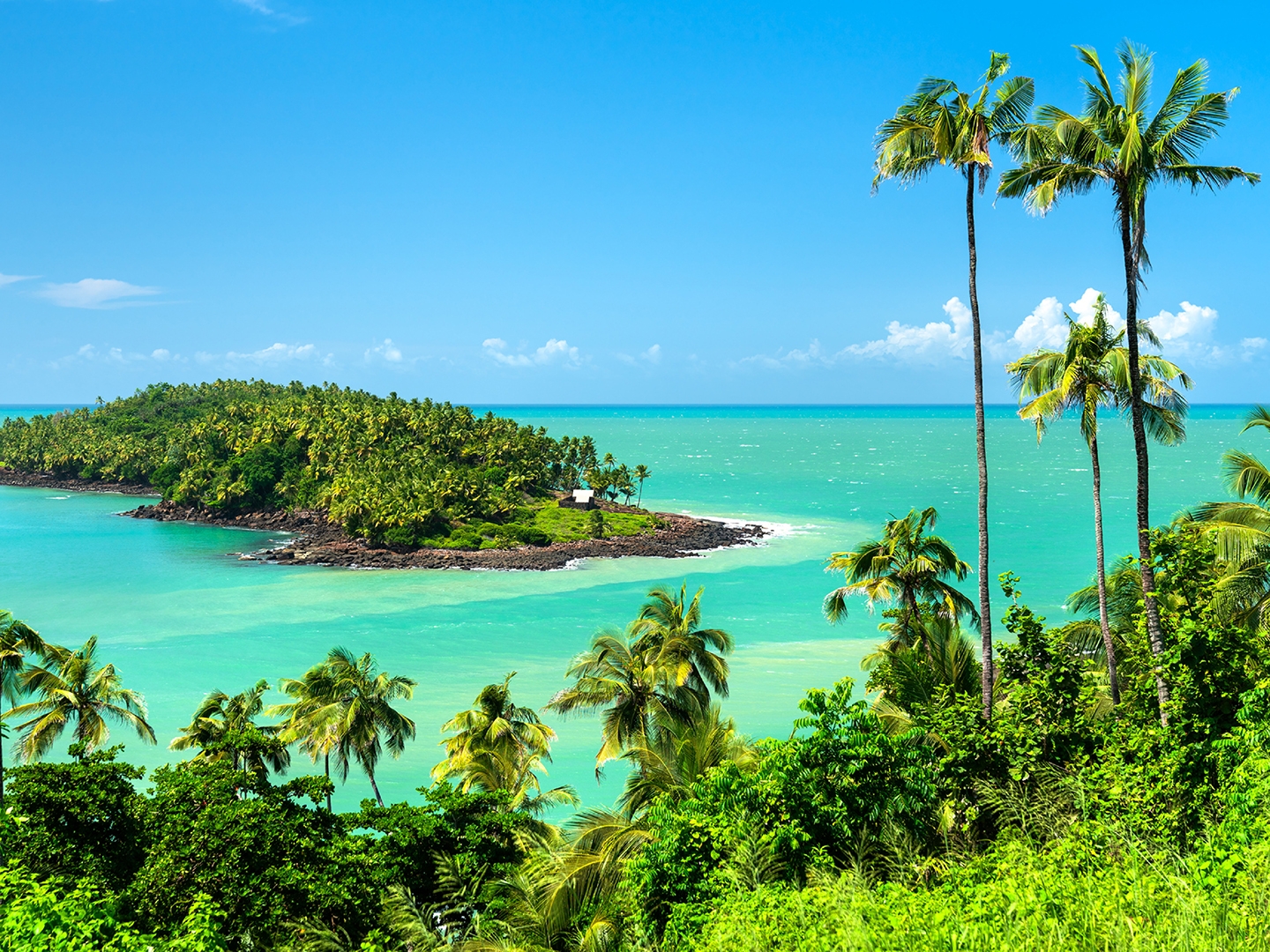
French Guiana is located in South America, in the Western and Northern Hemispheres. It has a maritime border with the Atlantic Ocean to the north. It also shares land borders with Suriname and Brazil. French Guiana is a territorial collectivity of France and is not an independent country. 

French Guiana is slightly larger than South Carolina and is approximately 97% covered by tropical rainforest. There is 1 time zone, French Guiana Time. It does not observe daylight saving time. French Guiana is 2 hours ahead of Washington, D.C. during Eastern Standard Time. 

Travel requirements

Tourist visa requirements

  • No visa is required for 90 days or less in a 180-day period.

Vaccinations

  • Yellow fever: Vaccination required for travelers over 1 year old.

Valid passport requirements

  • Your passport must be valid at the time of entry.
  • Must have 3 months’ validity beyond your date of departure.
  • 1 blank page available per stamp.
  • France does not recognize the 12-page U.S. emergency passport as a valid travel document for entry into France and its territories.  
    •  The following may occur: 
      • Immigration officers can refuse your boarding or entry. 
      •  You may be held at the airport until a return flight to the United States is available.

Currency on entry and exit

  • Entry maximum: 10,000 Euros
  • Exit maximum: 10,000 Euros

Tips from the U.S. embassy

  • Penalties for possessing, using, or trafficking in illegal drugs in French Guiana are severe. Convicted offenders can expect long jail sentences and heavy fines.
  • French authorities enforce strict regulations concerning drone use, firearms, artifacts, medications, business equipment, and sales samples. Contact the Embassy of France for information.

Help for U.S. citizens

U.S. Embassy Paramaribo

Kristalstraat 165
Paramaribo, Suriname

Main telephone:

+597-556-700, ext. 2129

Emergency after-hours:

+597-710-1112

EMBASSY UPDATE
Previous messages

Message failed to load

We are unable to load the message. Visit the main U.S. embassy or consulate website for updates.

Get embassy updates right to your inbox
Enroll In Step
Review how STEP works

Travel guidance for French Guiana

Explore our travel guidance topics to prepare for your trip abroad.

Date issued: July 30, 2026

Select a topic

Entry, exit, and visa requirements 

Helpful Resources  


Traveling with children

  • Always bring a copy of each child’s birth certificate or other evidence of your legal relationship to each child. 
  • When one parent is traveling with a child, a notarized consent letter is required from the absent parent. Otherwise, you must show proof of sole custody. 
  • Parents and guardians should prepare a notarized, written permission letter. It should allow their minor children to travel to or from French Guiana alone or with someone else. 
  • If you have concerns that your child may be abducted abroad by their other parent or guardian, review our information on how to prevent an international parental child abduction. You can also review our information on Parental Child Abduction in French Guiana. 
  • All minors under age 18 must travel with:
  • Their personal Identification Document,
  • A copy of the parent or guardian’s Identification Document, and 
  • The French Government Authorization to leave the territory (AST) Form 15646-01 completed by the parent or guardian. 
  • Review our information on Traveling with Minors.

Currency

  • The Euro is the official currency of French Guiana, and it is considered part of the Eurozone.
  • Most establishments accept credit cards, especially if you are in an urban area. 
  • French Guiana has ATMs that accept U.S.-issued bankcards.
  • The banking infrastructure in French Guiana is generally good due to its status as part of France, making it easier for international travelers compared to some neighboring countries

Safety and security

Emergency Phone Numbers

Local authorities are responsible for investigating and prosecuting crimes and providing emergency services.

  • Dial 112 for police and for ambulance. 

Terrorism

Terrorists and their supporters may target U.S. citizens abroad.

Terrorists may target:

  • Large public events (sporting contests, political rallies, demonstrations, holiday events, celebratory gatherings, etc.)
  • Popular hotels, clubs, and restaurants
  • Places of worship
  • Schools 
  • Parks
  • Shopping malls and markets
  • Public transportation (subways, buses, trains, and commercial flights)

Demonstrations 

Demonstrations and strikes affecting transportation, including airports and roads, may occur. Reconfirm any domestic or international flight reservations if you are traveling during these events.

  • Demonstrations can be unpredictable. Avoid areas around protests and other demonstrations.  
  • Demonstrations have previously impeded access to and operations at the Guiana Space Center in Kourou.
  • Check local media for updates and traffic advisories.

Crime

  • Petty street crime occurs throughout the major cities. Violent crime occurs more frequently than in mainland France but is not a concern for most visitors.  Brazilian gang activity, particularly affiliated with illegal gold mining, is a serious concern in the remote interior.  Those conducting adventure tourism into the interior and near the Brazilian border should exercise caution.
Safety Tips:
  • Avoid wearing expensive jewelry. 
  • Don’t display large amounts of money in public.
  • Avoid isolated areas, including the beach, after dark.
  • Drive with your windows closed and doors locked.
  • Avoid placing valuables in plain sight.  

Scams

  • Follow the Department of State guidelines to protect yourself from scams.
  • If you are a victim of a scam, learn how the FBI can help.   

Victims of Crime

Local authorities are responsible for investigating and prosecuting crime. You may report crimes to the local police by dialing 112.  Assistance in English may not be readily available.

Review our information for Victims of Crime.  

The U.S. embassy or consulate can: 

  • Replace a stolen or lost passport.
  • Help you find medical care.  
  • Assist you in how to report a crime to the police. 
  • Contact relatives or friends with your written consent. 
  • Provide general information regarding the criminal justice system.  
  • Provide a list of local attorneys. We do not endorse or recommend any specific attorneys. 
  • Provide information on victim’s compensation programs in the United States
  • Provide an emergency loan for repatriation to the United States or limited medical support in cases of need. 
  • Help you find accommodation and options to travel home

Sexual Assault and Domestic Violence 

  • U.S. citizen victims of sexual assault are encouraged to contact the U.S. embassy and local law enforcement for assistance

Technology Use Abroad

Mobile devices are vulnerable to compromise, theft, and damage anywhere in the world. Follow these safe practices:

  • Update all software (operating system and apps) before leaving the United States. 
  • Use reputable, U.S.-based VPN or VoIP applications.  
  • Don’t connect to public Wi-Fi networks. 
  • Research the safety of routes recommended by GPS. The fastest route is not always the safest.
  • Be cautious using dating apps abroad, as scammers often target U.S. citizens.
  • Drones are legal to use in French Guiana but are regulated under French aviation law.  Law enforcement has questioned U.S. citizens operating drones near the Guiana Space Center.  Check with local law enforcement before operating drones near sensitive sites.

Tourism Safety

The tourism industry is generally regulated.  

  • Rules with regards to general practices and safety inspections are regularly enforced.  
  • Dangerous areas and activities are marked with signs.  
  • Trained staff are usually there to help with organized activities.  
  • If someone gets hurt, they can usually get medical help anywhere in the country.  
  • In remote areas, it might take longer for medical help to arrive and assist.  
  • U.S. citizens are encouraged to purchase medical evacuation insurance. Review our Travel Insurance page for more information on insurance providers for coverage abroad. 
  • Review our information on Travel Insurance

Adventure travel 

  • Review the U.S. Centers for Disease Control and Prevention (CDC) tips for Adventure Travel.

Local laws and customs

Criminal Penalties

  • U.S. citizens must follow local laws. 
  • You must only enter and exit French Guiana at official border crossings.   
  • If you break local laws, even by mistake, you could be deported, arrested, or imprisoned.  
  • You may be prosecuted in the United States for crimes committed abroad regardless of the local law. Review the information provided by the U.S. Department of Justice about crimes against minors abroad.
  • Before you start a business or a profession in French Guiana seek information from the local authorities about what permits or licenses are required.  

Arrest Notification 

  • If you are arrested or detained, ask officials to notify the U.S. embassy or consulate immediately.  Ask that authorities in French Guiana notify the U.S. Embassy in Paramaribo, Suriname

Counterfeit and Pirated Goods 

Counterfeit and pirated goods are common in many destinations. 

• They may be illegal according to local laws.  

• Counterfeit and pirated goods may pose significant risks to consumer health and safety.  

• You may be subject to fines or have to surrender counterfeit and pirated goods to authorities if you bring them back to the United States.  

• Do not engage in trafficking of wildlife products or protected species.

Learn more about U.S. restrictions on counterfeit and pirated goods: 


French Foreign Legion

U.S. citizens interested in joining the French Foreign Legion (FFL) should be aware that:

  • The cognitive and physical tests for acceptance are challenging.
  • If not accepted, you will need to have funds to return home.
  • FFL provides successful candidates with a new identity and retains the U.S. citizen’s passport for an extended time. Not having access to a U.S. passport can complicate normal or emergency travel.

Faith-based Travelers

Faith based travel includes pilgrimages, service projects, and mission work. Prepare for your travel using these resources:  


Gay and Lesbian Travelers

  • There are no legal restrictions on consensual same-sex sexual relations, the provision of information or services to persons on the basis of real or perceived sexual orientation, or the organization of events focused on sexual orientation in French Guiana. 
  • Review our information for Gay and Lesbian Travelers.

Travelers with Accessibility Needs

The law in French Guiana prohibits discrimination against people with physical, sensory, intellectual, or mental disabilities. The law is enforced. 

  • Accessibility may be limited in older infrastructure. 
  • Buses and taxis are an accessible option for transportation.
  • Review our information on Accessibility Needs.

Students


Women Travelers  


Human Rights

  • Review the Department of State’s Human Rights Report for your destination prior to traveling.

Health

Health resources


Emergency Phone Numbers

  • Dial 112 for emergency medical services. 

Ambulance Services

Ambulance services are widely available. English is not widely spoken.  

  • Medical emergencies in isolated areas may require aircraft and/or boat transportation

Medical payments and insurance

Make sure you know if your health insurance plan covers any medical expenses abroad. Most U.S. plans do not. 

  • The U.S. government does not pay medical bills.
  • U.S. Medicare and Medicaid do not cover expenses or bills abroad.
  • Most hospitals and doctors abroad do not accept U.S. health insurance.
  • Medical care is not free in French Guiana for U.S. citizens. If you require medical attention, you will incur expenses, even if you are treated in a public healthcare facility.
  • Most care providers in French Guiana will accept credit card payments, though some only accept cash payments.
  • Hospitals often need payment up front or proof of good insurance before providing treatment or admitting a patient.
  • Make sure you know if your health insurance plan provides coverage abroad or reimbursement of payments. The CDC provides more information on types of insurance.
  • We strongly recommend supplemental insurance to cover medical evacuation. If you purchase supplemental insurance, you are responsible for seeking reimbursement from the insurance provider. Follow their instructions for filing claims. 

Vaccinations

  • Proof of vaccination for yellow fever may be required to enter French Guiana.

Stay up to date with the vaccines recommended by the U.S. Centers for Disease Control and Prevention.


Healthcare Facilities 

Health facilities within French Guiana are limited to urban areas. It may be harder to find adequate health care in rural areas.

  • The Centre Hospitalier Andrée Rosemon in Cayenne is the only hospital that has intensive care and trauma units. 
  • The Centre Hospitalier de l’Ouest Guyanais in St. Laurent provides more limited hospital services in the western part of French Guiana.
  • Not all medical facilities in French Guiana are air conditioned.
  • Hospitals and doctors will require payment upfront prior to service or admission. 
  • Medical staff may speak little or no English. 
  • Psychological and psychiatric services are limited, even in larger cities.  Hospital-based care is only available through government institutions.
  • • Patients must cover all costs for transferring to or between hospitals.

Generally, in public hospitals only minimal staff are available overnight in non-emergency wards. Consider hiring a private nurse or having family spend the night with the patient, especially a minor child


Prescription medications 

Always carry your prescription medication in original packaging, along with your doctor’s prescription.

  • You can find prescription and over-the-counter medicines in pharmacies in larger cities in French Guiana, but U.S. brands may not be available.
  • Check with the French Customs website to ensure the medication is legal in French Guiana. 
  • Exercise caution when purchasing medication abroad. Pharmaceuticals are usually easy to buy with few controls. 
  • Counterfeit medication is common and may not work, have the wrong strength, or have dangerous ingredients. You should buy medication with the help of a medical professional and from trusted places.

U.S. Customs and Border Protection (CBP) and the Food and Drug Administration (FDA) have rules for bringing medication back into the United States. If you buy medications abroad, the medications must meet CBP’s and the FDA’s requirements to bring them back legally. 

The medications must also be for personal use and approved for use in the United States. 

For more information: 


Assisted Reproductive Technology (ART) and Surrogacy

Surrogacy is illegal in French Guiana as in the rest of France.  If you are considering traveling to French Guiana to have a child through use of assisted reproductive technology (ART), please review our information on ART and Surrogacy Abroad

  • People who try to avoid local law risk legal consequences. 

Water quality and food safety 

  • Tap water is safe to drink and use in cooking. 
  • Many restaurants and hotels serve tap water unless bottled water is specifically requested. 
  • Eating uncooked vegetables and fruits can make you sick.

Air quality

Air pollution can be a significant problem in many destinations abroad. 

  • For information about common air pollutants, check the CDC’s Air Quality page
  • For information about the U.S. Air Quality Index and health guidance, check out the EPA’s AirNow

For general health information, visit the Medicine and Health page.

Transportation 

Road Conditions and Safety

Primary roads are paved and usually well maintained. Roads in rural areas are less developed, with frequent potholes and poor lane marking (if any).

  • Avoid driving at night due to unlit roads and vehicles. 
  • You may encounter stray livestock and wildlife, especially in the remote interior regions or on less-developed rural roads.
  • There are few to no service stations on the roads between cities and towns. 
  • Carry spare tires, extra fuel, tools, and other first aid equipment. 
  • Beware of intoxicated drivers, particularly at night on remote stretches of 

Traffic Laws  

You need a valid driver’s license and an International Driving Permit to drive in French Guiana.

  • Follow generally accepted driving rules regarding seatbelts and mobile phone use. 
  • Be aware that traffic policing may be limited outside major cities. Stay alert for other drivers’ behavior. 
  • French Guiana has strict laws regarding driving under the influence and authorities consider 0.05% blood alcohol concentration to be the limit.
  • Drivers are expected to have an accident form in the car. You must fill it out in case of accident. It is advisable to get witnesses, if possible. If there are injuries, you must call the police. 
  • Aggressive drivers are common. Motorcycles and mopeds weave in and out of traffic lanes. In slow traffic, motorcycles often pass cars. Drunk driving can be an issue in remote areas

Taxis and Ride-Shares

  • Taxis are relatively safe to use.
  • Ride-share apps are not available in French Guiana

Public and Commercial Transportation 

Public transportation in French Guiana is limited to bus services in and near the capital city of Cayenne. 


Aviation Safety Oversight 

  • The U.S. Federal Aviation Administration (FAA) has found that France’s Civil Aviation Authority meets international standards for aviation safety oversight. FAA's website includes more information on its assessment program.

Maritime travel

Mariners and passengers planning travel to French Guiana should check the following:  

Weather and natural disasters

Weather conditions

Hurricanes, Tropical storms, and Flooding

  • The hurricane season runs from June to November. French Guiana borders the Atlantic Ocean. While rare, it can experience tropical storms and hurricane winds as storms are passing to the north.
  • Flooding can happen in French Guiana, especially in low lying coastal areas and along rivers. Rains are heaviest from April to June.
  • With its proximity to the equator, travelers can expect and should plan for hot, humid weather all year long

U.S citizens living abroad

Living Abroad resources

If you live outside the United States for a long time, you or your family may experience various life events, wish to exercise U.S. citizenship rights, or need to meet U.S. legal obligations while abroad.

  • Learn how to prepare for voting in U.S. elections, the birth of a child, or getting married.
  • Ensure you have a plan for healthcare and medical insurance abroad.
  • Even abroad, you still have certain obligations such as paying your U.S. taxes or registering for military selective service.
  • Review information on federal benefits, such as Social Security and Veterans Affairs benefits.

Embassies and consulates

U.S. Embassy Paramaribo

Kristalstraat 165
Paramaribo, Suriname

Main telephone:

+597-556-700, ext. 2129

Emergency after-hours:

+597-710-1112