

 ) or https:// means you’ve safely connected to the .gov website. Share sensitive information only on official, secure websites.


Risk indicators:
- Crime (C)
Reissued after periodic review without changes.
Review the latest State Department Travel Advisory about Fiji. You can plan for safe travel by following the entry and exit requirements, reviewing local laws, and other travel guidance from the U.S. embassy or consulate.
Visit fj.usembassy.gov
Learn more about U.S. and Fiji relations at State.gov
Learn more about Travel Advisory levels
in Fiji. Some areas have increased risk. Read the entire Travel Advisory.
Exercise increased caution in Colo I Suva Forest Park due to the risk of crime.
Fiji is generally a safe destination for travelers.
Exercise increased caution in Colo I Suva Forest Park due to the risk of crime.
Learn more about Travel Advisory levels
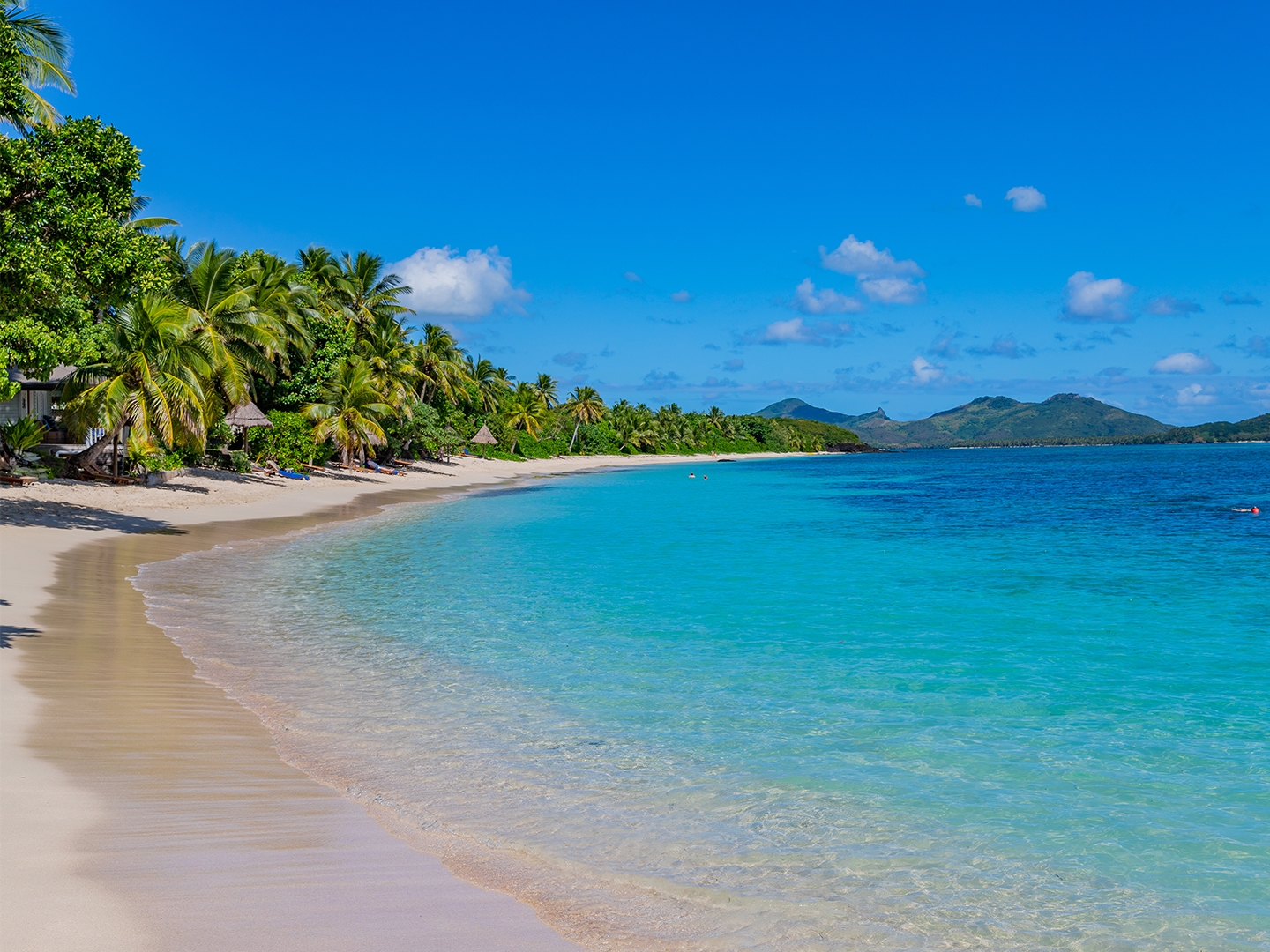
Fiji is located in Oceania, in the Southern Hemisphere. It is an island nation with no land borders. It has maritime borders with Tuvalu, Tonga, Vanuatu, and the Solomon Islands. Fiji has over 300 islands. Approximately 110 are permanently inhabited.
Fiji is slightly smaller than New Jersey. There is 1 time zone, Fiji Time (FJT)/ Fiji does not practice daylight savings time. Fiji is 17 hours ahead of Washington, D.C. during Eastern Standard Time.
158 Princes Rd, Tamavua
Suva, Fiji Islands
Message failed to load
We are unable to load the message. Visit the main U.S. embassy or consulate website for updates.
Explore our travel guidance topics to prepare for your trip abroad.
Date issued: October 22, 2026
If a Fiji Immigration Officer asks, you must show:
Always bring a certified copy of each child’s birth certificate and a certified copy of marriage certificate to easily verify family relationships.
Fiji does not restrict entry, residency, or stays based on HIV status. If you are living with HIV, you do not need to take an HIV test to enter the country and cannot be deported because of your status.
Avoid poorly lit, remote areas after dark.
Consider taking door-to-door transportation.
Follow the Department of State guidelines to protect yourself from scams.
If you are a victim of a scam, learn how the FBI can help.
Scams in Fiji range from digital fraud—such as romance and package delivery scams—to on-the-ground tourist traps. This includes over-priced custom carving stalls, "friendly local" guide traps, and rigged taxi rides.
Common scams include:
Safety tips:
If using dating apps or websites in Fiji:
Local authorities are responsible for investigating and prosecuting crime. You may report crimes to the local police by dialing 917.
The U.S. embassy or consulate can:
U.S. citizen victims of sexual assault and domestic violence are encouraged to contact the Fiji Police Force at 917 and the U.S. embassy for assistance.
Mobile devices are vulnerable to compromise, theft, and damage anywhere in the world. Follow these safe practices:
Drones are legal in Fiji but regulated by the Civil Aviation Authority of Fiji. Check Fiji regulations before travel. You must declare any drones you are bringing into the country at customs.
Satellite phones are not generally banned, but you may need telecom approval.
For more information, visit:
Research the route recommended by the GPS to make sure it’s safe.
The tourism industry is not well regulated:
Fiji is a popular destination for adventure travelers, but activities such as hiking, diving, and water sports carry real risks.
Ocean currents, severe weather, coral cuts, and mosquito-borne illnesses like dengue fever are all common hazards. In remote areas, infrastructure is limited, and emergency medical evacuations to Australia or New Zealand are a real possibility.
Fiji has a hyperbaric chamber, but it has gone offline in the past. When it is not working, the nearest chambers are in Australia and New Zealand.
Fiji waters have venomous creatures like the banded sea krait (sea snake) and stonefish. Always wear reef shoes, avoid touching the coral, and shuffle your feet in the sand to avoid stepping on hidden bottom-dwellers.
Coral scrapes easily become infected. Clean and treat any cuts immediately to prevent severe reactions.
Marijuana and cannabis products are illegal in Fiji, even if you have a valid medical cannabis card from your home country. Penalties include fines of up to FJ$1,000,000 and up to life imprisonment.
It is illegal to bring guns, ammunition, spent shells, or casings into Fiji without prior authorization. Before you travel, you must obtain an import license and permits approved by the Commissioner of the Fiji Police Force.
When you arrive, whether by air or by boat, you must immediately declare all firearms and ammunition to Fiji Revenue and Customs Service (FRCS) officers.
Failure to declare these items is treated as a serious border security threat.
Penalties for smuggling or failing to declare restricted goods include:
Experiencing Fiji’s warm culture requires a few essential courtesies, especially when visiting local villages.
If you are arrested or detained, ask officials to notify the U.S. embassy or consulate immediately.
A detention facility may not provide you with essential medications or medical care.
Counterfeit and pirated goods are common in many destinations.
Learn more about U.S. restrictions on counterfeit and pirated goods:
Faith based travel includes pilgrimages, service projects, and mission work. Prepare for your travel using these resources:
There are no legal restrictions on consensual same-sex sexual relations, the provision of information or services to persons on the basis of real or perceived sexual orientation, or the organization of events focused on sexual orientation in Fiji.
Gay and lesbian travelers are welcomed in Fiji, especially at international resorts and on private islands where same-sex couples, honeymoons, and family vacations are treated as completely normal.
Attitudes toward lesbian and gay people have become more accepting, especially among the young. Articles promoting tolerance are regularly found in the media.
The law in Fiji prohibits discrimination against people with physical, sensory, psychosocial, intellectual or mental disabilities. The law is enforced.
Always apply for your student permit and visas well in advance of your intended travel date. Requirements and fees can change.
Review the Department of State’s Human Rights Report for your destination prior to traveling.
Make sure you know if your health insurance plan covers any medical expenses abroad. Most U.S. plans do not.
Stay up to date with the vaccines recommended by the U.S. Centers for Disease Control and Prevention.
Health facilities are available in major cities. It may be harder to find adequate health care in rural areas.
Visit the CDC’s Medical Tourism website for information on medical tourism.
If you are traveling to Fiji and carrying medication, be aware that customs enforcement strictly monitors imported drugs, including prescription medications:
U.S. Customs and Border Protection (CBP) and the Food and Drug Administration (FDA) have rules for bringing medication back into the United States. If you buy medications abroad, the medications must meet CBP’s and the FDA’s requirements to bring them back legally.
The medications must also be for personal use and approved for use in the United States.
For more information:
Air pollution can be a significant problem in many destinations abroad.
Traffic moves on the left in Fiji.
You may drive in Fiji for up to 6 months with a valid U.S. driver’s license.
Fiji has an extensive bus network, particularly in major cities. However, local and inter-city buses are often poorly driven, vehicles are frequently in poor mechanical condition, and petty crime is common.
The U.S. Federal Aviation Administration (FAA) has found that Fiji’s Civil Aviation Authority meets international standards for aviation safety oversight. FAA's website includes more information on its assessment program.
Mariners and passengers planning travel to Fiji should check the following:
The U.S. Coast Guard has concerns about the security practices in the ports of Fiji. Mariners and passengers in Fijian ports should be careful and use stronger security measures.
If you live outside the United States for a long time, you or your family may experience various life events, wish to exercise U.S. citizenship rights, or need to meet U.S. legal obligations while abroad.
158 Princes Rd, Tamavua
Suva, Fiji Islands
Reissued after periodic review without changes.
Invalid Input
Last Updated: October 22, 2026
Owned by Overseas Citizens Services
An official website of the Department of State - Bureau of Consular Affairs