Skip to content

Cayman Islands

Review the latest State Department Travel Advisory about the Cayman Islands.  You can plan for safe travel by following the entry and exit requirements, reviewing local laws, and other travel guidance from the U.S. embassy or consulate.

Travel advisory levels

Learn more about Travel Advisory levels

  1. Exercise normal precautions
  2. Exercise increased caution
  3. Reconsider travel
  4. Do not travel

Travel advisory - Cayman Islands

Level 1 - Exercise normal precautions

Date issued: May 21, 2026 -

Exercise normal precautions

 in the Cayman Islands.

Advisory summary

The Cayman Islands is generally a safe destination for travelers.

Accessibility of medical services for routine and emergency procedures may be limited.  Review the Health Section of the Travel Guidance on this page for more information.

Review our Travel Guidance for the Cayman Islands to learn how to prepare for a safe trip.

If you decide to travel to the Cayman Islands:

  • Enroll in the Smart Traveler Enrollment Program (STEP) to get important updates and alerts from the U.S. embassy or consulate.  Enrolling helps the U.S. embassy or consulate contact you or your emergency contact in an emergency.
  • Review the Country Security Report for the Cayman Islands.
  • Visit the Centers for Disease Control and Prevention (CDC) website for the latest Travel Health Information for the Cayman Islands.
  • Whether you’re a first time or frequent traveler, use the International Travel Checklist.
  • We highly recommend that you buy travel insurance before you travel.  Check with your travel insurance provider about evacuation assistance, medical insurance, and trip cancelation coverage.
  • It is illegal to carry firearms or ammunition when arriving, departing, or traveling through the Cayman Islands. People have been arrested, charged with a crime, and fined for having even one bullet, a previously discharged bullet casing, or spent ammunition used in items such as jewelry or keychains in their pockets or luggage at the airport.
  • You must follow local laws abroad.  If you break laws in the Cayman Islands – even by mistake or unwillingly – you could face deportation, fines, or imprisonment.
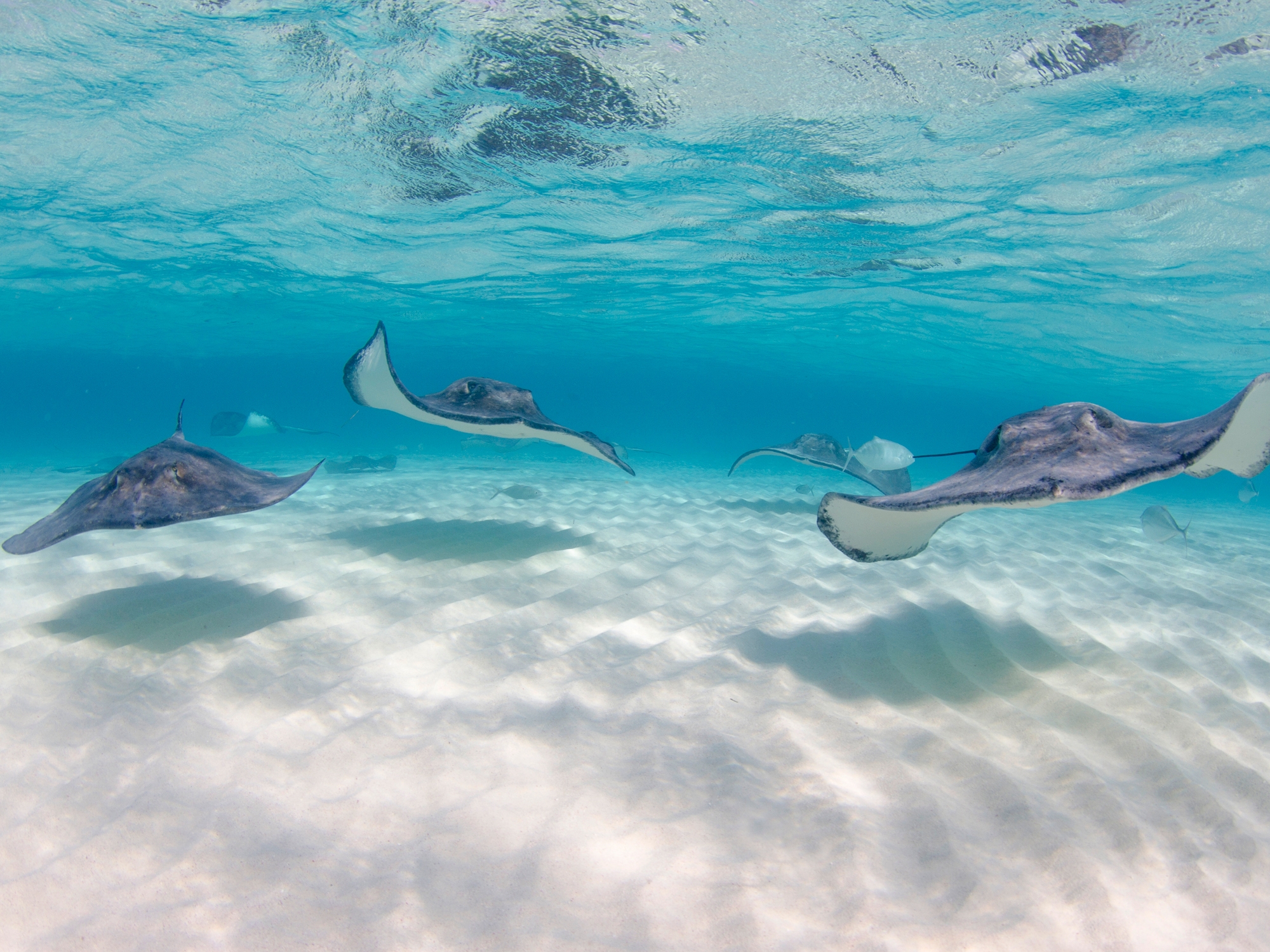
  • Accessibility of emergency medical services may be limited in popular tourist locations such as Stingray City (sandbar), West Bay, and other snorkeling areas. This also applies to boat parties, where there is an increased risk of drowning.
  • Little Cayman has no hospital. The clinic there is only open during business hours, Monday through Friday, but not on weekends.
Scroll to review full advisory
Travel advisory levels

Learn more about Travel Advisory levels

  1. Exercise normal precautions
  2. Exercise increased caution
  3. Reconsider travel
  4. Do not travel

About Cayman Islands

The Cayman Islands is a British Overseas Territory in the western Caribbean Sea. It has 3 islands: Grand Cayman, Cayman Brac, and Little Cayman.  

It is approximately 1.5 times the size of Washington D.C. There is 1 time zone, and the main time zone is Eastern Standard Time (EST). It does not observe daylight saving time. The Cayman Islands is the same time as Washington, D.C. during Eastern Standard Time.

Travel requirements

Tourist visa requirements

  • No tourist visa required.

Vaccinations

  • No vaccinations required.

Valid passport requirements

  • Must be valid at the time of entry and exit.

Currency on entry and exit

  • No currency restrictions.

Tips from the U.S. embassy

  • It is illegal to bring guns, ammunition, and even spent shells or casings into the Cayman Islands without permission.  Local authorities may confiscate your firearm. You could also face arrest, detention, large fines, or imprisonment.
  • Vehicles in the Cayman Islands travel on the left-hand side of the road. This is opposite to the United States.
  • Traffic circles (“roundabouts”) require traffic to move in a clockwise direction. This is opposite to the United States.
  • The Cayman Islands does not allow the importation of any form of cannabis even with a prescription.

Help for U.S. citizens

U.S. Embassy Kingston

142 Old Hope Road
Kingston 6
Jamaica, West Indies

Main telephone:

+876-702-6000

Emergency after-hours:

+876-702-6000

EMBASSY UPDATE
Previous messages

Message failed to load

We are unable to load the message. Visit the main U.S. embassy or consulate website for updates.

Get embassy updates right to your inbox
Enroll In Step
Review how STEP works

Travel guidance for Cayman Islands

Explore our travel guidance topics to prepare for your trip abroad.

Select a topic

Entry, exit, and visa requirements

Helpful resources


Traveling with children

  • Always bring a copy of each child’s birth certificate or other evidence of your legal relationship to each child.
  • When 1 parent is traveling with a child, a notarized consent letter is required from the absent parent. Otherwise, you must show proof of sole custody.
  • All Caymanian minors, including dual U.S. citizens, must have notarized, written permission from a parent or guardian to travel without that parent or guardian.
  • Cayman Island authorities have recently tried to prevent U.S. citizen minors from entering and leaving when traveling without any parent or guardian even with a notarized consent letter from their parents.
  • If you have concerns that your child may be abducted abroad by their other parent or guardian, review our information on how to prevent an international parental child abduction. You can also review our information on Parental Child Abduction in the Cayman Islands.
  • Review our information on Traveling with Minors.

HIV and AIDS restrictions

  • The U.S. Department of State is unaware of any HIV and AIDS entry restrictions for visitors to or foreign residents of the Cayman Islands.

Currency

  • The Cayman Islands Dollar is the official currency of the Cayman Islands. However, U.S. dollars are often accepted as well.
  • The Cayman Islands has ATMs that accept U.S.-issued bankcards.  ATMs may charge high fees and lack cash at some high traffic locations.
  • Most establishments in cities accept credit cards.  Be prepared to pay bills in cash at some resorts and in rural areas.

Safety and security

Emergency phone numbers

Local authorities are responsible for investigating and prosecuting crimes and providing emergency services.


Crime

Most crimes against foreigners and in tourist spots are crimes of opportunity like purse snatching and pickpocketing.

  • Police in the Cayman Islands enforce laws against illegal drugs, guns, and ammunition.
  • Local authorities are responsible for investigating and prosecuting crimes and providing emergency services.

Scams

Follow the Department of State guidelines to protect yourself from scams.


Victims of crime

Local authorities are responsible for investigating and prosecuting crime. You may report crimes to the local police by dialing 911. Additionally, victims of financial crimes including but not limited to romance scams are encouraged to contact the Financial Crime Investigation Unit at RCIPS.FCU@rcips.ky or 949-8797.

Review our information for Victims of Crime.

The U.S. embassy or consulate can:

  • Replace a stolen or lost passport
  • Help you find medical care.
  • Assist you in how to report a crime to the police.
  • Contact relatives or friends with your written consent.
  • Provide general information regarding the criminal justice system.
  • Provide a list of local attorneys.  We do not endorse or recommend any specific attorneys.
  • Provide information on victim’s compensation programs in the United States.
  • Provide an emergency loan for repatriation to the United States or limited medical support in cases of need.
  • Help you find accommodation and options to travel home.

Sexual assault and domestic violence

  • U.S. citizen victims of sexual assault and domestic violence are encouraged to contact the nearest U.S. embassy and local law enforcement for assistance.

Technology use abroad

Mobile devices are vulnerable to compromise, theft, and damage anywhere in the world. Follow these safe practices:

  • Update all software (operating system and apps) before leaving the United States.
  • Use reputable, U.S.-based VPN or VoIP applications. 
  • Don’t connect to public Wi-Fi networks.
  • Research the safety of routes recommended by GPS. The fastest route is not always the safest.
  • Be cautious using dating apps abroad, as scammers often target U.S. citizens.
  • It is a criminal offense to hold a GPS device or mobile phone while driving.

Tourism safety

The tourism industry is not well regulated:

  • Safety inspections for equipment and facilities are rare.
  • Dangerous areas and activities are not always marked with signs.
  • Staff may not be trained or certified.
  • If you get injured, you will likely need to travel to a major city for appropriate or extended medical care as first responders can’t always reach remote areas.
  • Emergency and medical care on Cayman Brac and Little Cayman is limited.  You can usually find better medical care options in Grand Cayman.
  • U.S. citizens are encouraged to have medical evacuation insurance.
  • Review our information on Travel Insurance.

Local laws and customs

Criminal penalties

  • U.S. citizens must follow local laws.
  • If you break local laws, even by mistake, you could be deported, arrested, or imprisoned.
  • Travelers who accidentally break local laws have been detained. Sometimes, this can be for a long time. They may also face criminal charges and even be convicted of a crime.
  • It is illegal to bring guns, ammunition, and even spent shells or casings into the Cayman Islands without permission.  You will likely have your firearm confiscated, be arrested, detained, significantly fined and/or subject to imprisonment.
  • You may be prosecuted in the United States for crimes committed abroad regardless of the local law. Review the information provided by the U.S. Department of Justice about crimes against minors abroad.
  • Before you start a business or profession in the Cayman Islands, seek information from the local authorities about what permits or licenses are required.

Arrest notification

  • If you are arrested or detained, ask officials to notify the U.S. embassy or consulate immediately.

Counterfeit and pirated goods

Counterfeit and pirated goods are common in many destinations.

  • They may be illegal according to local laws. 
  • Counterfeit and pirated goods may pose significant risks to consumer health and safety. 
  • You may be subject to fines or have to surrender counterfeit and pirated goods to authorities if you bring them back to the United States.

Learn more about U.S. restrictions on counterfeit and pirated goods:


Faith-based travelers

Faith based travel includes pilgrimages, service projects, and mission work.

Prepare for your travel using these resources: 


Gay and lesbian travelers

  • There are no legal restrictions on consensual same-sex sexual relations, the provision of information or services to persons on the basis of real or perceived sexual orientation, or the organization of events focused on sexual orientation in the Cayman Islands.
  • Review our information for Gay and Lesbian Travelers.

Travelers with accessibility needs

The law in the Cayman Islands, Disabilities (Solomon Webster) Act, 2016, prohibits discrimination against people with physical, sensory, and intellectual or mental disabilities. The law is enforced.

  • The most common types of accessibility may include accessible facilities, and ease of movement or access.
  • Expect accessibility to be limited in public transportation, some lodging, general infrastructure outside Grand Cayman.
  • Accessibility is common in the capital city.
  • General public sentiment around disability is welcoming.
  • Review our information on Accessibility Needs.

Students


Women travelers


Human rights

  • Review the Department of State’s Human Rights Report for your destination prior to traveling.

Health

Health resources


Emergency phone numbers

  • Dial 911 for emergency medical services.

Ambulance services

Ambulance services are widely available in Grand Cayman but not on the other islands. However, training and response time of emergency responders may poor.

  • Injured or very ill travelers might prefer to take a taxi or their own car to the nearest major hospital. This option can be faster than waiting for an ambulance.

Medical payments and insurance

Make sure you know if your health insurance plan covers any medical expenses abroad. Most U.S. plans do not.

  • The U.S. government does not pay medical bills.
  • U.S. Medicare and Medicaid do not cover expenses or bills abroad.
  • Most hospitals and doctors abroad do not accept U.S. health insurance.
  • Medical care is not free in the Cayman Islands. If you require medical attention, you will incur expenses, even if you are treated in a public healthcare facility.
  • Lack of payment may ban your future travel to the Cayman Islands.
  • Credit card payment is not always available.
  • Private and public hospitals often need payment up front or proof of good insurance before providing treatment or admitting a patient. 
  • Make sure you know if your health insurance plan provides coverage abroad or reimbursement of payments. The CDC provides more information on types of insurance.
  • We strongly recommend supplemental insurance to cover medical evacuation.
  • If you purchase supplemental insurance, you are responsible for seeking reimbursement from the insurance provider. Follow their instructions for filing claims. 

Vaccinations

Stay up to date with the vaccines recommended by the U.S. Centers for Disease Control and Prevention.


Healthcare facilities

Health facilities are available throughout the islands, but emergency and routine medical services on Little Cayman and Cayman Brac are limited. 

  • Most emergency medical needs can be served on Grand Cayman. It may be harder to find adequate health care in rural areas.
  • The U.S. embassy maintains a list of doctors and hospitals. We do not endorse or recommend any specific medical provider or clinic.
  • Hospitals and doctors require payment upfront prior to service or admission.
  • Patients must cover all costs for transfer to or between hospitals.
  • Psychological and psychiatric services are limited, even in larger cities.

Prescription medications

Always carry your prescription medication in original packaging, along with your doctor’s prescription.

  • Check with the Cayman Islands Customs and Border Control to ensure the medication is legal in the Cayman Islands.
  • The Cayman Islands does not allow the importation of any form of cannabis even with prescription. Travelers should avoid carrying any form of cannabis including medicinal, CBD oil, edibles or vapes, even if it may be legal in your home state.  Violations may result in fines and jail time.

U.S. Customs and Border Protection (CBP) and the Food and Drug Administration (FDA) have rules for bringing medication back into the United States.  If you buy medications abroad, the medications must meet CBP’s and the FDA’s requirements to bring them back legally.

The medications must also be for personal use and approved for use in the United States.

For more information:


Assisted Reproductive Technology (ART) and surrogacy

Surrogacy is not permitted in the Cayman Islands.

  • If you are considering traveling to the Cayman Islands to have a child through use of assisted reproductive technology (ART) or surrogacy, please review our information on ART and Surrogacy Abroad

Water quality and food safety

  • Tap water is generally safe to drink and use in cooking.
  • Bottled water and beverages are generally safe. Use major brands and ensure the seal is intact.

Air quality

Air pollution can be a significant problem in many destinations abroad.

Transportation

Road conditions and safety

  • Vehicles in the Cayman Islands travel on the left-hand side of the road.  This is opposite to the United States.

Traffic laws   

You can drive in the Cayman Islands with a valid U.S. driver’s license.

  • Traffic circles (“roundabouts”) require traffic to move in a clockwise direction.  This is opposite in the United States.
  • Motorists entering a roundabout must yield to those already in it.
  • All passengers are required to wear seat belts.
  • Laws against driving while intoxicated are strictly enforced.
  • Speed limits are strictly enforced. 
  • If you are in an accident, call 911 to report the accident, location, and injuries to the Royal Cayman Islands Police Service and exchange your information with the others involved.  Even minor accidents must be reported within 24 hours.
  • It is a criminal offense to hold a GPS device or mobile phone while driving.

Taxis and ride-shares

  • Licensed taxis (yellow license plate) are generally considered safe and reliable though some drivers only accept cash. 
  • Uber and Lyft are not available.

Public and commercial transportation


Aviation safety oversight

  • The U.S. Federal Aviation Administration (FAA) has found that the Cayman Islands’ Civil Aviation Authority meets international standards for aviation safety oversight.  FAA's website includes more information on its assessment program.

Maritime travel

Mariners and passengers planning travel to the Cayman Islands should check the following: 

Weather and natural disasters

Weather conditions

  • Hurricanes –The Cayman Islands lie in the Caribbean hurricane belt and face significant risk from these systems. Hurricanes can bring destructive winds, storm surges, coastal flooding, and heavy rainfall from June through November.
  • Heavy rainfall – Heavy rainfall can cause flash flooding, particularly in low-lying areas during the rainy season, from May through November.
  • Drought—Extended dry periods during the dry season from December to April can strain water resources on the islands.

U.S. citizens living abroad

If you live outside the United States for a long time, you or your family may experience various life events, wish to exercise U.S. citizenship rights, or need to meet U.S. legal obligations while abroad.

Embassies and consulates

U.S. Embassy Kingston

142 Old Hope Road
Kingston 6
Jamaica, West Indies

Main telephone:

+876-702-6000

Emergency after-hours:

+876-702-6000


U.S. Consular Agency Cayman Islands

202B Smith Road Center
150 Smith Road
George Town, Cayman Islands

Mailing Address:
U.S. Consular Agency
P.O. Box 12204
George Town, Grand Cayman
Cayman Islands. BWI
KY1-1010

Main telephone:

+345-945-8173

Emergency after-hours:

+876-702-6000 for U.S. Embassy Kingston, Jamaica

There is a part-time Consular Agent in the Cayman Islands. For routine assistance please contact the U.S. Embassy in Kingston, Jamaica.