Skip to content

The Kyrgyz Republic

Review the latest State Department Travel Advisory about The Kyrgyz Republic. You can plan for safe travel by following the entry and exit requirements, reviewing local laws, and other travel guidance from the U.S. embassy or consulate.

Travel advisory levels

Learn more about Travel Advisory levels

  1. Exercise normal precautions
  2. Exercise increased caution
  3. Reconsider travel
  4. Do not travel

Travel advisory - The Kyrgyz Republic

Level 1 - Exercise normal precautions

2
Date issued: February 10, 2026 -
  • Unrest (U)

Exercise normal precautions

in the Kyrgyz Republic. Some areas have increased risk. Read the entire Travel Advisory.

Advisory summary

The Kyrgyz Republic is generally a safe destination for travelers.

Review our travel guidance for the Kyrgyz Republic to learn how to prepare for a safe trip.

Unrest

U.S. citizen safety may be threatened by political, economic, religious, or other instability and violence. Demonstrations, protests, or armed conflict may threaten your physical safety and prevent you from accessing help or evacuating the area.

Risks in specific areas

Expand all

Level: 2 - Exercise increased caution

Border Region with Tajikistan

Exercise increased caution in areas within 30 kilometers of the border with Tajikistan. On March 13, 2025, the Kyrgyz Republic and Tajikistan signed a bilateral agreement to resume cross-border movement, but the status of the border crossings may change with short notice.

  • There are 2 checkpoints on the border that are open for transit.
  • There are no travel restrictions for U.S. citizens crossing the border.
  • Visitors to the Batken region, especially the Batken and Leilek districts, should remain cautious. There is a recent history of border clashes, so stay vigilant.

If you decide to travel to the Kyrgyz Republic:

  • Monitor local media for breaking news. Be prepared to adjust your plans.
  • Keep travel documents up to date and easily accessible.
  • Have a plan to depart in an emergency that does not depend on U.S. government help. Review our information on Crisis and Evacuations.
  • Enroll in the Smart Traveler Enrollment Program (STEP) to get important updates and alerts from the U.S. embassy. Enrolling helps the U.S. embassy contact you or your emergency contact in an emergency.
  • Review the Country Security Report for the Kyrgyz Republic.
  • Whether you are a first time or frequent traveler, use the International Travel Checklist.
  • Visit the Centers for Disease Control and Prevention (CDC) website for the latest Travel Health Information for the Kyrgyz Republic. We highly recommend that you buy travel insurance before you travel. 
  • Check with your travel insurance provider about evacuation assistance, medical insurance, and trip cancellation coverage.
Scroll to review full advisory
Travel advisory levels

Learn more about Travel Advisory levels

  1. Exercise normal precautions
  2. Exercise increased caution
  3. Reconsider travel
  4. Do not travel

About The Kyrgyz Republic

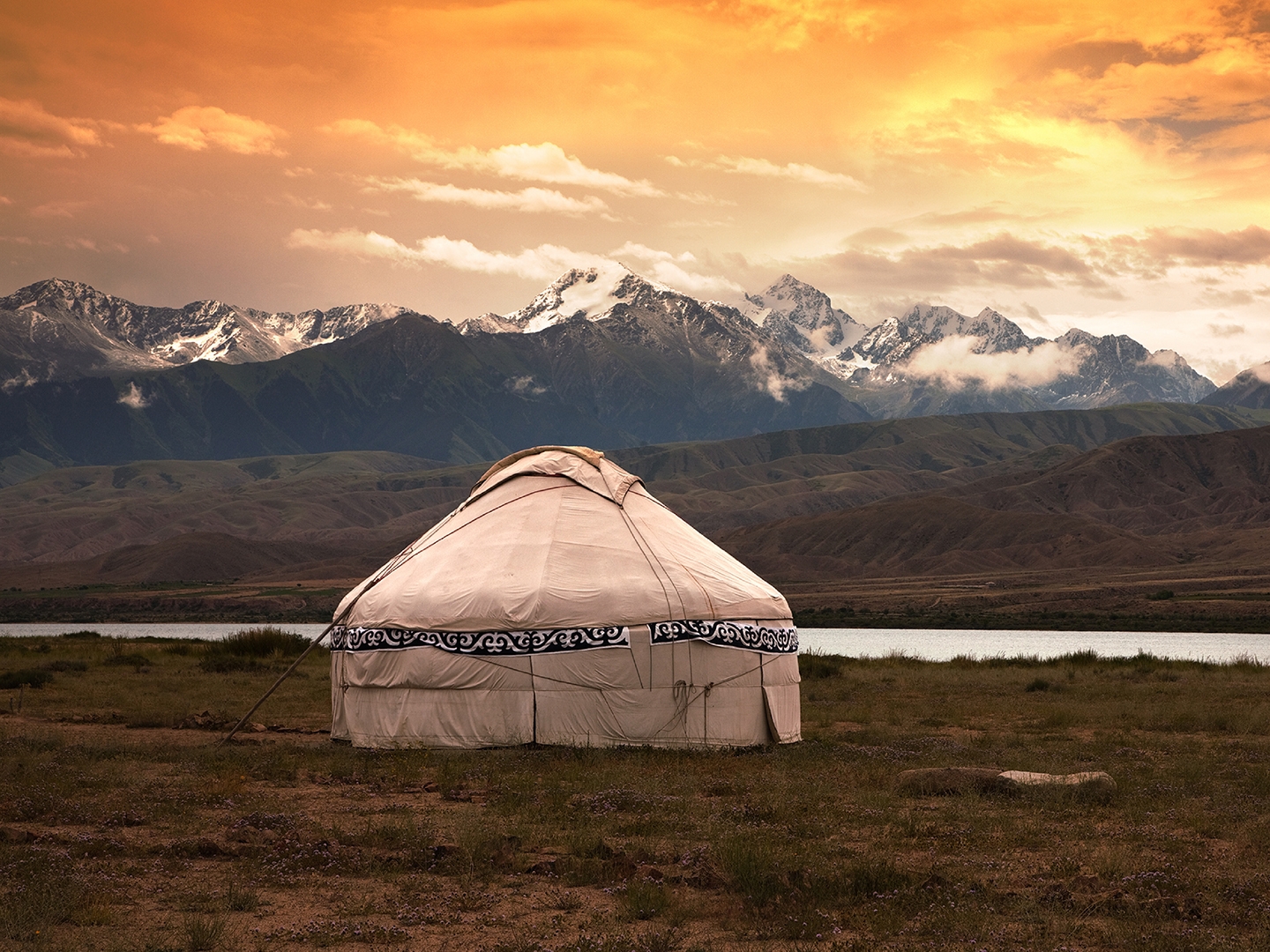
The Kyrgyz Republic is located in Central Asia, in the Eastern Hemisphere.  It is a landlocked country, lying in the Tian Shan and Pamir mountain ranges. It shares land borders with Kazakhstan, Uzbekistan, Tajikistan, and China.

The Kyrgyz Republic is about the same size as South Dakota. The sole time zone is Kyrgyzstan Time (KGT). It does not observe daylight saving time. The Kyrgyz Republic is 11 hours ahead of Washington, D.C. during Eastern Standard Time.

Travel requirements

Tourist visa requirements

  • No visa is required for 30 days or less.
  • A visa is required for more than 30 days.  You must apply for a visa in advance.
  • More visa information can be found at the Kyrgyz E-Visa Portal  

Vaccinations

  • No vaccinations are required

Valid passport requirements

  • Your passport must be valid at the time of entry.
  • Must have 6 months validity beyond your arrival date.
  • 1 blank page available for entry and exit stamps.

Currency on entry and exit

  • Entry maximum: $10,000
  • Exit maximum: $5,000 maximum for non-citizens and non-residents. 

Tips from the U.S. embassy

  • Make sure your passport gets stamped when you enter the country. There have been reports of officials intentionally not stamping passports for visitors. If this happens, you can’t prove you entered legally. 
  • If you plan to bring controlled medications or prohibited substances, you must provide specific documents to cross the border without legal issues.
  • Visitors must follow local laws and regulations. Do not assume that tour operators comply with these laws. 

Help for U.S. citizens

U.S. Embassy Bishkek

171 Prospect Mira
Bishkek 720016
Kyrgyz Republic

Main telephone:

+996-312-597-000

Emergency after-hours:

+996-312-597-733

EMBASSY UPDATE
Previous messages

Message failed to load

We are unable to load the message. Visit the main U.S. embassy or consulate website for updates.

Get embassy updates right to your inbox
Enroll In Step
Review how STEP works

Travel guidance for The Kyrgyz Republic

Explore our travel guidance topics to prepare for your trip abroad.

Select a topic

Entry, exit, and visa requirements

Helpful resources


Entry requirements

Travelers who enter the Kyrgyz Republic under the 30-day visa-free rule must leave for 30 days after their initial stay before returning. This means that in a 60-day period they can only stay for 30 days.

If you stay longer than 30 days, you must pay a fine and get an exit visa before leaving. For this process, contact BishkekACS@state.gov during regular business hours.

  • You can extend your stay for 1 month beyond the 30-day visa-free period by applying here.
  • You must complete this process before the 30-day visa-free period ends.
  • Visit the Ministry of Foreign Affairs website for more details. For longer stays, travelers must apply for the appropriate visa.
  • Register your stay with the appropriate government body. More information on registration is available here.

For additional help, contact the Citizen Inquiry Processing Center. There is an online chat available through Facebook, Instagram, WhatsApp, and Telegram. You can also dial +996-999-312 002 via WhatsApp.


Traveling with children

  • Always bring a copy of each child’s birth certificate or other evidence of your legal relationship to each child.
  • Parents and guardians should prepare a notarized, written permission letter. It should allow their minor children to travel to or from The Kyrgyz Republic alone or with someone else.
  • If you have concerns that your child may be abducted abroad by their parent or guardians, review our information on how to prevent an international parental child abduction. You can also review our information on Parental Child Abduction in the Kyrgyz Republic.
  • Review our information on Traveling with Minors.

HIV and AIDS restrictions

The Kyrgyz Republic has some entry rules for visitors and foreign residents with HIV and AIDS.  An HIV test is required to apply for a work visa. It is also required before enrolling in educational institutions in the Kyrgyz Republic.


Currency

  • The Som is the official currency of the Kyrgyz Republic.
  • The Kyrgyz Republic has ATMs that accept U.S.-issued bankcards. But ATMs are frequently out of order and may charge high fees.

Entering with controlled substances

Travelers planning to travel with prescription medications classified as controlled or prohibited substances, must carry an official letter from a licensed medical provider that includes the following information:

  • Patient’s full name and date of birth
  • Diagnosis for which the medication is prescribed
  • Medication name, dosage, quantity, and duration of use
  • The amount of imported medication should match with the prescription’s data. Documents must have official licensed translation into Russian or Kyrgyz language.

Safety and security

Emergency phone numbers

Local authorities are responsible for investigating crimes and providing emergency services, though visitors should know that response capabilities and the overall threat outlook vary significantly by region. In popular areas like Issyk-Kul, dedicated Tourist Police provide English-language assistance.

While police and medical services are generally helpful, they are often limited in remote mountain and border regions, where ethnic tensions or unexploded landmines from the 1999-2000 Batken Conflict can pose additional threats. For those exploring the backcountry, local emergency responses can be significantly delayed.


Demonstrations

  • Demonstrations are rare. There is a ban on demonstrations other than a single location in Bishkek. Public demonstrations in central Bishkek are frequently restricted by court order.
  • Participating in unauthorized gatherings or filming police responses to such events can lead to detention and deportation. Despite the ban, spontaneous demonstrations sometimes take place in response to political or economic issues.
  • Even demonstrations intended to be peaceful can turn confrontational and possibly become violent. 
  • Avoid areas around protests and other demonstrations.
  • Check local media for updates and traffic advisories.
  • Avoid live streaming or filming demonstrations.

Crime

The Kyrgyz Republic is generally safe for most visitors, but petty and violent crime occasionally occur.

  • There have been reports of muggings of foreigners in downtown Bishkek at night and areas outside of Bishkek. The threat increases particularly around areas near bars, nightclubs, and parks.
  • Other common crimes include auto theft and pickpocketing. They occur in crowded places such as markets, especially Bishkek’s Osh Bazaar, large department stores, internet cafes, and public transportation.
  • While violent crime in Bishkek and other large cities is rare, violent incidents do occur and occasionally involve organized groups. The most common violent incidents are nighttime robberies.  However, minor altercations, including traffic violations, can become violent as well.  The police are generally responsive to reports of crimes. 
  • Harassment and extortion by both genuine law enforcement and imposters posing as officials are persistent threats, particularly in transit hubs and nightlife districts. These individuals may demand to see your identification as a pretext to search your belongings or solicit "on-the-spot" fines.
  • Never voluntarily give your wallet to anybody.
  • If pressured by a police officer, tell the officer that you will report his behavior to the U.S. embassy and to the officer’s supervisors. Try to get the officer's name, badge number, and license plate number. Make sure to note where the incident happened. 

Scams

  • Follow the Department of State guidelines to protect yourself from scams.
  • If you are a victim of a scam, learn how the FBI can help.

Financial scams and Internet romance scams are common in the Kyrgyz Republic. Be careful of anyone asking for money, especially those who start a "romantic" relationship online or claim local authorities want money. Scams often begin through online posts, emails, or letters. Scammers pretend to be U.S. citizens in need of help.

Common scams in the Kyrgyz Republic include:  

  • Romance or online dating
  • Drink spiking
  • Money transfers
  • Lucrative sales
  • Contracts with promises of large payments
  • Grandparent or relative targeting
  • Free trip or travel bags
  • Lotteries
  • Inheritance notices
  • Work permits and job offers
  • Bank overpayments
  • Acting as a U.S. government official asking payment for services
  • Corruption-related scams like bribe-seeking by officials
  • 'Meet-and-Greet' scams

Victims of crime

Local authorities are responsible for investigating and prosecuting crime.

The U.S. embassy or consulate can:

  • Replace a stolen or lost passport.
  • Help you find medical care.
  • Assist you in how to report a crime to the police.
  • Contact relatives or friends with your written consent.
  • Provide general information regarding the criminal justice system.
  • Provide a list of local attorneys. We do not endorse or recommend any specific attorneys.
  • Provide information on victim’s compensation programs in the United States.
  • Provide an emergency loan for repatriation to the United States or limited medical support in cases of need.
  • Help you find accommodation and options to travel home.

Sexual assault and domestic violence

  • U.S. citizen victims of sexual assault and domestic violence are encouraged to contact the embassy and local law enforcement for assistance. Crisis centers exist in some major cities across the Kyrgyz Republic, but there is limited English-language help. 

Technology use abroad

Mobile devices are vulnerable to compromise, theft, and damage anywhere in the world. Follow these safe practices:

  • Update all software (operating system and apps) before leaving the United States.
  • Use reputable, U.S.-based VPN or VoIP applications.
  • Don’t connect to public Wi-Fi networks.
  • Research the safety of routes recommended by GPS. The fastest route is not always the safest.
  • Be cautious using dating apps abroad, as scammers often target U.S. citizens.

Devices with concealed recording or listening capabilities may be restricted or prohibited. Drones are allowed in the Kyrgyz Republic. However, you must get a license after completing a course.  Flying over private property within city limits is not permitted. Cellphone registration rules

If you bring a cell phone, you may need to register it with the government. This applies to:

  • Phones you buy in the Kyrgyz Republic
  • Phones you mail to yourself
  • Phones you bring with you when you travel that will use a local phone plan

Every phone has a special ID number called an IMEI code. You must register this number.

If you’re just visiting and using a foreign phone plan (roaming), you don’t need to register your phone.


Tourism safety

The tourism industry is not well regulated:

  • Safety inspections for equipment and facilities are rare.
  • Dangerous areas and activities are not always marked with signs.
  • Staff may not be trained or certified.
  • If you get injured, you will likely need to travel to a major city for appropriate medical care.
  • First responders cannot reach remote areas in case of emergencies.
  • U.S. citizens are encouraged to have medical evacuation insurance.
  • Review our information on Travel Insurance.

Hunting and adventure travel

  • It is illegal to hunt without a proper license. You need a permit from the Kyrgyz government to import or own firearms before you arrive.
  • Foreigners without official permission to hunt or take animals out may face criminal or civil charges.
  • Hikers and adventure travelers should prepare for sudden weather changes, like rockslides, mudslides, avalanches, heavy rain, and snow.
  • Cell phone reception in popular hiking areas is often poor or unavailable.
  • If you get lost or hurt, rescue help is limited. Local rescue teams don't have as much equipment or training as teams in the United States, Canada, or Europe.
  • Review the U.S. Centers for Disease Control and Prevention (CDC) tips for Adventure Travel.

Local laws and customs

Criminal penalties

  • U.S. citizens must follow local laws.
  • If you break local laws, even by mistake, you could be deported, arrested, or imprisoned.
  • Travelers who accidentally break local laws have been detained. Sometimes, this can be for a long time. They may also face criminal charges and even be convicted of a crime.
  • Individuals establishing a business or practicing a profession that requires additional permits or licensing should seek information from the local authorities prior to practicing or operating a business. 
  • You must always carry your passport, or a certified copy. If local officials stop you, they may request proof of identity, citizenship, and permission to be in the Kyrgyz Republic (visa or entry stamp). 
  • Officials may take you for questioning if you do not have your passport with you. For a fee and with a scheduled appointment, the U.S. embassy can provide you with a certified copy of your passport. You can use this copy if you’re stopped. 
  • It is illegal to take pictures of certain buildings. Ask before taking pictures of anything of possible military or security interest, including government buildings, people in police or military uniforms, or food markets. 
  • The legal blood alcohol level for driving in the Kyrgyz Republic is zero. Driving under the influence may land you immediately in jail, no matter how little you consumed. 
  • Penalties for possessing, using, or trafficking in illegal drugs in the Kyrgyz Republic are severe. Convicted offenders can expect long jail sentences and heavy fines. 
  • You may be prosecuted in the United States for crimes committed abroad regardless of the local law. Review the information provided by the U.S. Department of Justice about crimes against minors abroad.
  • Before you start a business or a profession in the Kyrgyz Republic seek information from the local authorities about what permits or licenses are required.  

Arrest notification

  • If you are arrested or detained, ask police or prison officials to notify the U.S. embassy immediately. 

Counterfeit and pirated goods

Counterfeit and pirated goods are common in many destinations.

  • They may be illegal according to local laws.
  • Counterfeit and pirated goods may pose significant risks to consumer health and safety.
  • You may be subject to fines or have to surrender counterfeit and pirated goods to authorities if you bring them back to the United States.

Learn more about U.S. restrictions on counterfeit and pirated goods:


Faith-based travelers

Faith based travel includes pilgrimages, service projects, and mission work. It is illegal to proselytize. 

NARAIR must approve all religious activities organized in public locations other than churches, mosques, temples, or official places of worship at least 10 days in advance. Check with your host organization to ensure the participation in local spiritual activities follows religious laws and regulations.  

Prepare for your travel using these resources: 


Gay and lesbian travelers

There are no legal restrictions on same-sex sexual relations in the Kyrgyz Republic. However, the Kyrgyz Republic does not prohibit discrimination on the basis of sexual orientation.  

  • Local authorities sometimes use other laws as an excuse to target people because of their sexual orientation. People may face unfair treatment and criminal charges.
  • Many lesbian and gay individuals report that they are often threatened, harassed, or extorted by law enforcement officials. 
  • Review our information for Gay and Lesbian Travelers.

Travelers with accessibility needs

  • The law in the Kyrgyz Republic prohibits discrimination against persons with physical, sensory, intellectual and mental disabilities, but the law is not enforced.
  • Social acceptance of persons with disabilities in public is not as prevalent as in the United States.
  • Access to sidewalks and public buildings may be limited due to a lack of ramps or access points.
  • Public infrastructure is limited and may be in poor condition. Expect accessibility to be limited in public transportation, lodging, communication or information, and general infrastructure.
  • Conditions in rural or outlying areas are substantially worse than in developed areas. 
  • There are limited possibilities for repair or replacement of personal aids, equipment, or devices. Sign language interpretation options are limited.
  • Personal assistants are available but may not have training or experience comparable to personal assistants in the United States. 
  • Review our information on Accessibility Needs.

Students


Women travelers

Forced marriage, bridal kidnapping, and high rates of domestic violence are known trends in the Kyrgyz Republic.


Human rights

If you travel to the Kyrgyz Republic in any religious capacity, you must register with the National Agency for Religious Affairs and Interethnic Relations and obtain the appropriate visa. 

U.S. service members

Country clearance through Aircraft and Personnel Automated Clearance System (APACS) is required before arrival. 

Health

Health resources


Emergency phone numbers


Ambulance services

  • Ambulance services are not widely available. Training and availability of emergency responders may be poor.
  • Emergency responders may not be present throughout the country or are unreliable in most areas except Bishkek, Osh, and other large cities.
  • Ambulances are not equipped with advanced medical equipment and are typically not staffed with trained paramedics.
  • Injured or very ill travelers, particularly outside of large cities, might prefer to take a taxi or their own car to the nearest major hospital. This option can be faster than waiting for an ambulance.
  • A list of private ambulance services can be found on the U.S. embassy’s website.

Medical payments and insurance

Make sure you know if your health insurance plan covers any medical expenses abroad. Most U.S. plans do not.

  • U.S. Medicare and Medicaid do not cover expenses or bills abroad. 
  • Most hospitals and medical professionals require cash payment.
  • Make sure you know if your health insurance plan provides coverage abroad or reimbursement of payments. The CDC provides more information on types of insurance.

Vaccinations

Stay up to date with the vaccines recommended by the U.S. Centers for Disease Control and Prevention.


Tuberculosis

  • Tuberculosis is prevalent across the country.  The risk is higher in crowded, poorly ventilated places.
  • Tuberculosis testing and treatment are available nationwide, though care quality varies by region. 

Healthcare facilities

  • The U.S. embassy maintains a list of doctors and hospitals here. We do not endorse or recommend any specific medical provider or clinic. 
  • Public medical clinics lack basic resources and supplies.
  • Hospitals and doctors often require payment upfront prior to service or admission.
  • Credit card payment is common but not always available.
  • U.S. citizens often travel outside of the Kyrgyz Republic for medical treatment, including for routine procedures.
  • Medical staff may speak little or no English.
  • Psychological and psychiatric services are limited, even in larger cities.
  • Hospital-based care is only available through government institutions. 

Prescription medications

  • Always carry your prescription medication in original packaging, along with your doctor’s prescription
  • Check the Ministry of Justice’s website  to ensure the medication is legal in the Kyrgyz Republic.
  • Exercise caution when purchasing medication abroad. Pharmaceuticals are usually easy to buy with few controls.

U.S. Customs and Border Protection (CBP) and the Food and Drug Administration (FDA) have rules for bringing medication back into the United States. If you buy medications abroad, the medications must meet CBP’s and the FDA’s requirements to bring them back legally.

The medications must also be for personal use and approved for use in the United States.

For more information:


Assisted Reproductive Technology (ART) and Surrogacy

  • If you are considering traveling to the Kyrgyz Republic to have a child through use of assisted reproductive technology (ART) or surrogacy, please review our information on ART and Surrogacy Abroad.
  • Surrogacy is largely unregulated in the Kyrgyz Republic with no clear legal protection for foreign intended parents. Surrogacy agreements may not be enforced by Kyrgyz courts.

Water quality and food safety

  • Tap water is generally safe to drink and use in cooking in Bishkek.
  • In rural areas tap water is not always safe to drink or cook with.
  • In some locations, tap water is not available every day.
  • Bottled water and beverages are generally safe. Use major brands and ensure the seal is intact.
  • Many restaurants and hotels serve tap water unless bottled water is specifically requested.
  • You may want to request no ice in your drinks since it may be made using tap water.
  • Make water safe by filtering, boiling, disinfecting, or distilling.
  • Impure water can cause diseases like typhoid, cholera, hepatitis, and dysentery.

Altitude

  • Many cities in the Kyrgyz Republic are at high altitude.
  • Be aware of the symptoms of altitude sickness and take precautions before you travel.
  • Visit the U.S. Centers for Disease Control and Prevention website for more information about Travel to High Altitudes.

Air quality

Air pollution is a significant problem in several major cities in the Kyrgyz Republic

.Consider the impact seasonal smog and heavy particulate pollution may have on you and consult your doctor before traveling if necessary. 

The air quality varies considerably and fluctuates with the seasons. It is typically at its worst in the winter. People at the greatest risk from particle pollution exposure include: 

  • Infants, children, and teens 
  • People over 65 years of age 
  • People with lung disease such as asthma and chronic obstructive pulmonary disease (COPD), which include chronic bronchitis and emphysema 
  • People with heart disease or diabetes 
  • People who work or are active outdoors 
  • Review our Medicine and Health page, for general health information,

Travel and transportation  

Road conditions and safety

Car accidents that cause serious injuries are common in the Kyrgyz Republic. City roads are dangerous because of potholes, open manholes, poor lighting, and people walking into traffic.

  • If your car breaks down, there are no tow trucks or roadside help available.
  • Roads outside cities are in bad condition. Mountain roads are narrow and dangerous, with sharp drops and no guardrails. These roads can close suddenly because of snow, ice, or falling rocks.
  • Horses and cattle roam freely across the country, and you may find them on roads at night.

Traffic laws

You must follow all local traffic laws. Passengers must wear seat belts and motorcycle riders must wear helmets. 

  • Drunk driving and hit-and-run accidents are common. 
  • Drivers often speed on the newly upgraded roads that connect main cities and towns. 
  • Many local drivers do not stop at red lights, pass vehicles when it is dangerous or prohibited to do so, drive into oncoming traffic, and do not stop for pedestrians. 
  • Traffic police have been known to demand payment of arbitrary "fines" for infractions.
  • Make all payments for traffic fines at local banks. Some police vehicles now offer terminals for people with bank cards to pay their fines immediately. 
  • International driving permits are recognized in the Kyrgyz Republic. 

Taxis and ride-shares

  • Use officially registered taxi apps. Do not hail taxis off the street.
  • Apps typically show a fixed fare and let you track the ride. This helps you avoid common scams or overcharging.
  • Carry cash in the local currency (Kyrgyz Som). Card payment may not always work reliably.
  • Avoid using "private taxis" and unmarked taxis. Do not enter a cab that already has passengers. 
  • Taxis ordered by telephone typically charge based on set rates. The driver’s cellular phone operates as the meter. 
  • If hailing a taxi on the street, negotiate a price before you get in the cab. Cab drivers often try to charge foreigners a higher rate. Many taxi services now have cabs with meters, but passengers should confirm that these work before entering the cab. 

Public and commercial transportation


Aviation safety oversight

  • The U.S. Federal Aviation Administration (FAA) has not assessed the Kyrgyz Republic’s Civil Aviation Authority for compliance with international standards for aviation safety oversight. 
  • FAA’s website includes more information on its assessment program.  

Weather and natural disasters

Weather conditions

The Kyrgyz Republic has mountains, so different weather dangers happen at different times of the year.

Floods and mudflows
  • From spring to early summer (March to June), floods and mudflows are most common because snow melts and heavy rains fall.
Glacial lake floods
  • In summer (June to August), mountain lakes formed by melting glaciers can suddenly burst and cause dangerous floods in high-mountain areas.
Avalanches 
  • From winter through spring (December to May), avalanches happen often in the mountains after heavy snowfall or when snow starts to melt.
Heavy snow and freezing temperatures
  • During winter and the seasons in between (fall and spring), heavy snow and freezing temperatures can close roads and make travel difficult, especially in rural areas.
Landslides and earthquakes
  • Year-round, landslides and earthquakes can happen anywhere in the mountains, but they are most common in the south and high-altitude areas.

U.S. citizens living abroad

Living abroad resources

If you live outside the United States for a long time, you or your family may experience various life events, wish to exercise U.S. citizenship rights, or need to meet U.S. legal obligations while abroad.

Embassies and consulates

U.S. Embassy Bishkek

171 Prospect Mira
Bishkek 720016
Kyrgyz Republic

Main telephone:

+996-312-597-000

Emergency after-hours:

+996-312-597-733