Travel.State.Gov US Department of State Homepage

Travel advisory - Republic of Singapore

Level 1 - Exercise normal precautions

Date issued: March 09, 2025 -

Exercise normal precautions

in Singapore.

Advisory summary

Singapore is generally a safe destination for travelers.

Review our travel guidance for Singapore to learn how to prepare for a safe trip.

If you decide to travel to Singapore:

  • Enroll in the Smart Traveler Enrollment Program (STEP) to get important updates and alerts from the U.S. embassy. Enrolling helps the U.S. embassy contact you make it easier to locate you in an emergency.
  • Review the Country Security Report for Singapore. 
  • You are subject to local laws when traveling overseas. The U.S. government cannot guarantee your release when you are detained or arrested abroad.
  • Visit the Centers for Disease Control and Prevention (CDC) website for the latest Travel Health Information for Singapore
  • Whether you’re a first time or frequent traveler, use the International Travel Checklist.
  • We highly recommend that you buy travel insurance before you travel. Check with your travel insurance provider about evacuation assistance, medical insurance, and trip cancellation coverage. 
Scroll to review full advisory
Travel advisory levels
Learn more about
  1. Exercise normal precautions
  2. Exercise increased caution
  3. Reconsider travel
  4. Do not travel

About Singapore

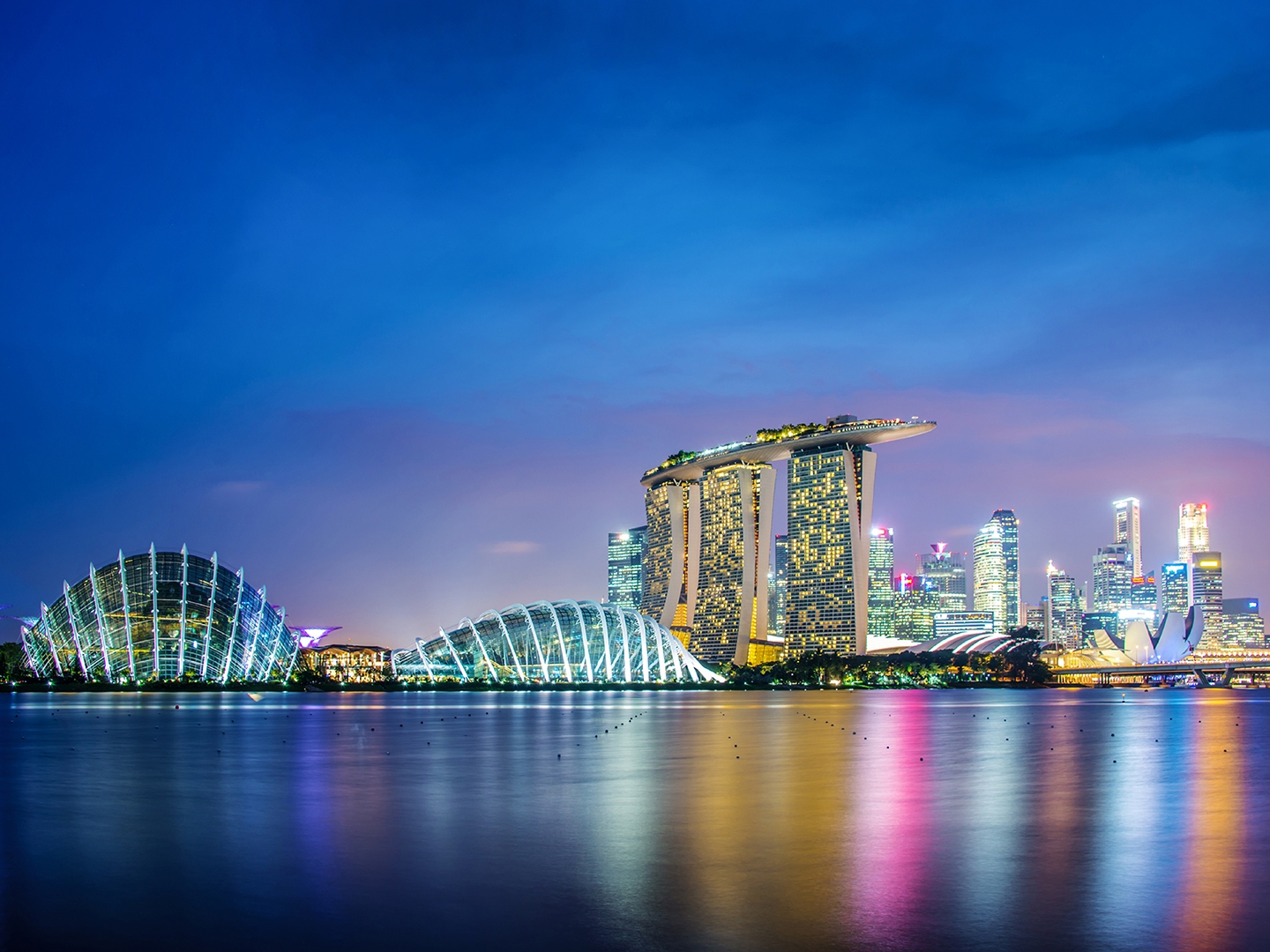
Singapore is located in Southeast Asia, in both the Northern and Eastern Hemispheres. It has maritime borders with Malaysia, Indonesia, the Straits of Malacca and the South China Sea. It shares no direct land borders with any country but is connected to Malaysia by two causeways. 

Singapore is about 3.5 times the size of Washington, D.C.  The main time zone is Singapore Standard Time (SST). It does not observe daylight saving time. Singapore is 12 hours ahead of Washington, D.C. during Eastern Standard Time.

Travel requirements

Tourist visa requirements

  • No visa is required for 90 days or less.

Vaccinations

  • Yellow fever: Required for travelers from certain countries in South America or Africa.

Valid passport requirements

  • Must have 6 months validity beyond your date of departure.
  • 1 blank page available per stamp. 

Currency on entry and exit

  • Entry maximum: 20,000 Singapore Dollars or (Approx. $15,500 USD)
  • Exit maximum: 20,000 Singapore Dollars or (Approx. $15,500 USD)

Tips from the U.S. embassy

  • You must complete your Singapore Arrival Card (SGAC) with Electronic Health Declaration no more than 3 days before entering Singapore. SGAC submission is free. Visit Singapore’s immigration & Checkpoints Authority website to submit the SGAC.
  • Always carry your passport. You may be taken in for questioning if you don’t have your passport with you.
  • It is illegal to possess, purchase, or use vapes and e-cigarettes.
EMBASSY UPDATE

Message failed to load


We are unable to load the message. Visit the main U.S. embassy or consulate website for updates.

Get embassy updates right to your inbox
Enroll In Step
Review how STEP works

Travel guidance for Singapore

Explore our travel guidance topics to prepare for your trip abroad.

Select a topic

Entry, exit, and visa requirements

Helpful resources


Traveling with children

  • Check U.S. passport expiration dates carefully for all travelers. 
  • Children must also submit SGACs.  
  • Always bring a copy of each child’s birth certificate or other evidence of your legal relationship to each child. 
  • When one parent is traveling with a child, a notarized consent letter is required from the absent parent. Otherwise, you must show proof of sole custody. 
  • If you have concerns that your child may be abducted abroad by their other parent or guardian, review our information on how to prevent an international parental child abduction. You can also review our information on Parental Child Abduction in Singapore.
  • Review our information on Traveling with Minors

HIV and AIDS restrictions

  • Singapore has some entry rules for visitors and foreign residents with HIV and AIDS. 
  • Foreign workers applying for an employment pass are required to undergo a medical screening for HIV and AIDS. A positive test will result in the rejection of a foreign worker’s application.
  • You can verify this information with the Embassy of Singapore before you travel.

Currency

  • The Singapore Dollar is the official currency of Singapore. 
  • Singapore has ATMs that accept U.S.-issued bankcards. 
  • Credit cards and other electronic forms of payment are widely accepted. 
  • Please visit Singapore’s Immigration & Checkpoints Authority website for information about currency requirements entering and exiting Singapore.

Safety and security

Emergency phone numbers

Local authorities are responsible for investigating and prosecuting crimes and providing emergency services.


Crime

  • Singapore is generally safe, and crime against foreigners is rare.  

Scams

Follow the Department of State guidelines to protect yourself from scams.

If you are a victim of a scam, learn how the FBI can help.   

Financial scams are common in Singapore. Be careful of anyone asking for money, especially those who start a "romantic" relationship online or claim local authorities want money. Scams often begin through online posts, emails, or letters. Scammers pretend to be U.S. citizens in need of help. 

Common scams include:

  • People claiming to be U.S. military personnel
  • People claiming to be detained or hospitalized abroad
  • Romance and online dating 
  • Money transfers 
  • Grandparent and relative targeting 
  • Free trip or luggage 
  • Lotteries 
  • Inheritance notices 
  • Work permits and job offers

Victims of crime

Local authorities are responsible for investigating and prosecuting crime. You may report crimes to the local police by dialing 999.  You may contact the U.S. embassy in Singapore by dialing +65-6476-9100.

Review our information for Victims of Crime.  

The U.S. embassy can:

  • Replace a stolen or lost passport.
  • Help you find medical care.  
  • Assist you in how to report a crime to the police. 
  • Contact relatives or friends with your written consent. 
  • Provide general information regarding the criminal justice system.  
  • Provide a list of local attorneys. We do not endorse or recommend any specific attorneys. 
  • Provide information on victim’s compensation programs in the United States. 
  • Provide an emergency loan for repatriation to the United States or limited medical support in cases of need. 
  • Help you find accommodation and options to travel home.

Sexual assault and domestic violence

U.S. citizen victims of sexual assault and domestic violence are encouraged to contact the U.S. Embassy at +65-6476-9100 and local law enforcement, by dialing 999, for assistance.


Technology use abroad

Mobile devices are vulnerable to compromise, theft, and damage anywhere in the world. Follow these safe practices:

  • Update all software (operating system and apps) before leaving the United States. 
  • Use reputable, U.S.-based VPN or VoIP applications.  
  • Don’t connect to public Wi-Fi networks. 
  • Research the safety of routes recommended by GPS. The fastest route is not always the safest.
  • Be cautious using dating apps abroad. Scammers often target U.S. citizens.
  • Please visit Singapore’s Civil Aviation Authority of Singapore (CAAS) for more information about unmanned aircrafts.

Tourism safety

The tourism industry is regulated:

  • Rules and safety inspections are regularly enforced. 
  • Dangerous areas and activities are marked with signs. 
  • Trained and certified staff are usually there to help with organized activities. 
  • If you get injured, you can usually get medical help locally. 
  • In rural areas, it might take longer for medical help to arrive and help. 
  • U.S. citizens are encouraged to have medical evacuation insurance.  
  • Review our information on Travel Insurance.

Local laws and customs

Local laws

  • U.S. citizens must follow local laws.
  • If you break local laws, even by mistake, you could be deported, arrested, convicted of crime, imprisoned for a long time or even caned (a form of physical punishment). 
  • You may be prosecuted in the United States for crimes committed abroad regardless of the local law. Review the information provided by the U.S. Department of Justice about crimes against minors abroad.
  • Before you start a business or a profession in Singapore, seek information from the local authorities about what permits or licenses are required.  
  • Always carry your passport with you. You may be taken in for questioning if you don’t have your passport with you.

Arrest notification

  • If you are arrested or detained, ask officials to notify the U.S. embassy or consulate immediately.

Criminal penalties

Be aware of the following penalties for certain crimes in Singapore:

  • Jaywalking, littering, or spitting - possible arrest 
  • Vandalism offenses - mandatory caning (a form of physical punishment) 
  • Immigration violations - possible imprisonment, caning, or fines  
  • Possession of vapes and e-cigarettes – fines, potential deportation, and ban from re-entering Singapore 
  • Drug-related charges - Severe penalties, including the death penalty or caning.
  • Sex crimes or sexually inappropriate behavior - possible jail time, caning or fines. Making offensive comments, sending unwanted messages, or taking inappropriate photos of women can result in fines or imprisonment. This is called “insulting the modesty of a woman.” If there is any unwanted physical contact, such as touching or molestation, the laws are gender neutral, and the punishments are usually more severe.
  • Drunk and disorderly conduct – it can lead to a SG$1,000 fine or imprisonment. It is illegal to drink alcohol in a public place between 10:30 pm and 7:00 am. The areas of Geylang and Little India are designated as “Liquor Control Zones” where drinking in public places is prohibited all weekend, on public holidays, and on the eve of public holidays.
  • Weapons: The manufacture, use, sale, storage, transport, importation, exportation and possession of firearms are strictly prohibited without a valid license. The punishment for any person found in unlawful possession of firearms or ammunition ranges in imprisonment of 5–20 years, including caning. Those trafficking in firearms may face the death penalty. Singapore also prohibits concealed weapons, including flick knives, gravity knives, wasp knives, throwing knives, knuckledusters, ninja stars, catapults or slingshots, and nunchaku. 
  • Visit Singapore’s Immigration & Checkpoint Authorities website for an overview of prohibited goods.

Illegal drugs

If you are suspected of consuming or possessing illegal drugs, police may:

  • Conduct unannounced drug tests and property searches, including upon entry into Singapore.
  • Require you to provide a urine or blood sample on short notice.
  • A positive finding or an unwillingness to participate can lead to denial of entry into Singapore, detention, or confiscation of your passport while under investigation.
  • Singaporean authorities may arrest and convict any permanent residents of Singapore even if they have consumed illegal drugs outside of Singapore.

Vapes and e-cigarettes

Vaping is illegal in Singapore. It is illegal to possess, purchase, or use vapes and e-cigarettes.

  • Foreigners found in possession of vapes or e-cigarettes will have them seized and could be fined. 
  • Repeat offenders or those using etomidate vapes (K-pods) may face more severe penalties, including deportation and a ban from re-entering Singapore.  
  • For more information, please visit Stop Vaping

Dual nationality

  • Singapore does not recognize dual nationality beyond the age of 22. It strictly enforces universal national service for all male citizens and permanent residents. To determine if you will have a national service obligation, you should contact the Singaporean Ministry of Defense.

Public demonstrations

Public demonstrations are legal only at Speakers’ Corner in Hong Lim Park and after pre-registering the event. All other outdoor public assemblies require a police permit.

  • Singapore forbids foreign nationals who are not permanent residents from observing permitted public demonstrations, assemblies, and processions at Speakers’ Corner. 
  • The law does not distinguish between participants and observers, so anyone at Speakers’ Corner could be considered part of an event. Penalties may be severe, including large fines, or imprisonment.

Counterfeit and pirated goods

Counterfeit and pirated goods are common in many destinations.

  • They may be illegal according to local laws.  
  • Counterfeit and pirated goods may pose significant risks to consumer health and safety.  
  • You may be subject to fines or have to surrender counterfeit and pirated goods to authorities if you bring them back to the United States.  

Learn more about U.S. restrictions on counterfeit and pirated goods:


Travelers with accessibility needs

Singapore has set a clear code of standards for barrier-free accessibility. This includes facilities for people with physical disabilities in all new buildings and a mandate that older structures be gradually upgraded. Cultural norms and general public sentiment around disability are generally positive.

  • The law in Singapore prohibits discrimination in the workplace against people with physical, sensory, intellectual or mental disabilities. The law is enforced.
  • Accessibility is common in public transportation and public spaces.  Most MRT stations have wider gates and elevators and lifts to assist with mobility issues.  
  • SMRT trains and buses feature dedicated wheelchair spaces.  
  • Sidewalks are wide and well-maintained.  
  • Key cultural attractions are equipped with clean and accessible facilities and restrooms, and some museums offer wheelchair loans.  
  • Changi Airport provides wide, automated special assistance lanes to make the airport journey faster and more seamless for passengers with disabilities. 
  • Visit Accessible Singapore for more resources and information. 
  • Review our information on Accessibility Needs.

Students


Women travelers


Human rights

  • Review the Department of State’s Human Rights Report for your destination prior to traveling.

Health

Health resources


Emergency phone numbers


Ambulance services

  • Ambulance services are widely available.


Medical Records

  • Singapore uses a National Electronic Health Records (NEHR), which is a national collection of selected health information about individuals.  Physicians may be required to report medical information without the patient's consent.
  • Employment pass holders are subject to medical exams and may be denied or deported on medical grounds, including for HIV infection.
  • Review our Medicine and Health page for more information.

Medical payments and insurance

 Make sure you know if your health insurance plan covers any medical expenses coverage abroad. Most U.S. plans do not.

  • The U.S. government does not pay medical bills.
  • U.S. Medicare and Medicaid do not cover expenses or bills abroad.
  • Most hospitals and doctors abroad do not accept U.S. health insurance.
  • Medical care is not free in Singapore. If you require medical attention, you will incur expenses, even if you are treated in a public healthcare facility.
  • Make sure you know if your health insurance plan provides coverage abroad or reimbursement of payments. The CDC provides more information on types of insurance.
  • We strongly recommend supplemental insurance to cover medical evacuation.

Vaccinations

Stay up to date with the vaccines recommended by the U.S. Centers for Disease Control and Prevention.


Healthcare facilities

  • Health facilities are available throughout Singapore.
  • The U.S. embassy maintains a list of doctors and hospitals. We do not endorse or recommend any specific medical provider or clinic.
  • Private hospitals usually require advance payment or proof of adequate insurance before admitting a patient.

Prescription medications

U.S. Customs and Border Protection (CBP) and the Food and Drug Administration (FDA) have rules for bringing medication back into the United States.  If you buy medications abroad, the medications must meet CBP’s and the FDA’s requirements to bring them back legally. 

The medications must also be for personal use and approved for use in the United States.

For more information:


Assisted Reproductive Technology (ART) and surrogacy

  • Surrogacy is illegal in Singapore. For additional information, visit the Government of Singapore’s Ministry of Health website 
  • If you are considering traveling to Singapore to have a child through use of assisted reproductive technology (ART), please review our information on ART

Water quality and food safety

  • Tap water is generally safe to drink and use in cooking. 
  • Bottled water and beverages are generally safe. Use major brands and ensure the seal is intact.
  • Many restaurants and hotels serve tap water unless bottled water is specifically requested. 
  • Eating uncooked vegetables and fruits can make you sick.

Air quality

Air pollution can be a significant problem in many destinations abroad. 

Haze warning: Air pollution from forest fires in neighboring countries occurs intermittently from July to October. Singapore’s National Environmental Agency’s Haze provides public updates on conditions.

  • Check NASA’s Air Quality Forecast. It uses Artificial Intelligence (AI), historical data, and global pollution modeling to generate a 3-day forecast of expected air quality in Singapore.
  • For information about common air pollutants, check the CDC’s Air Quality page.
  • For information about the U.S. Air Quality Index and health guidance, check out the EPA’s AirNow.

Mosquito-borne disease

Transportation

Road conditions and safety

Singapore has highly developed and well-maintained roads and highways.


Traffic laws

  • Driving is on the left-hand side of the road. 
  • Foreigners residing in Singapore for less than 12 months must possess a foreign driving license and International Driving Permit (IDP). 
  • Foreigners residing in Singapore for more than 12 months are required to convert their foreign driving license to a valid Singapore Driving License.
  • For exceptions and more guidance please visit the Singapore Police Force website. Laws involving traffic rules, vehicle registration, and liability in case of accidents are strictly enforced. Violations may result in criminal penalties.

Taxis and ride-shares

  • Taxis are widely available. They are inexpensive and reliable.
  • Ride sharing services like Grab, Gojek, and TADA are popular and booked through smartphone apps.

Public and commercial transportation


Aviation safety oversight

  • The U.S. Federal Aviation Administration (FAA) has found that Singapore’s Civil Aviation Authority meets international standards for aviation safety oversight. FAA's website includes more information on its assessment program.

Weather and natural disasters

Weather conditions

  • Singapore is situated near the equator and has a typically tropical climate, with abundant rainfall, high temperatures, and high humidity all year round.  
  • Heavy rainfall, thunder, and flash floods are common during the Northeast Monsoon Season from November to January.
  • Haze, caused by forest fires in neighboring countries, especially Indonesia, is common from June to October and can reduce air quality and visibility.

Local Resources for Weather and Disaster Emergencies

  • National Environment Agency (NEA)
    • Provides real-time weather updates, air quality readings, and haze advisories.
  • Singapore Civil Defence Force (SCDF):  
    • Handles emergency response, including floods, fires, and rescue operations. Emergency hotline: 995.
  • PUB, Singapore’s National Water Agency:
    • Issues flood alerts and manages drainage systems. Flood risk maps and advisories are available online.
  • myENV App
    • Official mobile app by NEA for weather, air quality, and environmental alerts.
  • Gov.sg WhatsApp and Telegram Channels
    • Provide timely government alerts and advisories during emergencies.

U.S. citizens living abroad

Living abroad resources

If you live outside the United States for a long time, you or your family may experience various life events, wish to exercise U.S. citizenship rights, or need to meet U.S. legal obligations while abroad.

Embassies and consulates

U.S. Embassy Singapore

27 Napier Road
Singapore 258508

Main telephone:

+65-6476-9100

Emergency after-hours:

+65-6476-9100

Last Updated: March 12, 2026

Owned by Overseas Citizens Services