Skip to content

Saint Vincent and the Grenadines

Review the latest State Department Travel Advisory about Saint Vincent and the Grenadines. You can plan for safe travel by following the entry and exit requirements, reviewing local laws, and other travel guidance from the U.S. embassy or consulate.

Travel advisory levels

Learn more about Travel Advisory levels

  1. Exercise normal precautions
  2. Exercise increased caution
  3. Reconsider travel
  4. Do not travel

Travel advisory - Saint Vincent and the Grenadines

Level 1 - Exercise normal precautions

Date issued: July 07, 2026 -

Exercise normal precautions

in Saint Vincent and the Grenadines.

Advisory summary

Saint Vincent and the Grenadines is generally a safe destination for travelers.

Saint Vincent and the Grenadines regularly experiences hurricanes. Review our information on Weather and Natural Disasters in Saint Vincent and the Grenadines.

  • Review our Travel Guidance for Saint Vincent and the Grenadines to learn how to prepare for a safe trip.

If you decide to travel to Saint Vincent and the Grenadines:

If you decide to travel to Saint Vincent and the Grenadines:

Scroll to review full advisory
Travel advisory levels

Learn more about Travel Advisory levels

  1. Exercise normal precautions
  2. Exercise increased caution
  3. Reconsider travel
  4. Do not travel

About Saint Vincent and the Grenadines

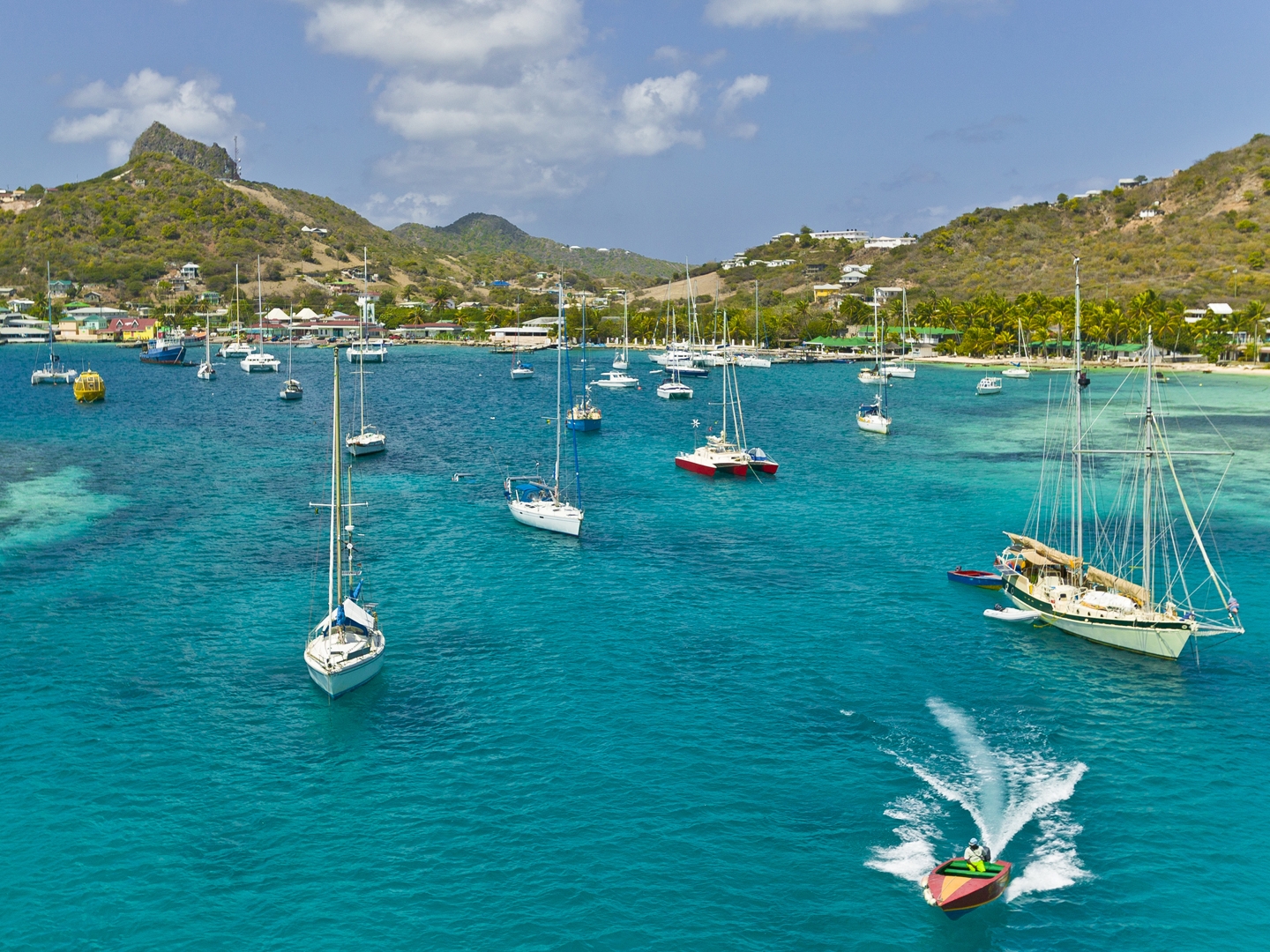
Saint Vincent and the Grenadines are located in North America, in the Northern and Western Hemispheres. It has maritime borders with the Caribbean Sea and the Atlantic Ocean. As an island chain, it does not share land borders with any countries. Saint Vincent and the Grenadines consist of the main island of Saint Vincent and a chain of smaller islands known as the Grenadines.

Saint Vincent and the Grenadines are smaller than Washington, D.C. There is 1 time zone, Atlantic Standard Time (AST, UTC−4). They do not observe daylight saving time. Saint Vincent and the Grenadines are 1 hour ahead of Washington, D.C. during Eastern Standard Time.

Travel requirements

Tourist visa requirements

  • None

Vaccinations

  • No vaccinations are required.

Valid passport requirements

  • Your passport must be valid at the time of entry.
  • All U.S. citizens are required to present a valid U.S. passport when traveling to Saint Vincent and the Grenadines, as well as proof of anticipated departure from the country. This includes travelers arriving by airplane and by private sea-going vessel. 
  • If you are traveling to Saint Vincent and the Grenadines on a cruise, you may use another Western Hemisphere Travel Initiative (WHTI) compliant document. 
  • We strongly recommend you obtain a passport before traveling in case of an emergency that requires you to disembark and return by air.

Currency on entry and exit

  • Entry maximum: None.
  • Exit maximum: None.

Tips from the U.S. embassy

  • You must get an Electronic Travel Authorization (ETA) or electronic border form online before travel. This is a pre‑arrival entry authorization, not a traditional visa. If you do not complete it, you may be denied entry to the country.  
  • It is illegal to bring marijuana, cannabis, or CBD products or derivatives into Saint Vincent and the Grenadines. It is also illegal to bring guns, ammunition, and even spent shells or casings into Saint Vincent and the Grenadines. Penalties are severe, and you may be arrested and detained for long periods of time. 

Help for U.S. citizens

U.S. Embassy Bridgetown

Wildey Business Park
St. Michael BB 14006
Barbados, W.I.

Main telephone:

+246 227-4000

Emergency after-hours:

+246 227-4000

EMBASSY UPDATE
Previous messages

Message failed to load

We are unable to load the message. Visit the main U.S. embassy or consulate website for updates.

Get embassy updates right to your inbox
Enroll In Step
Review how STEP works

Travel guidance for Saint Vincent and the Grenadines

Explore our travel guidance topics to prepare for your trip abroad.

Date issued: August 20, 2026

Select a topic

Entry, exit, and visa requirements

Helpful resources  


Traveling with children

Always bring a copy of each child’s birth certificate or other evidence of your legal relationship to each child. 

  • When 1 parent is traveling with a child, a notarized consent letter is required from the absent parent. Otherwise, you must show proof of sole custody. 
  • Parents and guardians should prepare a notarized, written permission letter. It should allow their minor children to travel to or from Saint Vincent and the Grenadines alone or with someone else. 
  • All Saint Vincent and the Grenadines minors, including dual U.S. citizens, must have notarized, written permission from a parent or guardian to travel without that parent or guardian. 
  • If you have concerns that your child may be abducted abroad by their other parent or guardian, review our information on how to prevent an international parental child abduction. You can also review our information on Parental Child Abduction in Saint Vincent and the Grenadines. 

Review our information on Traveling with Minors


HIV and AIDS restrictions

  • The U.S. Department of State is unaware of any HIV and AIDS entry restrictions for visitors to or foreign residents of Saint Vincent and the Grenadines.  

Currency

  • The Eastern Caribbean Dollar is the official currency of Saint Vincent and the Grenadines. Some establishments frequented by tourists may accept U.S. dollars. 
  • Many establishments do not accept credit cards. Be prepared to pay bills in cash. 
  • Saint Vincent and the Grenadines has ATMs that accept U.S.-issued bankcards. But ATMs are frequently out of order and may charge high fees.

Safety and security

Emergency phone numbers

Local authorities are responsible for investigating and prosecuting crimes and providing emergency services.


Demonstrations 

Demonstrations are not frequent but may occur. They may take place in response to political or economic issues. They may also occur on significant holidays, and during large events. 

  • Demonstrations can be unpredictable. Avoid areas around protests and other demonstrations.  
  • Check local media for updates and traffic advisories.

Crime

U.S. citizens are generally not targeted for crime in the Eastern Caribbean islands. However, crimes of opportunity occur such as petty larceny, burglary, and automobile break-ins. Some incidents of violent crime happen, such as murder, sexual assault, robbery, shootings, and drug related crimes.

Safety tips:
  • Do not leave valuables unattended in public areas, on beaches, unsecured in hotel rooms, or in rental homes.
  • Avoid walking alone, especially at night, on beaches, and in remote or poorly lit locations.
  • Go out in groups or with a companion and restrict nighttime activities to established safe and reputable venues.
  • Use only clearly marked taxis and avoid rides with strangers.
  • Stick to well-lit and well-traveled routes.
  • Avoid displaying flashy jewelry, expensive electronics, and large amounts of cash.
  • Always be aware of your surroundings. If you see something suspicious or unusual contact local police to report it immediately.
  • Use added caution when shopping in crowded areas, especially during the holiday season.
  • Use added caution when attending crowded events, celebrations, music festivals, etc.
  • Do not leave drinks unattended in public venues as this could create a potential vulnerability for the use of “date rape” drugs in furtherance of criminal activity.
  • Do not be predictable; vary your daily routes and schedules.
  • Do not engage in illegal activity.
  • For boaters: Be wary of unfamiliar people or crafts approaching your boat, whether at anchor or at sea.

Scams

Follow the Department of State guidelines to protect yourself from scams.

If you are a victim of a scam, learn how the FBI can helpFinancial scams and internet romance scams are not common but may occur in Saint Vincent and the Grenadines. Be careful of anyone asking for money, especially those who start a "romantic" relationship online or claim local authorities want money. Scams often begin through online posts, emails, or letters. Scammers pretend to be U.S. citizens in need of help. 

Common scams include: 
  • People claiming to be U.S. military personnel
  • People claiming to be detained or hospitalized abroad
  • Romance and online dating 
  • Money transfers 
  • Grandparent and relative targeting 
  • Free trip or luggage 
  • Lotteries 
  • Inheritance notices 
  • Work permits and job offers

If using dating apps or websites in Saint Vincent and the Grenadines: 

  • Criminals may use dating apps to target potential victims for robbery or assault.
  • Let your friends and family know where you are and consider sharing your location on your phone.  
  • Meet in a popular public place. 
  • Tell your family or friends all the details about the person you are meeting and how you met them (which app).
  • Set up and talk using a video call before agreeing to meet in person. 
  • Avoid locations where you can be isolated, like hotel rooms, private apartments or houses.
  • Never leave food or drinks unattended at a bar or restaurant.
  • Observe the preparation of your food or drink order when possible.
  • Refuse offers of food or drinks from strangers.
  • Have a communication plan with friends or family. Send updates to them on an agreed schedule.

Victims of crime

Local authorities are responsible for investigating and prosecuting crime. You may report crimes to the local police by dialing 911 or 999.

Review our information for Victims of Crime.  

The U.S. embassy or consulate can: 

  • Replace a stolen or lost passport.
  • Help you find medical care.  
  • Assist you in how to report a crime to the police. 
  • Contact relatives or friends with your written consent. 
  • Provide general information regarding the criminal justice system.  
  • Provide a list of local attorneys. We do not endorse or recommend any specific attorneys. 
  • Provide information on victim’s compensation programs in the United States. 
  • Provide an emergency loan for repatriation to the United States or limited medical support in cases of need. 
  • Help you find accommodation and options to travel home.
  • Marion House and the Saint Vincent and the Grenadines Human Rights Association may provide information and support for victims of crime.  

Sexual assault and domestic violence 

Resources for victims of sexual assault or domestic violence may reach out to the Domestic Violence Hotline at HELP-4357.

  • U.S. citizen victims of sexual assault are encouraged to contact the U.S. embassy and local law enforcement for assistance. 
  • U.S. citizen victims of domestic violence are encouraged to contact the U.S. embassy and local law enforcement for assistance.  

Technology use abroad

Mobile devices are vulnerable to compromise, theft, and damage anywhere in the world. Follow these safe practices:

  • Update all software (operating system and apps) before leaving the United States. 
  • Use reputable, U.S.-based VPN or VoIP applications.  
  • Don’t connect to public Wi-Fi networks. 
  • Research the safety of routes recommended by GPS. The fastest route is not always the safest.
  • Be cautious using dating apps abroad, as scammers often target U.S. citizens.

Tourism safety

The tourism industry is not well regulated:

  • Safety inspections for equipment and facilities are rare. 
  • Dangerous areas and activities are not always marked with signs. 
  • Staff may not be trained or certified. 
  • If you get injured, you will likely need to travel to a major city for appropriate medical care. 
  • First responders may not be able to reach remote areas in case of emergencies. 
  • U.S. citizens are encouraged to have medical evacuation insurance. 

Review our information on Travel Insurance


Lodging safety

Be mindful of safety when picking places to stay.

  • Research hotels or lodgings carefully. Book accommodations before traveling and have backup options ready in case you have to switch locations.
  • Consider accommodations with safety measures like 24-hour lobby service, gates, or security guards.
  • Ensure all doors and windows lock properly.
  • Always meet new visitors or strangers in the public lobby, not in your room.

Review our information on Lodging Safety


Adventure travel 

  • Review the U.S. Centers for Disease Control and Prevention (CDC) tips for Adventure Travel.

Watersports activities

Carefully assess the potential risks of recreational water activities and consider your physical capabilities and skills. 

  • Never venture out alone, particularly at isolated beaches or far out to sea. 
  • Avoid entering the water above your waist if you have been drinking.
  • Be mindful of jet skis and boat traffic in the area. 

Local laws and customs

Criminal penalties

  • U.S. citizens must follow local laws. 
  • If you break local laws, even by mistake, you could be deported, arrested, or imprisoned.  
  • Travelers who accidentally break local laws have been detained. Sometimes, this can be for a long time. They may also face criminal charges and even be convicted of a crime.
  • You may be prosecuted in the United States for crimes committed abroad regardless of the local law. Review the information provided by the U.S. Department of Justice about crimes against minors abroad.
  • Before you start a business or a profession in Saint Vincent and the Grenadines seek information from the local authorities about what permits or licenses are required.  

Arrest notification 

  • If you are arrested or detained, ask officials to notify the U.S. embassy or consulate immediately.  

Counterfeit and pirated goods

Counterfeit and pirated goods are common in many destinations. 

  • They may be illegal according to local laws.  
  • Counterfeit and pirated goods may pose significant risks to consumer health and safety.  
  • You may be subject to fines or have to surrender counterfeit and pirated goods to authorities if you bring them back to the United States.  

Learn more about U.S. restrictions on counterfeit and pirated goods: 


Faith-based travelers

Faith based travel includes pilgrimages, service projects, and mission work. Prepare for your travel using these resources:  


Gay and lesbian travelers

Consensual same-sex sexual activity is illegal. It carries penalties up to 10 years in prison. 

  • No law protects people from discrimination based on sexual orientation.
  • Review our information for Gay and Lesbian Travelers.

Travelers with accessibility needs

The law in Saint Vincent and the Grenadines prohibits discrimination against people with physical, sensory, psychosocial, intellectual or mental disabilities. The law is not enforced. 

  • The most common types of accessibility may include limited accessible facilities and basic access to services. 
  • Expect accessibility to be limited in public transportation, lodging, communication, and general infrastructure.
  • Accessibility is uncommon in public transportation, lodging, communication, and general infrastructure with slightly better conditions in Kingstown compared to rural areas and the Grenadine islands.
  • General public sentiment around disability is generally respectful and helpful, but formal accommodations are limited. People may need to request help directly, and services may not meet U.S. accessibility standards.

Review our information on Accessibility Needs.


Students


 Women travelers  


Human rights

  • Review the Department of State’s Human Rights Report for your destination prior to traveling.

Health

Health resources


Emergency phone numbers


Ambulance services

Ambulance services are widely available. However, training and response time of emergency responders may vary, particularly on outer islands in the Grenadines. 

  • Injured or very ill travelers might prefer to take a taxi or their own car to the nearest major hospital. This option can be faster than waiting for an ambulance.

Medical payments and insurance

Make sure you know if your health insurance plan covers any medical expenses abroad.  Most U.S. plans do not. 

  • The U.S. government does not pay medical bills.
  • U.S. Medicare and Medicaid do not cover expenses or bills abroad.
  • Most hospitals and doctors abroad do not accept U.S. health insurance.
  • Medical care is not free in Saint Vincent and the Grenadines. If you require medical attention, you will incur expenses, even if you are treated in a public healthcare facility.
  • Lack of payment may bar future travel to Saint Vincent and the Grenadines.
  • Most care providers overseas only accept cash payments.
  • Credit card payment is not always available.
  • Make sure you know if your health insurance plan provides coverage abroad or reimbursement of payments. The CDC provides more information on types of insurance.
  • We strongly recommend supplemental insurance to cover medical evacuation.

If you purchase supplemental insurance, you are responsible for seeking reimbursement from the insurance provider. Follow their instructions for filing claims. 


Vaccinations

Stay up to date with the vaccines recommended by the U.S. Centers for Disease Control and Prevention.


Healthcare facilities 

Health facilities are available in Kingstown and other main population centers, but it may be harder to find adequate health care in rural areas and the Grenadine islands.

  • The U.S. embassy maintains a list of doctors and hospitals. We do not endorse or recommend any specific medical provider or clinic.
  • Public medical clinics lack basic resources and supplies.  
  • Hospitals and doctors often require payment upfront prior to service or admission. 
  • Generally, in public hospitals only minimal staff is available overnight in non-emergency wards. Consider hiring a private nurse. Another option is to have family stay the night with the patient, especially a child.
  • Patients must cover all costs for transfer to or between hospitals. 
  • Hospital-based care is only available through government institutions.

Prescription medications 

Always carry your prescription medication in original packaging, along with your doctor’s prescription. 

  • Exercise caution when purchasing medication abroad. Pharmaceuticals are usually easy to buy with few controls. 
  • Counterfeit medication is common and may not work, have the wrong strength, or have dangerous ingredients. You should buy medication with the help of a medical professional and from trusted places.

U.S. Customs and Border Protection (CBP) and the Food and Drug Administration (FDA) have rules for bringing medication back into the United States.  If you buy medications abroad, the medications must meet CBP’s and the FDA’s requirements to bring them back legally. 

The medications must also be for personal use and approved for use in the United States. 

For more information: 


Assisted Reproductive Technology (ART) and surrogacy

If you are considering traveling to Saint Vincent and the Grenadines to have a child through use of assisted reproductive technology (ART) or surrogacy, please review our information on ART and Surrogacy Abroad

  • Surrogacy is largely unregulated in Saint Vincent and the Grenadines with no clear legal protections for foreign intended parents.  Surrogacy agreements may not be enforced by Saint Vincent and the Grenadines courts.
  • If you decide to pursue parenthood in Saint Vincent and the Grenadines via ART with a surrogate, consider hiring a reputable local attorney and be prepared for long and unexpected delays with local authorities while documenting your child’s birth or citizenship status. 
  • People who try to avoid local law risk legal consequences.

Water quality and food safety 

  • Tap water is generally safe to drink and use in cooking. 
  • In some locations, tap water is not available every day.
  • Bottled water and beverages are generally safe. Use major brands and ensure the seal is intact.
  • Many restaurants and hotels serve tap water unless bottled water is specifically requested. 
  • You may want to request no ice in your drinks since it may be made using tap water. 
  • Eating uncooked vegetables and fruits can make you sick.
  • Make water safe by filtering, boiling, disinfecting, or distilling. 
  • Impure water can cause diseases like typhoid, cholera, hepatitis, and dysentery.

Air quality

Air pollution can be a significant problem in many destinations abroad. 

  • For information about common air pollutants, check the CDC’s Air Quality page
  • For information about the U.S. Air Quality Index and health guidance, check out the EPA’s AirNow

For general health information, visit the Medicine and Health page.

Transportation

Road conditions and safety

Major roads are in average or poor condition. You may find wandering animals and slow-moving heavy equipment. 

  • Drivers often stop in the middle of the roadway without warning. Always maintain a safe distance from the vehicle in front of you and watch for signs of sudden breaking. Cars may lack working safety and signaling devices.
  • Driving culture can be aggressive and unpredictable, with frequent speeding, limited use of signals, and passing on narrow roads. 
  • Motorcycles and minibuses often drive erratically, and pedestrians may share the roadway. 
  • Seatbelt use and adherence to traffic laws are inconsistent. Intoxicated driving occurs.

Traffic laws  

A valid U.S. driver’s license is not enough on its own. You must obtain a temporary local driver’s permit, available from police stations or car rental agencies, to drive legally. An International Driving Permit may be accepted but is not a substitute for the local permit.

  • In the event of a traffic accident, drivers should remain at the scene, notify police, and obtain a police report for insurance purposes. 
  • Moving vehicles before police arrive is generally discouraged unless necessary for safety.
  • Carry a driver’s license, local permit, passport copy, and vehicle rental or registration documents. 
  • Requests for bribes by officials are not common, but follow lawful instructions and avoid informal payments.

Taxis and ride-shares

Taxis are widely available and generally safe, especially when using licensed, clearly marked taxis that have a “H” license plate.

  • Ride-share apps like Uber or Lyft are not available in Saint Vincent and the Grenadines.
  • Use only registered taxis and agree on fares in advance. Meters are not typically used. 
  • Avoid accepting rides from unmarked vehicles or strangers. Be extra cautious at night and in less populated areas.
  • Use known or recommended drivers when possible. 

Public and commercial transportation 

Public transportation consists primarily of privately operated minibuses (“vans”) and ferries. Minibuses are widely used but can be overcrowded, drive aggressively, and make frequent unscheduled stops, creating safety concerns. 


Aviation safety oversight 

  • The U.S. Federal Aviation Administration (FAA) has found that Saint Vincent and the Grenadines does not meet international standards for aviation safety oversight. FAA's website includes more information on its assessment program. 

Maritime travel

Mariners and passengers planning travel to Saint Vincent and the Grenadines should check the following:  

Weather and natural disasters

Weather conditions

Hurricanes and tropical storms
  • Hurricanes and tropical storms are the most significant natural hazards. 
  • The Atlantic hurricane season runs from June through November, with peak activity between August and October. 
  • Storms can cause flooding, landslides, infrastructure damage, and power outages.
Heavy rainfall and flooding

Heavy rainfall and flooding occur primarily during the rainy season from June to November. Intense rainfall can lead to flash flooding and landslides, particularly in mountainous areas of Saint Vincent.

Volcanoes

Volcanic activity is a known risk due to La Soufrière volcano on Saint Vincent. The most recent major eruption occurred in April 2021, causing evacuations, ashfall, and disruption to air travel. Future eruptions remain possible.

Drought

Drought conditions can occur during the dry season from December to May. This can sometimes lead to water shortages, particularly on smaller islands in the Grenadines.

Earthquakes

Earthquakes are possible due to regional seismic activity, though they are typically minor and infrequent.

Helpful resources:
  • The National Emergency Management Organisation (NEMO): Provides updates, alerts, and disaster preparedness guidance. It also has a local radio and government channels for real-time information.

U.S. citizens living abroad

Living abroad resources

If you live outside the United States for a long time, you or your family may experience various life events, wish to exercise U.S. citizenship rights, or need to meet U.S. legal obligations while abroad.

Embassies and consulates

U.S. Embassy Bridgetown

Wildey Business Park
St. Michael BB 14006
Barbados, W.I.

Main telephone:

+246 227-4000

Emergency after-hours:

+246 227-4000