- Terrorism (T)
- Other (O)
There were no changes to the Travel Advisory Level or the risk indicators. Advisory summary was updated to reflect that family members may travel to Jordan.
Review the latest State Department Travel Advisory about Jordan. You can plan for safe travel by following the entry and exit requirements, reviewing local laws, and other travel guidance from the U.S. embassy or consulate.
Visit jo.usembassy.gov
Learn more about U.S. and Jordan relations at State.gov
Learn more about Travel Advisory levels
to Jordan due to terrorism and armed conflict. Some areas have increased risk. Read the entire Travel Advisory.
Do not travel to:
As of August 29, 2026, family members may join U.S. government employees who work in Jordan.
Following the onset of hostilities between the United States and Iran on February 28, 2026, there has been an ongoing threat of drone and missile attacks from Iran and significant disruptions to commercial flights.
There is a risk of terrorist violence, including terrorist attacks and other activity in Jordan. Visit the U.S. Department of State’s country reports on terrorism to learn more.
Terrorists may attack without warning, including such targets as:
Jordan is relatively stable but due to high tensions in the region, the security environment remains complex and can change quickly.
There is heightened risk of terrorism and crime in Zarqa City.
There is heightened risk of terrorism and crime in the following areas:
For more information, Americans should consult the Federal Aviation Administration’s Prohibitions, Restrictions and Notices.
Do not travel to the towns of Mansheyat al Ghayyath, Ruwayshid, and Jordan's border with Syria and Iraq due to the continued threat of cross-border violence, terrorism, and crime.
Do not travel to Syrian refugee camps in Jordan due to the Government of Jordan’s restrictions on entry into these camps.
All U.S. government personnel on official travel to the following three Syrian refugee camps must follow U.S. embassy travel restrictions:
Official U.S. government travel to these camps must occur during daylight hours. Personal travel by U.S. government personnel to these refugee camps is not authorized.
Do not travel to Rusayfah City due to the risk of terrorism and crime.
Do not travel to the Baqa’a neighborhood of Ayn Basha due to the risk of terrorism and crime.
Learn more about Travel Advisory levels
Jordan is located in the Middle East, in the Northern Hemisphere. It has maritime borders with the Dead Sea and the Gulf of Aqaba. It has land borders with Syria, Iraq, Saudi Arabia, and Israel.
The country is slightly smaller than Indiana. The time zone is Arabia Standard Time. Jordan is 7 hours ahead of Washington, DC, and does not observe daylight saving time.
Al-Umayyaween Street,
Abdoun neighborhood,
Amman 11118
Jordan
Online Navigator: U.S. Citizens Services Assistant
Message failed to load
We are unable to load the message. Visit the main U.S. embassy or consulate website for updates.
Explore our travel guidance topics to prepare for your trip abroad.
Date issued: May 14, 2026
Time |
Entries |
Cost |
3 months |
1 entry |
40 JOD |
3 months |
2 entries |
60 JOD |
6 months |
Multiple entries |
120 JOD |
1 year |
Multiple entries |
200 JOD |
5 years |
Multiple entries |
110 JOD (only for U.S. citizens) |
VISAS NOT REQUIRING REGISTRATION
VISAS REQUIRING REGISTRATION
Travelers on any visa other than the Jordan Pass, transit visa, or Hajj visa, who intend to remain in Jordan for longer than 2 weeks must register with the Public Security Directorate, one of its branches, or a local police station. This request must be made before the initial 2-week period of their date of entry expires.
Failing to submit a formal request may lead to personally liability and a fine of 200 Jordanian Dinars (JOD), payable in cash or credit at the point of departure.
Requirements for residence registration
Fines
King Hussein (Allenby Bridge) border crossing
For more information regarding travel to the West Bank and Jerusalem, please review the country information for Israel, the West Bank, and Gaza.
Border crossing requirements may change. Borders may be closed during holidays and periods of heightened security. For more information, contact the embassy:
Embassy of the Hashemite Kingdom of Jordan
3504 International Drive NW
Washington, DC 20008
Phone: 202-966-2861 or 202-966-2664.
Jordan also maintains honorary consulates in Detroit, MI, Chicago, IL, and San Francisco, CA.
Jordan has some entry rules for visitors and foreign residents with HIV and AIDS:
Local authorities are responsible for investigating and prosecuting crimes and providing emergency services.
Terrorists and their supporters may target U.S. citizens abroad.
Terrorists may target:
The threat of terrorism remains high in Jordan.
Transnational and indigenous terrorist groups can plan and carry out attacks in Jordan.
Demonstrations may occur in Jordan with varying degrees of frequency. They may take place in response to political or economic issues, on politically significant holidays, and during international events.
Follow the Department of State guidelines to protect yourself from scams.
If you are a victim of a scam, learn how the FBI can help.
Financial scams and internet romance scams are common in Jordan. Be careful of anyone asking for money, especially those who start a "romantic” relationship online or claim local authorities want money. Scams often begin through online posts, emails, or letters. Scammers pretend to be U.S. citizens in need of help.
Common scams include:
If using dating apps or websites in Jordan:
Local authorities are responsible for investigating and prosecuting crimes. You may report crimes to the local police by dialing 911.
The U.S. embassy or consulate can:
Mobile devices are vulnerable to compromise, theft, and damage anywhere in the world. Follow these safe practices:
U.S. citizens should stay away from the border areas with Syria and Iraq.
The tourism industry is not well regulated:
U.S. citizens must follow local laws. If you break local laws, even by mistake, you could be deported, arrested, or imprisoned.
Counterfeit and pirated goods are common in many destinations.
Learn more about U.S. restrictions on counterfeit and pirated goods:
The U.S. Embassy is aware of cases in Jordan where U.S. citizens faced domestic violence, abandonment by spouses, exit bans travel, loss of child custody, or forced marriage.
Under Jordanian law, any adult male may prevent his minor children from leaving Jordan by registering a hold on their travel with the Jordanian authorities.
The Government of Jordan considers U.S.-Jordanian dual nationals to be Jordanian citizens.
Jordanian customs authorities have strict rules for importing or exporting items. These items include:
Contact the Embassy of the Hashemite Kingdom of Jordan in Washington, D.C., or one of the Jordanian consulates in the United States if you seek specific information regarding customs requirements.
Faith based travel includes pilgrimages, service projects, and mission work. Prepare for your travel using these resources:
Women in Jordan have reported sexual harassment, stalking, indecent exposure, and assault.
The U.S. Embassy continues to receive sporadic reports involving taxis and drivers. Some cases included physical assaults.
Safety precautions:
Stay up to date with the vaccines recommended by the U.S. Centers for Disease Control and Prevention.
U.S. Customs and Border Protection (CBP) and the Food and Drug Administration (FDA) have rules for bringing medication back into the United States. If you buy medications abroad, the medications must meet CBP’s and the FDA’s requirements to bring them back legally.
The medications must also be for personal use and approved for use in the United States.
For more information:
The air quality varies considerably and changes with the seasons. It is typically at its worst in the spring. People at the greatest risk from particle pollution exposure include:
Air pollution can be a significant problem in many destinations abroad.
While in Jordan, U.S. citizens may find road conditions and driving habits quite different from those in the United States. Traffic accidents are frequent and continue to be the largest cause of unnatural death.
Here is some general information. It may not be completely accurate for every location or situation:
Drivers must have a valid Jordanian license or a valid foreign license with an International Driving Permit (IDP) to drive in Jordan. You must get the IDP before traveling to Jordan. Temporary visitors may use their valid American driver's licenses only to rent “green” plated rental cars.
Police may pull over speeding drivers, as well as those believed to be driving under the influence of drugs or alcohol.
Jordan has abundant taxi and ride-share services.
Mass transportation is not recommended.
Embassy of the Hashemite Kingdom of Jordan
3504 International Drive NW
Washington, DC 20008
Phone at 202-966-2664
Mariners and passengers planning travel to Jordan should check the following:
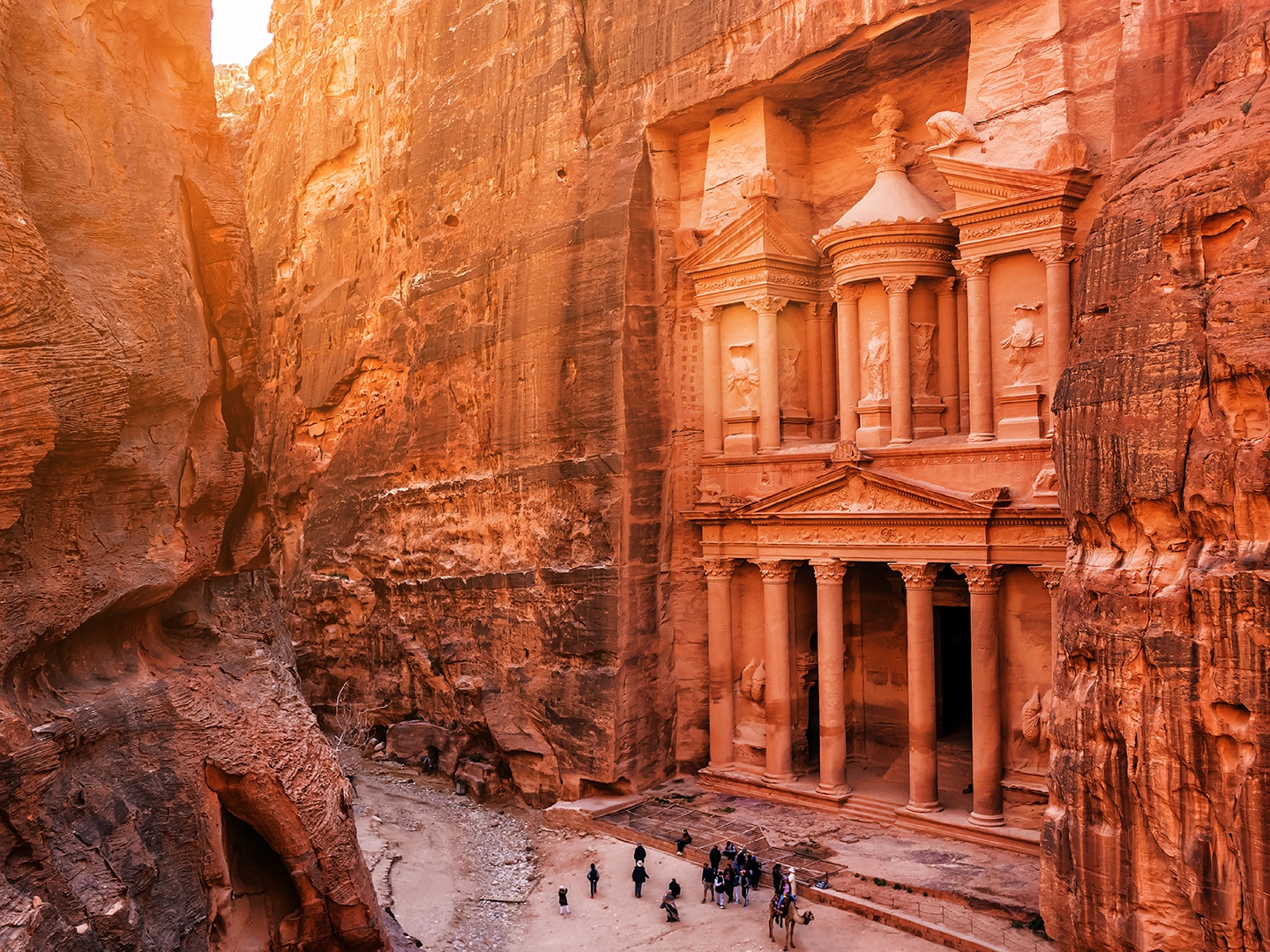
Certain areas of Jordan, including Petra and the Dead Sea, often face heavy rain and flash flooding from October to March.
If you live outside the United States for a long time, you or your family may experience various life events, wish to exercise U.S. citizenship rights, or need to meet U.S. legal obligations while abroad.
Al-Umayyaween Street,
Abdoun neighborhood,
Amman 11118
Jordan
Online Navigator: U.S. Citizens Services Assistant
There were no changes to the Travel Advisory Level or the risk indicators. Advisory summary was updated to reflect that family members may travel to Jordan.
Updated to reflect the ordered departure of non-emergency U.S. government personnel and family members of government personnel on March 2 and the change to Level 3: Reconsider Travel due to safety risks, and to add the “other” risk indicator. Advisory summary was updated to reflect changes to U.S. embassy operations.
Invalid Input
Last Updated: May 14, 2026
Owned by Overseas Citizens Services
An official website of the Department of State - Bureau of Consular Affairs