- Crime (C)
There were no changes to the advisory level or risk indicators. Advisory summary was updated.
Review the latest State Department Travel Advisory about Paraguay. You can plan for safe travel by following the entry and exit requirements, reviewing local laws, and other travel guidance from the U.S. embassy or consulate.
Visit py.usembassy.gov
Learn more about U.S. and Paraguay relations at State.gov
Learn more about Travel Advisory levels
in Paraguay due to crime.
Exercise Increased Caution in Departments of Alto Paraná, Amambay, Canindeyú, Concepcion, and San Pedro due to crime.
Paraguay is generally a safe destination for travelers. Some areas have increased crime risk. U.S. government employees working in Paraguay need special authorization to travel to some areas. U.S. government employees are prohibited from using municipal buses in Paraguay because of risk of robbery and assault.
Review the Travel Guidances for Paraguay for additional information on travel.
Exercise increased caution in these areas due to the risk of crime.
Learn more about Travel Advisory levels
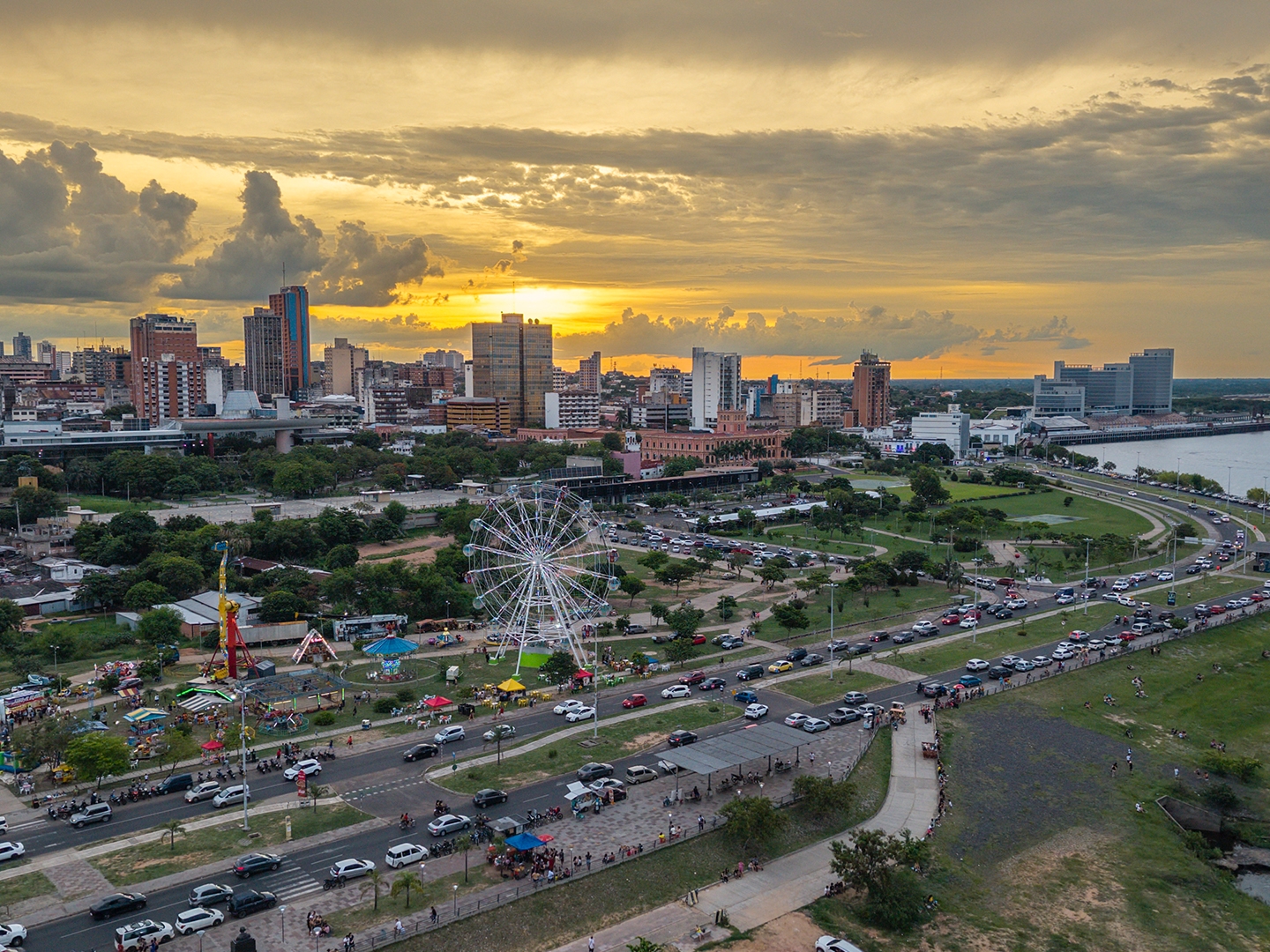
Paraguay is located in South America, in the Southern and Western Hemispheres. It has no maritime borders. It shares land borders with Bolivia, Brazil, and Argentina.
It is slightly smaller than California. There is 1 time zone, Paraguay Time. It does not observe daylight saving time. Paraguay is 1 hour ahead of Washington, D.C. from mid-March to early November. Paraguay is 2 hours ahead of Washington, D.C. from early November to mid-March.
1776 Mariscal Lopez Avenue
Asunción, Paraguay
Online Navigator: U.S. Citizen Services Assistant
Message failed to load
We are unable to load the message. Visit the main U.S. embassy or consulate website for updates.
Explore our travel guidance topics to prepare for your trip abroad.
Date issued: September 17, 2026
U.S. citizens need a valid passport to enter Paraguay.
Always bring a copy of each child’s birth certificate or other evidence of your legal relationship to each child.
The U.S. Embassy is not aware of any specific threat to U.S. citizens in Paraguay. But terrorists and their supporters may target U.S. citizens abroad.
Terrorists may target:
Demonstrations are common. They may take place in response to political or economic issues. They may also occur on significant holidays and during large events. U.S. citizens visiting or residing in Paraguay should also avoid large gatherings or events where crowds have congregated to demonstrate, protest, or where they could cause damage as a byproduct of celebrating an event, such as after soccer matches.
Street crime is common in cities. Pickpockets and armed assaults occur.
Follow the Department of State guidelines to protect yourself from scams.
Local authorities are responsible for investigating and prosecuting crime. You may report crimes to the local police by dialing 911.
The U.S. embassy or consulate can:
Mobile devices are vulnerable to compromise, theft, and damage anywhere in the world. Follow these safe practices:
The tourism industry is not well regulated:
Counterfeit and pirated goods are common in many destinations.
Learn more about U.S. restrictions on counterfeit and pirated goods:
Faith based travel includes pilgrimages, service projects, and mission work. Prepare for your travel using these resources:
The law in Paraguay prohibits discrimination against people with physical or mental disabilities. The law is enforced.
Ambulance services are not widely available. Training and response time of emergency responders may be poor.
Common diseases
Make sure you know if your health insurance plan covers any medical expenses abroad. Most U.S. plans do not.
Stay up to date with the vaccines recommended by the U.S. Centers for Disease Control and Prevention.
Health facilities are available in Paraguay especially in Asuncion and other major cities. It may be harder to find adequate health care in rural areas.
Always carry your prescription medication in original packaging, along with your doctor’s prescription.
U.S. Customs and Border Protection (CBP) and the Food and Drug Administration (FDA) have rules for bringing medication back into the United States. If you buy medications abroad, the medications must meet CBP’s and the FDA’s requirements to bring them back legally.
The medications must also be for personal use and approved for use in the United States.
For more information:
Air pollution can be a significant problem in many destinations abroad.
U.S. citizens have been injured and killed in traffic accidents throughout Paraguay.
U.S. drivers need a valid U.S. driver’s license and a valid International Drivers Permit to drive in Paraguay.
Taxis are available and you can call them via telephone numbers listed in newspapers.
Public transportation is available for urban and intercity travel. U.S. government employees are prohibited from using municipal buses in Paraguay because of a serious risk of robbery and assault.
The U.S. Federal Aviation Administration (FAA) has not assessed Paraguay’s Civil Aviation Authority for compliance with international standards for aviation safety oversight. FAA's website includes more information on its assessment program.
If you live outside the United States for a long time, you or your family may experience various life events, wish to exercise U.S. citizenship rights, or need to meet U.S. legal obligations while abroad.
1776 Mariscal Lopez Avenue
Asunción, Paraguay
Online Navigator: U.S. Citizen Services Assistant
There were no changes to the advisory level or risk indicators. Advisory summary was updated.
Invalid Input
Last Updated: September 17, 2026
Owned by Overseas Citizens Services
An official website of the Department of State - Bureau of Consular Affairs