Skip to content

Macau

Review the latest State Department Travel Advisory about Macau. You can plan for safe travel by following the entry and exit requirements, reviewing local laws, and other travel guidance from the U.S. consulate. Macau is a Special Administrative Region (SAR) of China. Review our information on travel to mainland China.

Travel advisory levels

Learn more about Travel Advisory levels

  1. Exercise normal precautions
  2. Exercise increased caution
  3. Reconsider travel
  4. Do not travel

Travel advisory - Macau Special Administrative Region | See also: China and Hong Kong

Level 3 - Reconsider travel

Date issued: September 04, 2026 -
  • Other (O)

Reconsider travel

to Macau SAR due to a limited ability to provide emergency consular services and arbitrary enforcement of local laws.

Advisory summary

Reconsider travel to Macau SAR due to a limited ability to provide emergency consular services and arbitrary enforcement of local laws.

  • Reconsider travel due to limited ability for the U.S. government to provide emergency consular services. There are travel restrictions imposed on U.S. diplomatic personnel.
  • Reconsider travel due to arbitrary enforcement of local laws.
  • U.S. government employees must follow the policies established by their Department or Agency regarding official or personal travel to China, including to Macau SAR.

The U.S. government has a limited ability to provide emergency services to U.S. citizens in Macau SAR. This is due to China’s Ministry of Foreign Affairs travel restrictions on U.S. diplomatic personnel.

Even in an emergency, the Ministry of Foreign Affairs requires all U.S. diplomatic personnel, including those accredited to Macau SAR, to apply for and receive visas before entering Macau SAR. This can take a week or longer. That delay can significantly limit the U.S. government’s ability to offer timely consular services in Macau SAR.

Dual nationality

The Macau SAR government does not recognize dual nationality. Dual U.S.-Chinese citizens and U.S. citizens of Chinese descent may face additional security checks and harassment. If you are a dual U.S.-Chinese citizen and enter Macau SAR on a U.S. passport, Chinese authorities must notify the U.S. Embassy or a U.S. Consulate General if you are arrested. They must also allow U.S. consular officials to have access to you.

However, even if you enter on a U.S. passport, U.S. consular officers may not be able to access you. For more information, visit Consular Protection and Right of Above in HK(SAR) for Dual Nationals – U.S. Consulate General Hong Kong & Macau.

Demonstrations

Participating in demonstrations or any other activities that authorities interpret as constituting an act of secession, subversion, terrorism, or collusion with a foreign country could result in criminal charges under local broad security laws. Be aware of your surroundings and avoid demonstrations.

If you decide to travel to the Macau SAR:

  • Enroll in the Smart Traveler Enrollment Program (STEP) to receive important updates and alerts from the U.S. consulate. Enrolling helps the U.S. consulate contact you or your emergency contact in an emergency.
  • Review the China Country Security Report for China.
  • Visit the Centers for Disease Control and Prevention (CDC) website for the latest Travel Health Information for Macau.
  • Whether you’re a first-time or frequent traveler, use the International Traveler’s Checklist.
  • We highly recommend that you buy travel insurance before you travel. Check with your travel insurance provider about evacuation assistance, medical insurance, and trip cancellation coverage.
  • Visit our website for Travel to High-Risk Areas.  
  • Be aware of your surroundings.
  • Avoid demonstrations.
  • Avoid communicating, either privately or publicly, opinions or observations that might be considered embarrassing or otherwise negative about China or Macau or the Chinese or Macau authorities.
  • Exercise caution near large gatherings or protests.
  • Avoid taking photographs of protesters or police without permission.
  • Keep a low profile.
  • If you are arrested or detained, ask police or prison officials to notify the U.S. Consulate General Hong Kong & Macau immediately.
  • Do not consume illicit drugs in Macau SAR or prior to arriving in Macau SAR.
  • Prepare a backup plan for emergency situations.
  • Monitor local media and the Macau Government Tourism Office website for updates.
  • Review your flight status with your airline or at the Macau International Airport website.
  • Follow U.S. Consulate General Hong Kong & Macau on Facebook and X.
Scroll to review full advisory
Travel advisory levels

Learn more about Travel Advisory levels

  1. Exercise normal precautions
  2. Exercise increased caution
  3. Reconsider travel
  4. Do not travel

About Macau

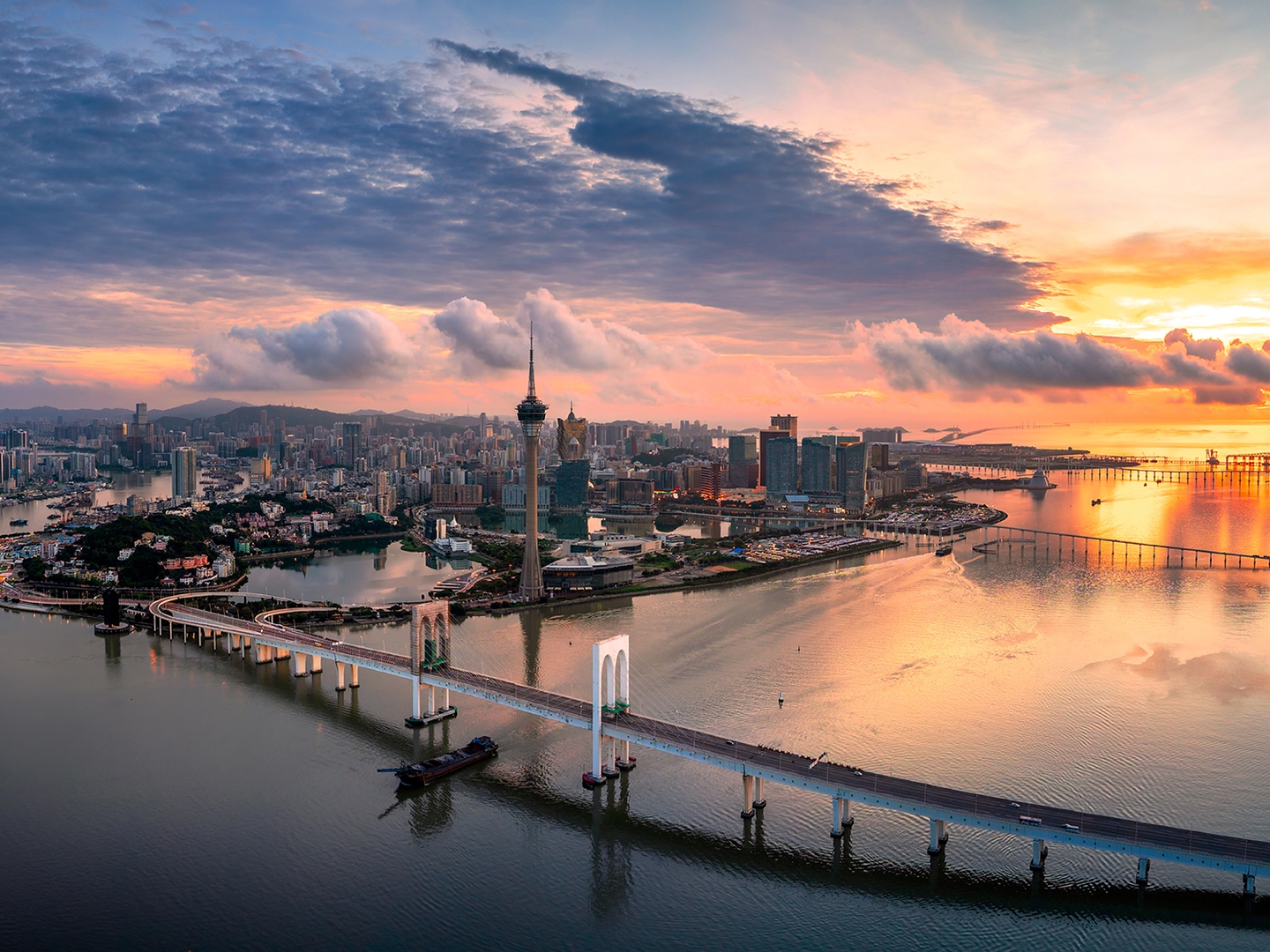
Macau is located in East Asia, in the Northern Hemisphere. It has maritime borders with the South China Sea and the Pearl River Delta. Macau is located on the southern coast of mainland China, across the Zhujiang River Estuary from Hong Kong. 

Macau is a Special Administrative Region of China. It is about half the size of Manhattan in New York. It has 1 time zone, China Standard time (CST). It does not observe daylight saving time. Macau is 12 to 13 hours ahead of Washington, D.C. depending on U.S. daylight saving time.

Travel requirements

Tourist visa requirements

  • No tourist visa is required for 30 days or less.

Vaccinations

  • Yellow fever: Required if arriving from countries with a risk of yellow fever transmission. This rule applies if you’ve had a layover of 12 hours or more in such a country.
  • Please visit the CDC website for more information.

Valid passport requirements

  • Your passport must be valid at the time of entry.
  • Must have 90 days validity beyond your intended date of departure.
  • 1 blank page available per stamp.

Currency on entry and exit

  • Threshold for mandatory declaration: Macanese pataca (MOP$) 120,000 (about $15,000) and above must be declared on arrival. 
  • Exit maximum: No limit, but if asked by customs officials, you must truthfully declare amount of cash, traveler’s checks, checks, bills of exchange, money orders, or promissory notes or face significant fines. 

Tips from the U.S. consulate

  • The U.S. Consulate General Hong Kong & Macau does not have a permanent physical presence in Macau, and the Chinese government restricts the access of consular officers to Macau. U.S. citizen visitors should exercise caution when traveling to Macau due to the limited ability of the U.S. government to provide emergency consular services.
  • The legal age for gambling in Macau is 21. Gaming in Macau is mostly conducted in Hong Kong Dollars (HKD), and several money exchangers operate in Macau, some using unfavorable rates of exchange.  
  • Macau has strict drug laws. Possession of even small amounts of illegal substances can lead to severe penalties. This includes marijuana and CBD products. You could face arrest and detention.
  • Vaping in public as well as import/export of vaping products is illegal and may result in an arrest and detention.  
  • Public intoxication, smoking, or disruptive behavior, especially in casinos and tourist areas, can lead to fines or police intervention. Maintain a respectful demeanor in public at all times.

Help for U.S. citizens

U.S. Consulate General Hong Kong & Macau

26 Garden Road
Central, Hong Kong

This consular district includes the Hong Kong and Macau Special Administrative Regions (SARs).

CONSULATE UPDATE
Previous messages

Message failed to load

We are unable to load the message. Visit the main U.S. embassy or consulate website for updates.

Get updates right to your inbox
Enroll In Step
Review how STEP works

Travel guidance for Macau

Explore our travel guidance topics to prepare for your trip abroad.

Date issued: September 17, 2026

Select a topic

Entry, exit, and visa requirements

Helpful resources  


Traveling with children

  • Generally, it is advisable to have a copy of each child’s birth certificate or other evidence of your legal relationship to each child when traveling abroad.  
  • It can also be helpful to bring notarized consent from the absent parent when 1 parent is traveling with a child. Otherwise, you may be required to show proof of sole custody.  
  • If you have concerns that your child may be abducted abroad by their other parent or guardian, review our information on how to prevent an international parental child abduction. You can also review our information on Parental Child Abduction in Macau.
  • Review our information on Traveling with Minors

HIV and AIDS restrictions

  • The U.S. Department of State is unaware of any HIV and AIDS entry restrictions for visitors to or foreign residents of Macau.  

Currency

  • The Macanese Pataca (MOP) is the official currency of Macau. The Hong Kong Dollar (HKD) and Chinese Renminbi (RMB) are widely accepted at a one-to-one ratio with the Pataca, though change is typically paid in Pataca. 
  • Credit cards and ATM debit cards are widely accepted in Macau. 
  • Banks and major hotels might accept traveler’s checks, though fees or unfavorable exchange rates often apply.

Safety and security

Emergency phone numbers

Local authorities are responsible for investigating and prosecuting crimes and providing emergency services.

  • Dial 999 for police and for ambulance. 
  • Dial 2823-3030 for the Social Welfare Bureau victims of domestic violence hotline or dial 2823-6632 for the Lai Yuen Centre of the Women’s Association of Macau (non-governmental organization) for domestic violence assistance.  
  • Visit this website for more information about social services.

Demonstrations  

Although large demonstrations are uncommon in Macau, certain acts of political dissent may be prosecuted under Macau’s National Security Law. Such protests may take place in response to political or economic issues. They may also occur on significant holidays, and during large events.  

  • Participating in demonstrations or any other activities that authorities interpret as being an act against national security committed by foreign political organizations or groups could result in criminal charges. 
  • Demonstrations can be unpredictable. Avoid areas around protests and other demonstrations. 
  • Macanese law guarantees residents the right to organize and participate in demonstrations; however, the government rarely grants approval. 
  • Check local media for updates and traffic advisories. 

Crime

  • Macau has a low crime rate. 
  • Violent crime, though rare, does occur. 
  • Protect your personal belongings and travel documents at all times.
  • Exercise caution when in congested areas. Pay particular attention to personal belongings while in crowded areas, and while traveling on public transportation. 
  • Petty street crime, including pickpocketing, occurs in tourist areas. This is common in and around casinos and at the airport. 

Scams

Follow the Department of State guidelines to protect yourself from scams.

If you are a victim of a scam, learn how the FBI can helpFinancial scams and internet romance scams are increasingly common overseas. Be careful of anyone asking for money, especially those who start a "romantic" relationship online or claim local authorities want money.

Scams often begin through online posts, emails, or letters. Scammers pretend to be U.S. citizens in need of help. 

Common scams include: 

  • People claiming to be U.S. military personnel
  • People claiming to be detained or hospitalized abroad
  • Romance and online dating 
  • Money transfers 
  • Grandparent and relative targeting 
  • Free trip or luggage 
  • Lotteries 
  • Inheritance notices 
  • Work permits and job offers

Victims of crime

Local authorities are responsible for investigating and prosecuting crime. You may report crimes to the local police by dialing 999.

Review our information for Victims of Crime.  

The U.S. consulate, located in Hong Kong, can: 

  • Replace a stolen or lost passport. For more information on how to travel from Macau to Hong Kong to replace your passport, please contact the consulate directly
  • Provide information about where to access medical care.
  • Provide information on how to report a crime to the police.
  • Contact relatives or friends with your written consent. 
  • Provide general information regarding the criminal justice system.  
  • Provide a list of local attorneys. We do not endorse or recommend any specific attorneys. 
  • Provide information on victim’s compensation programs in the United States. 
  • Provide an emergency loan for repatriation to the United States or limited medical support in cases of need. 

Sexual assault and domestic violence 

  • U.S. citizen victims of sexual assault or domestic violence are encouraged to contact the U.S. consulate and local law enforcement for assistance.

Technology use abroad

Mobile devices are vulnerable to compromise, theft, and damage anywhere in the world. Follow these safe practices: 

  • Update all software (operating system and apps) before leaving the United States.  
  • Use reputable, U.S.-based VPN or VoIP applications.   
  • Don’t connect to public Wi-Fi networks.  
  • Research the safety of routes recommended by GPS. The fastest route is not always the safest. 
  • Be cautious using dating apps abroad, as scammers often target U.S. citizens. 
  • Please check with local authorities for the most up to date regulations on the import and use of drones and satellite phones in Macau. Violating those regulations can result in fines, detention, arrest, or deportation.  

Tourism safety

The tourism industry is regulated: 

  • Rules and safety inspections are regularly enforced.  
  • Dangerous areas and activities are marked with signs.  
  • Trained and certified staff are usually there to help with organized activities.  
  • If you get injured, you can usually get medical help locally.  
  • Outside the city center, it might take longer for medical assistance to arrive and help.  
  • U.S. citizens are strongly encouraged to have medical evacuation insurance. 
  • Review our information on Travel Insurance.  

Local laws and customs

Criminal penalties

  • U.S. citizens must follow local laws, including Chinese laws that apply to Macau. 
  • If you break local laws, even by mistake, you could be deported, arrested, or imprisoned.  
  • You may be prosecuted in the United States for crimes committed abroad regardless of the local law. Review the information provided by the U.S. Department of Justice about crimes against minors abroad. 
  • Before you start a business or a profession in Macau seek information from the local authorities about what permits or licenses are required.   

Arrest notification 

If you are arrested or detained, ask officials to notify the U.S. Consulate General Hong Kong & Macau immediately.

  • Macau authorities must notify the U.S. consulate within 4 days if a U.S. citizenwho entered Macau using their U.S. passport is arrested.   
  • Other than a legal representative, a U.S. consular officer may be the only authorized visitor during your initial detention period.  
  • Detention may last many months before a trial. 
  • Due to China’s travel restrictions on diplomatic personnel, it can take a week or longer for a U.S. consular officer to travel to Macau. This is true even in an emergency. 
  • The U.S. Consulate General Hong Kong & Macau is unable to represent you in legal matters. 

Dual nationality in Macau 

Dual nationality is not recognized under local law.   

  • Local authorities might prevent the U.S. Consulate General Hong Kong & Macau from providing consular services to dual citizens, or U.S. citizens with family ties to China or Macau.  
  • Local authorities will generally only allow U.S. officials to provide consular assistance to individuals who enter Macau on a U.S. passport.  
  • If you enter Macau on a U.S. passport, but also hold Chinese citizenship, Macau authorities might treat you as a Chinese citizen only. This could prevent U.S. consular officials from visiting you in detention.   
  • Please review our information on dual nationality

Customs regulations

Macau customs authorities strictly enforce import and export regulations. 

  • If you bring controlled items into Macau without the necessary Macau documents, even if only transiting, you may be prosecuted. The goods may also be confiscated.   
  • The penalty for trafficking drugs can range from a heavy fine to life in prison.   
  • Please review the Macau Customs Service website for more information. 

The following is a non-exhaustive list of controlled or prohibited items: 

  • Animals and plants. You must have a permit to bring dogs and cats into Macau.  
  • Counterfeit goods or illegally produced copies of copyrighted items. 
  • Electronic cigarettes. 
  • Ivory.
  • Meat and poultry. 
  • Narcotics. 
  • Pharmaceuticals. 
  • Sensitive technology or military products.  
  • Television decoders that require a subscription. 
  • Weapons, including handcuffs, firearms and ammunition. 

For more information on bringing controlled items into Macau please contact the Macau Customs Service at +853 2855-9944 or [email protected]

U.S. Customs and Border Protection encourages the use of an ATA (Admission Temporaire/Temporary Admission) carnet for the temporary admission of professional equipment, commercial samples, or goods for exhibitions and fair purposes. A carnet is a temporary import/export permit for specific goods to facilitate international travel. 

For additional information, please visit the U.S. Council for International Business website and the U.S. Customs and Border Protection web page on Traveling with Samples

Please review our information on Laws Abroad.


Counterfeit and pirated goods

Counterfeit and pirated goods are common in Macau. 

  • They may be illegal according to local laws.  
  • Counterfeit and pirated goods may pose significant risks to consumer health and safety.  
  • You may be subject to fines or have to surrender counterfeit and pirated goods to authorities if you bring them back to the United States.  

Learn more about U.S. restrictions on counterfeit and pirated goods: 


Faith-based travelers

Faith based travel includes pilgrimages, service projects, and mission work. Prepare for your trip using these resources:  


Gay and lesbian travelers

  • Macau does not criminalize consensual same-sex relations and does not explicitly prohibit related events or the provision of services to persons on the basis of sexual orientation. 
  • Same-sex marriages are not legally recognized in Macau or China. Local authorities will not provide marriage certificates to same-sex couples.   
  • There are no civil laws in Macau prohibiting discrimination or harassment based on sexual orientation or gender identity.    
  • Violence against gay and lesbian individuals in Macau is rare.  
  • Review our information for Gay and Lesbian Travelers

Travelers with accessibility needs

  • The law in Macau prohibits discrimination against people with physical, sensory, intellectual, and mental disabilities. The law is generally enforced.  
  • The most common types of accessibility features are ramp access to public buildings, audible signals at crosswalks, and raised treading on sidewalks. Handicap-accessible parking is required in public parking lots.  
  • The Macau Social Welfare Bureau is responsible for public assistance programs for people with disabilities.  
  • Please review the Macau Barrier-Free Access Guide for information about accessible tourism in Macau. 
  • Review our information on Accessibility Needs

Students


Women travelers  


Human rights

  • Review the Department of State’s Human Rights Report for your destination prior to traveling.

Health

Health resources


Emergency phone numbers

  • Dial 999 for emergency medical services.  

Ambulance services

  • Ambulance services are widely available. 

Medical payments and insurance

Make sure you know if your health insurance plan covers any medical expenses coverage abroad.  Most U.S. plans do not.  

  • The U.S. government does not pay medical bills. 
  • U.S. Medicare and Medicaid do not cover expenses or bills abroad. 
  • Most hospitals and doctors abroad do not accept U.S. health insurance. 
  • Medical care is not free in Macau. If you require medical attention, you will incur expenses, even if you are treated in a public healthcare facility. 
  • Lack of payment may bar future travel to Macau. 
  • Hospitals in Macau will require some form of payment or deposit before providing treatment or admitting a patient.   
  • Review our Insurance Providers for Overseas Coverage page for more information on insurance providers.
  • Make sure you know if your health insurance plan provides coverage abroad or reimbursement of payments. The CDC provides more information on types of insurance. If you purchase medical travel insurance, you are responsible for seeking reimbursement from your medical insurance. Be sure to follow their guidance and instructions for filing claims. 
  • We strongly recommend supplemental insurance to cover medical evacuation. 

Vaccinations

Stay up to date with the vaccines recommended by the U.S. Centers for Disease Control and Prevention.


Healthcare facilities 

  • Several major hospitals in Macau have adequate medical facilities. The Kiang Wu and Conde de Sao Januario hospitals can provide emergency medical care.  
  • Highly sophisticated medical facilities and trained personnel are available in Hong Kong. From Macau, you can get to Hong Kong in about 1 hour by jetfoil ferry, 1-2 hours by car, and 20 minutes by helicopter. 
  • The U.S. Consulate General Hong Kong & Macau maintains a list of medical providers in Macau. We do not endorse or recommend any specific medical provider or clinic. 
  • Medical staff may speak little or no English.  
  • Hospitals only have minimal staff available overnight. Consider hiring a private nurse if an overnight stay is required, or have family stay the night with the patient, especially if the patient is a child. 
  • Patients must cover all costs for transferring to or between hospitals.  
  • Psychological and psychiatric services are limited. 

Prescription medications 

  • Always carry your prescription medication in original packaging, along with your doctor’s prescription.  
  • Be sure to bring enough of your prescriptions (as well as over-the-counter medications) to last the duration of your trip. 
  • Exercise caution when purchasing medication abroad. Pharmaceuticals are usually easy to buy with few controls.  
  • Counterfeit medication is common and may not work, have the wrong strength, or have dangerous ingredients. You should buy medication with the help of a medical professional and from trusted places. 
  • Certain prescription and over-the-counter drugs are prohibited in Macau, including appetite suppressants, some antibiotics, certain Chinese herbal products, and pharmaceutical products derived from high-risk bovine tissues. Detailed information can be found on the Pharmaceutical Administration Bureau website. 

U.S. Customs and Border Protection (CBP) and the Food and Drug Administration (FDA) have rules for bringing medication back into the United States.  If you buy medications abroad, the medications must meet CBP’s and the FDA’s requirements to bring them back legally.  

The medications must also be for personal use and approved for use in the United States.  

For more information: 


Traditional Chinese Medicine (“TCM”)  

Exercise caution using Traditional Chinese Medicine (“TCM”). Consult your healthcare provider before departure to discuss any potential risks or interactions with medications you may be taking.  

Please follow these safety tips if you decide to use TCM in Macau:  

  • Consult your doctor before traveling: Discuss any plans to use TCM with your healthcare provider, especially if you have pre-existing conditions or are taking prescription medications.  
  • Verify the credentials of practitioners: Ensure that the TCM practitioner is licensed and reputable. Ask about their qualifications and experience.  
  • Be cautious with herbal remedies: Some herbal remedies may interact with medications or have side effects. Ask about the ingredients and potential risks.  
  • Avoid unregulated products: Be cautious about purchasing TCM products from unverified sources. They may contain harmful substances or contaminants.  
  • Monitor your health: If you experience adverse effects after using TCM, seek medical attention immediately. Make sure you have access to licensed emergency medical facilities.  

Assisted Reproductive Technology (ART) and Surrogacy

  • Macau explicitly prohibits surrogacy, embryo donation, human cloning through asexual reproduction, and any alteration or selection of fetal characteristics for non-medical purposes.
  • If you are considering traveling to Macau to have a child through use of assisted reproductive technology (ART), please review our information on ART and Surrogacy Abroad

Water quality and food safety 

  • Tap water is generally safe to drink and use in cooking.
  • Older buildings may have less stringent water treatment processes.  
  • Bottled water and beverages are generally safe. Use major brands and ensure the seal is intact. 
  • Many restaurants and hotels serve tap water unless bottled water is specifically requested.  
  • You may want to request no ice in your drinks since it may be made using tap water.  
  • Eating uncooked vegetables and fruits can make you sick. 
  • Make water safe by filtering, boiling, disinfecting, or distilling.  
  • Impure water can cause diseases like typhoid, cholera, hepatitis, and dysentery. 

Air quality

  • Air pollution is an increasing concern in Macau. 
  • Congested vehicle traffic and mainland factories emit ozone, sulfur, and nitrogen oxides. This leads to a visible haze in the atmosphere on most days of the year. 
  • Average roadside pollution levels exceed World Health Organization (WHO) guidelines. This may cause health risks for those with allergies, asthma, or cardiac problems. 
  • Check NASA’s Air Quality Forecast. It uses Artificial Intelligence (AI), historical data, and global pollution modeling to generate a 3-day forecast of expected air quality in Macau.
  • For information about common air pollutants, check the CDC’s Air Quality page
  • For information about the U.S. Air Quality Index and health guidance, check out the EPA’s AirNow
  • For general health information, visit the Medicine and Health page.

Transportation

Road conditions and safety

  • The local emergency number is 999.
  • Traffic moves on the opposite side of the road to the United States.
  • Cars drive on the left, with the steering wheel on the right side of the vehicle, like in the United Kingdom or Australia.
  • Expect heavy traffic during rush hour.

Traffic laws  

  • U.S. citizens visiting Macau should carry both a valid U.S. driver’s license and an International Driving Permit (IDP).
  • Macau strictly enforces traffic laws and parking regulations. 
  • Roads can be narrow and congested, so defensive driving is essential. 
  • Ensure your rental includes full insurance. 
  • Traffic violations in Macau are similar to those in the United States, including penalties for reckless driving, driving under the influence, and using a hand-held device while operating a vehicle. 
  • Macau law requires that all registered vehicles carry valid third-party liability insurance.

Taxis and ride-shares

  • Taxis are inexpensive and available through a queuing system at the airport, ferry terminal, and gaming venues. They can also be ordered by phone. 
  • Most will ask for cash payment.
  • Uber does not operate in Macau. 

Public and commercial transportation 

  • Public transportation in Macau is generally safe and reliable.
  • Large hotel and casino complexes operate shuttles to ferries and border crossing points. 
  • Public buses are also inexpensive and frequent, but you may have difficulty finding them outside major tourist areas.
  • Visit the website of Macau’s national tourist office for more information. 
  • Review our information on Driving and Transportation Safety Abroad

Aviation safety oversight 

  • The U.S. Federal Aviation Administration (FAA) has not assessed Macau’s Civil Aviation Authority for compliance with international standards for aviation safety oversight.  FAA’s website includes more information on its assessment program.

Maritime travel 

Mariners and passengers planning travel to Macau should check the following:  

The U.S. Coast Guard is unable to determine if effective anti-terrorism measures are in place in Macau ports as required by 46 U.S. Code § 70108. Mariners and passengers traveling through Macau ports should be careful and use stronger security measures.

Weather and natural disasters

Weather conditions

Typhoons 
  • Typhoons are the most significant natural disaster risk in Macau. These powerful storms bring heavy rainfall, strong winds, and storm surges. They can cause flooding and infrastructure damage.
  • Typhoon season typically runs from May to October, with the highest risk between June and September.
  • The Macau Meteorological and Geophysical Bureau (SMG) provides real-time updates and warnings in English. The bureau uses a signal system from T1 (least severe) to T10 (most severe). 
  • Visit the Macau Government Tourism office’s website for more information about traveling during typhoon season.
Heavy rainfall and flooding
  • Macau experiences intense rainfall during the summer months from May through October. This can lead to flash flooding, particularly in low-lying areas such as the Inner Harbor.
  • The SMG issues rainstorm warnings and updates on flood-prone areas. Monitor these warnings closely.
Storm surges
  • Storm surges, often caused by typhoons, result in high sea levels that can flood coastal areas. Storm surges are most likely during typhoon season from May to October.
  • The SMG provides storm surge alerts in conjunction with typhoon warnings.
Heatwaves
  • Prolonged periods of extreme heat can occur during the summer months, especially July and August. This causes health risks such as heatstroke and dehydration.
  • The SMG issues high-temperature warnings, and public health authorities provide guidance on staying safe during extreme heat.

U.S. citizens living abroad

Living abroad resources

If you live outside the United States for a long time, you or your family may experience various life events, wish to exercise U.S. citizenship rights, or need to meet U.S. legal obligations while abroad.

U.S. Consulate

U.S. Consulate General Hong Kong & Macau

26 Garden Road
Central, Hong Kong

Emergency after-hours:

+852-2523-9011

This consular district includes the Hong Kong and Macau Special Administrative Regions (SARs).