- Crime (C)
- Health (H)
There was no change to the advisory level. The “Health” risk indicator was added. Advisory summary was updated.
Review the latest State Department Travel Advisory about Lesotho. You can plan for safe travel by following the entry and exit requirements, reviewing local laws, and other travel guidance from the U.S. embassy or consulate.
Visit ls.usembassy.gov
Learn more about U.S. and Lesotho relations at State.gov
Learn more about Travel Advisory levels
in Lesotho due to crime and health.
Crime is common in Lesotho. Armed robberies and carjackings happen from time to time. Local police may not have enough resources to respond quickly when crimes occur.
Lesotho’s health infrastructure is inadequate. Health facilities, services, hygiene, and quality control do not meet U.S. standards of care. Pharmacies are neither well-regulated nor well stocked. Locally available medications may be unsafe. Travelers have the option to enter South Africa for health services.
Make sure you have medical or travel insurance that includes medical evacuation. Bring enough prescription medications to last the entire duration of your trip.
Learn more about Travel Advisory levels
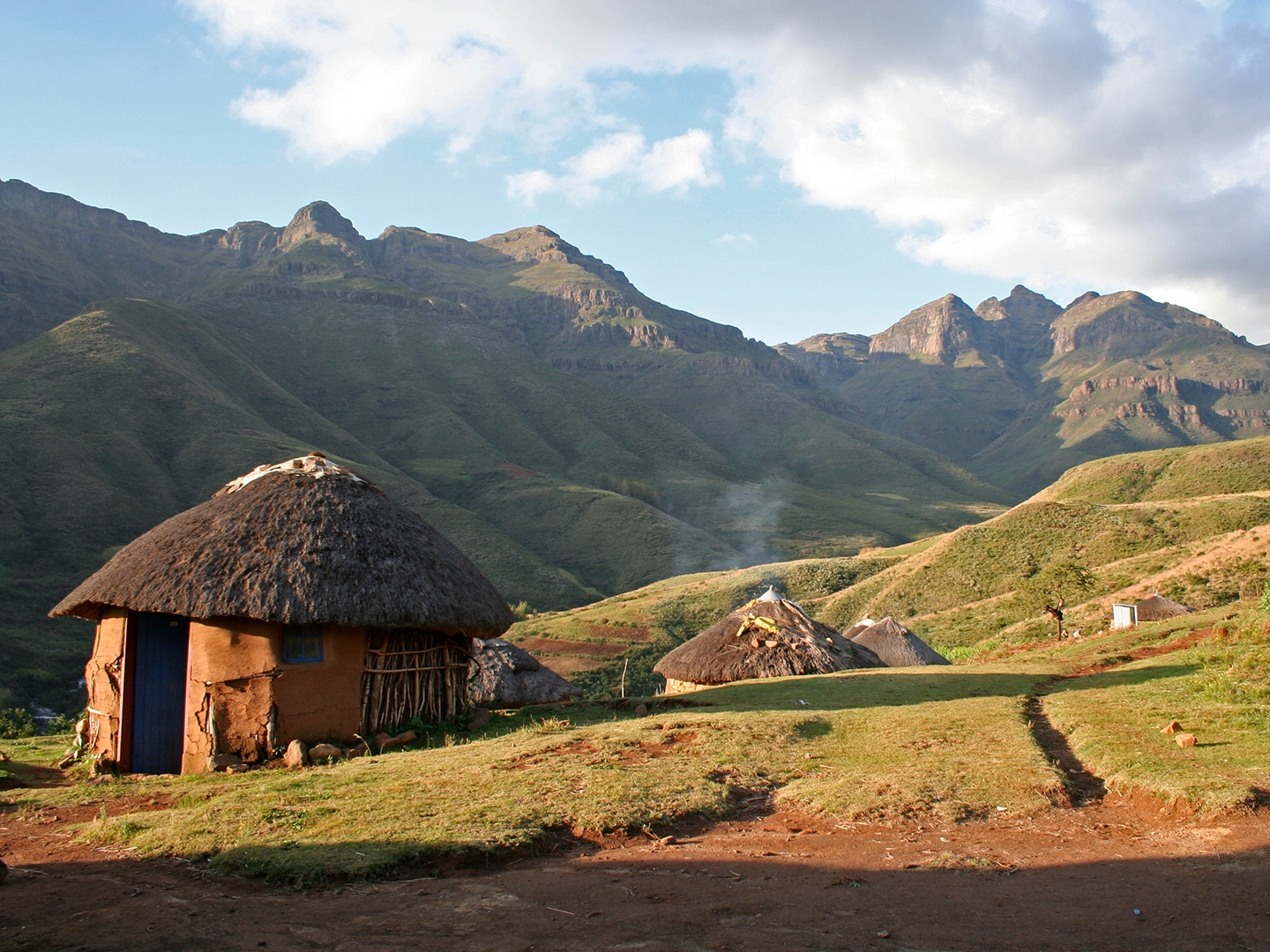
Lesotho is located in Africa, in the Southern Hemisphere. It is a landlocked country fully surrounded by South Africa.
It is slightly smaller than Maryland. There is 1 time zone, South Africa Standard Time (SAST). It does not observe daylight saving time. Lesotho is 6 hours ahead of Washington, D.C. during Eastern Standard Time..
254 Kingsway Avenue
Maseru 100, Lesotho
Message failed to load
We are unable to load the message. Visit the main U.S. embassy or consulate website for updates.
Explore our travel guidance topics to prepare for your trip abroad.
Date issued: September 24, 2026
Travelers commonly transit through South Africa when entering or leaving Lesotho and must comply with South African immigration rules. South African authorities may prevent U.S. citizen minors from continuing their travel if they are not accompanied by a parent or guardian and lack the required consent documents.
You must have 2 blank (unstamped) visa pages to visit or transfer through South Africa.
If you plan to visit South Africa for a longer period, you should check with the High Commission of South Africa in Maseru on how to obtain a visa.
Always bring a copy of each child’s birth certificate or other evidence of your legal relationship to each child.
The U.S. Department of State is unaware of any HIV and AIDS entry restrictions for visitors to or foreign residents of Lesotho.
Lesotho has one of the highest HIV rates in the world. Approximately one-quarter of the adult population of Lesotho is infected with HIV.
Local authorities are responsible for investigating and prosecuting crimes and providing emergency services.
Terrorists and their supporters may target U.S. citizens abroad.
Terrorists may target:
Demonstrations are common. They may take place in response to political or economic issues. They may also occur on significant holidays, and during large events.
Lesotho has a high crime rate. Foreigners must always remain vigilant.
Follow the Department of State guidelines to protect yourself from scams.
If you are a victim of a scam, learn how the FBI can help.
Financial scams and internet romance scams are common in Lesotho. Be careful of anyone asking for money, especially those who start a "romantic" relationship online or claim local authorities want money. Scams often begin through online posts, emails, or letters. Scammers pretend to be U.S. citizens in need of help.
Common scams include:
If using dating apps or websites in Lesotho:
Local authorities are responsible for investigating and prosecuting crime. You may report crimes to the local police by dialing 122 or +266-2232-2099.
The U.S. embassy or consulate can:
U.S. citizen victims of sexual assault are encouraged to contact the U.S. embassy and local law enforcement for assistance.
U.S. citizen victims of domestic violence are encouraged to contact the U.S. embassy, +266-2231-6666.
Mobile devices are vulnerable to compromise, theft, and damage anywhere in the world. Follow these safe practices:
Prior to using GPS abroad:
The tourism industry is not well regulated:
Review the U.S. Centers for Disease Control and Prevention (CDC) tips for Adventure Travel.
If you are arrested or detained, ask officials to notify the U.S. embassy or consulate immediately.
A detention facility may not provide you with essential medications or medical care.
Counterfeit and pirated goods are common in many destinations.
Learn more about U.S. restrictions on counterfeit and pirated goods:
Faith based travel includes pilgrimages, service projects, and mission work. Prepare for your travel using these resources:
Consensual same-sex sexual relations between men are criminalized in Lesotho. However, the U.S. embassy is not aware of any recent arrests or prosecutions.
The law in Lesotho prohibits discrimination against people with physical, sensory, intellectual or mental disabilities. The law is partially enforced.
Review the Department of State’s Human Rights Report for your destination prior to traveling.
Lesotho does not have reliable public emergency ambulance service. Private providers are the only reliable option for emergency medical transport.
U.S. Embassy Maseru maintains a list of physicians and other health care professionals. We do not endorse or recommend any specific medical provider or clinic.
Ambulance services are not widely available. Training and response time of emergency responders may be poor.
Make sure you know if your health insurance plan covers any medical expenses abroad. Most U.S. plans do not.
Stay up to date with the vaccines recommended by the U.S. Centers for Disease Control and Prevention.
There are no adequate health facilities in Lesotho. Closest high-quality care is available in Bloemfontein, South Africa.
Always carry your prescription medication in original packaging, along with your doctor’s prescription.
U.S. Customs and Border Protection (CBP) and the Food and Drug Administration (FDA) have rules for bringing medication back into the United States. If you buy medications abroad, the medications must meet CBP’s and the FDA’s requirements to bring them back legally.
The medications must also be for personal use and approved for use in the United States.
For more information:
U.S. citizens have had serious complications or died while getting care from non-traditional “healers” and practitioners in Lesotho.
If you are considering traveling to Lesotho to have a child through use of assisted reproductive technology (ART) or surrogacy, please review our information on ART and Surrogacy Abroad.
Many cities in Lesotho are at high altitude.
Air pollution can be a significant problem in many destinations abroad.
Most of Lesotho’s 5,000 miles of roads are unpaved. A few main rural highways are comparable to 2-lane rural roads in the United States.
U.S. driver's licenses are not recognized in Lesotho. Lesotho does, however, recognize an International Driver’s Permit. U.S. citizens also have the option to hire a driver with a vehicle. U.S. citizens planning to stay longer than 6 months and wishing to drive must apply for a Lesotho license and surrender their U.S. license for the duration of their stay. The U.S. license will be returned upon departure. The application process takes 1 day for holders of a valid U.S. license.
Bus and public taxi services exist, but they are not safe. They are often overloaded and poorly maintained.
The U.S. Federal Aviation Administration (FAA) has not assessed Lesotho’s Civil Aviation Authority for compliance with international standards for aviation safety oversight.
FAA's website includes more information on its assessment program.
Lesotho experiences a temperate climate shaped largely by its mountainous terrain. Summers from October to April are warm, with most of the country's annual rainfall occurring during this period, often in the form of afternoon thunderstorms.
Winters from May to September are cold and dry, with snowfall in the highlands. The lowlands experience milder winters.
Natural hazards include:
Visitors to the interior of Lesotho should bring clothing and equipment suitable for extreme cold weather during the winter months of June through August.
If you live outside the United States for a long time, you or your family may experience various life events, wish to exercise U.S. citizenship rights, or need to meet U.S. legal obligations while abroad.
254 Kingsway Avenue
Maseru 100, Lesotho
There was no change to the advisory level. The “Health” risk indicator was added. Advisory summary was updated.
Invalid Input
Last Updated: September 24, 2026
Owned by Overseas Citizens Services
An official website of the Department of State - Bureau of Consular Affairs