Skip to content

Guadeloupe

Review the latest State Department Travel Advisory about Guadeloupe. You can plan for safe travel by following the entry and exit requirements, reviewing local laws, and other travel guidance from the U.S. embassy or consulate.

Travel advisory levels

Learn more about Travel Advisory levels

  1. Exercise normal precautions
  2. Exercise increased caution
  3. Reconsider travel
  4. Do not travel

Travel advisory - Region of Guadeloupe

Level 1 - Exercise normal precautions

Date issued: August 20, 2026 -

Exercise normal precautions

in Guadeloupe.


Advisory summary

Guadeloupe is generally a safe destination for travelers.

If you decide to travel to Guadeloupe: 

Scroll to review full advisory
Travel advisory levels

Learn more about Travel Advisory levels

  1. Exercise normal precautions
  2. Exercise increased caution
  3. Reconsider travel
  4. Do not travel

About Guadeloupe

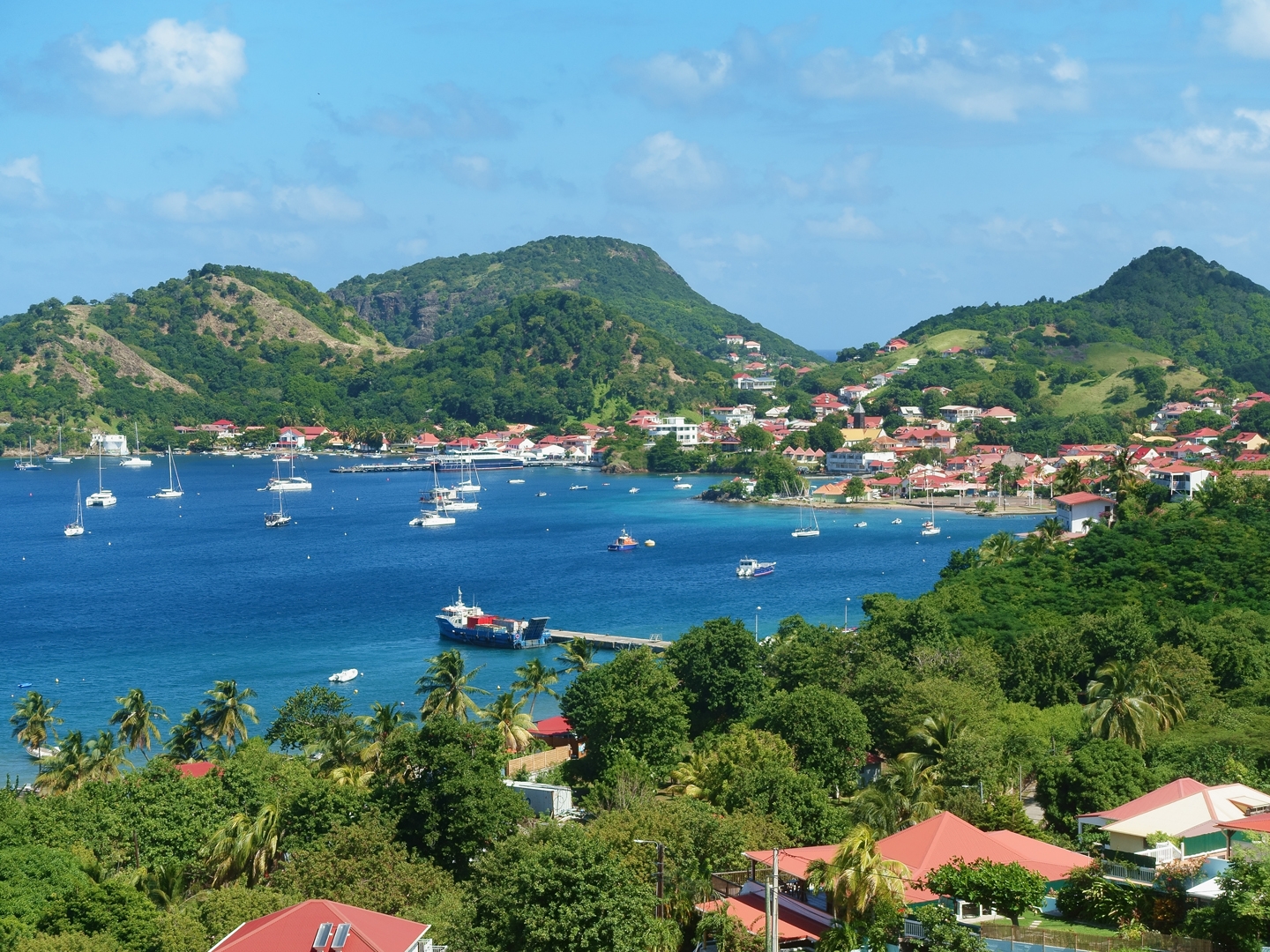
Guadeloupe is located in North America, in the Northern and Western Hemispheres. It is an island and has maritime borders with the Caribbean Sea.

It is slightly larger than Los Angeles. There is 1 time zone, Atlantic Standard Time. It does not observe daylight saving time. Guadeloupe is 1 hour ahead of Washington, D.C. during Eastern Standard Time.

Travel requirements

Tourist visa requirements

  • A visa is required for stays of more than 3 months. You must apply for a visa before you travel. 
  • No visa is required for less than 3 months.
  • You must show proof of lodging and onward travel if you don’t have a visa. 

Vaccinations

  • Yellow fever: Required if arriving from certain countries in South America or Africa.

Valid passport requirements

  • Your passport must be valid at the time of entry.
  • Must have 6 months validity beyond your arrival date.
  • The 12-page U.S. emergency passport is not valid for entry into France. 
  • Must have 1 blank passport page for stamps.

Currency on entry and exit

  • Entry maximum: €10,000  
  • Exit maximum: €10,00.0

Tips from the U.S. embassy

  • Always travel with a passport, even if not required for a cruise. In an emergency, you may need a passport to return to the United States.
  • It is illegal to bring guns, ammunition, and even spent shells or casings into Guadeloupe. You may face fines up to approximately $5,500 or imprisonment for up to 4 years. 
  • Dengue fever is a risk. Outbreaks often follow rainy seasons. Dengue is a mosquito-borne virus that causes high fever, severe headache, and joint pain. Use insect repellent (50% DEET), wear protective clothing, and use air-conditioned or screened rooms to prevent bites.

Help for U.S. citizens

U.S. Embassy Bridgetown

Wildey Business Park
St. Michael BB 14006
Barbados, W.I.

Main telephone:

+246 227-4000

Emergency after-hours:

+246 227-4000

EMBASSY UPDATE
Previous messages

Message failed to load

We are unable to load the message. Visit the main U.S. embassy or consulate website for updates.

Get embassy updates right to your inbox
Enroll In Step
Review how STEP works

Travel guidance for Guadeloupe

Explore our travel guidance topics to prepare for your trip abroad.

Date issued: August 20, 2026

Select a topic

Entry, exit, and visa requirements

Helpful resources


Cruise ship passengers 

  • Always travel abroad with a valid U.S. passport.
  • Caribbean cruises that begin and end in the United States may not require that you travel with a valid passport. However, in an emergency, you may encounter difficulties entering or remaining in a foreign country if you do not have a passport. 
  • Without a passport, you may also have difficulty attempting to re-enter the United States by air. Many airlines require you to have one before boarding the aircraft. 

Traveling with children

Always bring a copy of each child’s birth certificate or other evidence of your legal relationship to each child. 

  • When 1 parent is traveling with a child, a notarized consent letter is required from the absent parent. Otherwise, you must show proof of sole custody. 
  • Parents and guardians should prepare a notarized, written permission letter to allow their minor children to travel to or from Guadeloupe alone or with someone else. 

All minors under age 18 must have written permission from at least 1 parent or legal guardian to leave France or its territories in these cases: 

  • The minor is a resident of France or its territories. 
  • The minor is traveling without a parent or legal guardian. 

In these cases, the minor must travel with the following documents: 

  • Their personal Identification Document 
  • A copy of the parent or guardian’s Identification Document 
  • The French Government Authorization to leave the territory (AST) Form 15646-01 completed by the parent or guardian. 

If you have concerns that your child may be abducted abroad by their other parent or guardian, review our information on how to prevent an international parental child abduction.


HIV and AIDS restrictions 

  • The U.S. Department of State is unaware of any HIV and AIDS entry restrictions for visitors to or foreign residents of Guadeloupe.

Currency 

  • The euro is the official currency of Guadeloupe.
  • ATMs are available throughout Guadeloupe.
  • Credit cards are accepted by large retailers. 

Safety and security

Emergency phone numbers

Local authorities are responsible for investigating and prosecuting crimes and providing emergency services.

  • Dial 112 for general emergencies.
  • Dial 17 for police.
  • Dial 15 for ambulance.
  • Dial 18 for fire department.
  • Dial 3919 for the French national domestic violence line – Violences Femmes Info (from a French phone). It is free and anonymous.

Crime

Petty street crime can occur, including purse snatching. 

Safety tips:

  • Do not leave valuables unattended in public areas, unsecured hotel rooms, rental homes, or visible in vehicles.
  • Exercise caution, especially at night. Roads may be unmarked and unlit.
  • Be vigilant when using public telephones or ATMs, especially in secluded areas.
  • Avoid wearing expensive jewelry.
  • Avoid carrying expensive objects or large amounts of cash.
  • Keep doors and windows locked, especially at night.
  • Use caution when dealing with beach merchants.
  • For boaters: Be wary of unfamiliar people or crafts approaching your boat, whether at anchor or at sea.

Scams

Follow the Department of State guidelines to protect yourself from scams. 

Financial and internet romance scams are not common in Guadeloupe, but may happen. Be careful of anyone asking for money, especially those who start a "romantic" relationship online or claim local authorities want money. Scams often begin through online posts, emails, or letters. Scammers pretend to be U.S. citizens in need of help.

Common scams include: 

  • People claiming to be U.S. military personnel
  • People claiming to be detained or hospitalized abroad
  • Romance and online dating
  • Money transfers
  • Grandparent and relative targeting
  • Free trip or luggage
  • Lotteries
  • Inheritance notices
  • Work permits and job offers

Victims of crime

Local authorities are responsible for investigating and prosecuting crime. You may report crimes to the local police by dialing 17. 

Review our information for Victims of Crime.

The U.S. embassy or consulate can:

  • Replace a stolen or lost passport.
  • Help you find medical care.
  • Assist you in how to report a crime to the police.
  • Contact relatives or friends with your written consent.
  • Provide general information regarding the criminal justice system.
  • Provide a list of local attorneys. We do not endorse or recommend any specific attorneys.
  • Provide information on victim’s compensation programs in the United States.
  • Provide an emergency loan for repatriation to the United States or limited medical support in cases of need.
  • Help you find accommodation and options to travel home.

Sexual assault and domestic violence

  • U.S. citizen victims of sexual assault are encouraged to contact the U.S. embassy and local law enforcement for assistance. 
  • U.S. citizen victims of domestic violence are encouraged to contact the U.S. embassy and local law enforcement for assistance. 

Technology use abroad

Mobile devices are vulnerable to compromise, theft, and damage anywhere in the world. Follow these safe practices:

  • Update all software (operating system and apps) before leaving the United States.
  • Use reputable, U.S.-based VPN or VoIP applications.
  • Don’t connect to public Wi-Fi networks.
  • Research the safety of routes recommended by GPS. The fastest route is not always the safest.
  • Be cautious using dating apps abroad, as scammers often target U.S. citizens.

Tourism safety

The tourism industry is regulated:

  • Rules and safety inspections are regularly enforced.
  • Dangerous areas and activities are marked with signs.
  • Trained and certified staff are usually there to help with organized activities.
  • If you get injured, you can usually get medical help locally.
  • In rural areas, it might take longer for medical help to arrive and help.
  • U.S. citizens are encouraged to have medical evacuation insurance. Review our information on Travel Insurance.


Lodging safety

Consider safety when picking places to stay.

  • Research hotels or lodgings carefully. Book accommodations before traveling and have backup options ready in case you have to switch locations.
  • Consider accommodations with safety measures like 24-hour lobby service, gates, or security guards.
  • Ensure all doors and windows lock properly.
  • Always meet new visitors or strangers in the public lobby, not in your room.
  • Review our information on Lodging Safety.


Adventure travel

Carefully assess the potential risks of recreational water activities. Consider your physical capabilities and skills. 

  • Never venture out alone, particularly at remote beaches or far out to sea.
  • Avoid entering the water above your waist if you have been drinking. 
  • Always be mindful of jet ski and boat traffic in the area. When in doubt, stay out the water.
  • Review the U.S. Centers for Disease Control and Prevention (CDC) tips for Adventure Travel.

Local laws and customs

Criminal penalties

U.S. citizens must follow local laws. If you break local laws, even by mistake, you could be deported, arrested, or imprisoned.

  • Travelers who accidentally break local laws have been detained. Sometimes, this can be for a long time. They may also face criminal charges and even be convicted of a crime.
  • You may be prosecuted in the United States for crimes committed abroad regardless of the local law. Review the information provided by the U.S. Department of Justice about crimes against minors abroad.
  • Before you start a business or a profession in Guadeloupe seek information from the local authorities about what permits or licenses are required.

Arrest notification 

  • If you are arrested or detained, ask officials to notify the U.S. embassy or consulate immediately.

Counterfeit and pirated goods 

Counterfeit and pirated goods are common in many destinations.

  • They may be illegal according to local laws.
  • Counterfeit and pirated goods may pose significant risks to consumer health and safety.
  • You may be subject to fines or have to surrender counterfeit and pirated goods to authorities if you bring them back to the United States.

Learn more about U.S. restrictions on counterfeit and pirated goods: 


Faith-based travelers

Faith based travel includes pilgrimages, service projects, and mission work. Prepare for your travel using these resources: 


Gay and lesbian travelers 

  • There are no legal restrictions on consensual same-sex sexual relations, the provision of information or services to persons on the basis of real or perceived sexual orientation, or the organization of events focused on sexual orientation in Guadeloupe.
  • Review our information for Gay and Lesbian Travelers.

Travelers accessibility needs

The law in Guadeloupe prohibits discrimination against people with physical, sensory, psychosocial, intellectual or mental disabilities. The law is enforced.

  • The most common types of accessibility may include accessible facilities, information, and communication or access to services.
  • Expect accessibility to be extremely limited in public transportation, lodging, and general infrastructure.
  • General public sentiment around disability is similar to that in the United States.  However, limited infrastructure may make mobility and accessibility difficult. 
  • Review our information on Accessibility Needs.

Students 


Women travelers


Human rights

  • Review the Department of State’s Human Rights Report for your destination prior to traveling.

Health

Health resources


Emergency phone numbers

  • Dial 112 or 15 for emergency medical services.  

Ambulance services

  • Ambulance services are widely available. However, training and response time of emergency responders may vary.

Medical payments and insurance

Make sure you know if your health insurance plan covers any medical expenses coverage abroad.  Most U.S. plans do not. 

  • The U.S. government does not pay medical bills.
  • U.S. Medicare and Medicaid do not cover expenses or bills abroad.
  • Most hospitals and doctors abroad do not accept U.S. health insurance.
  • Medical care in Guadeloupe is not free for non-residents. If you require medical attention, you will be responsible for expenses, even when treated at public healthcare facilities.
  • Hospitals often need payment up front or proof of good insurance before providing treatment or admitting a patient.  
  • Make sure you know if your health insurance plan provides coverage abroad or reimbursement of payments. The CDC provides more information on types of insurance.
  • We strongly recommend supplemental insurance to cover medical evacuation
  • If you purchase supplemental insurance, you are responsible for seeking reimbursement from the insurance provider. Follow their instructions for filing claims. 

Vaccinations

Stay up to date with the vaccines recommended by the U.S. Centers for Disease Control and Prevention.


Healthcare facilities

Guadeloupe offers adequate care for basic medical conditions. 

  • For more specialist treatment or elective surgery, you may need to travel to the United States.
  • In the event of a medical emergency, an evacuation to the United States may be necessary. Such evacuations can be extremely expensive. 
  • The U.S. embassy maintains a list of doctors and hospitals. We do not endorse or recommend any specific medical provider or clinic.

Prescription medications

U.S. Customs and Border Protection (CBP) and the Food and Drug Administration (FDA) have rules for bringing medication back into the United States.  If you buy medications abroad, the medications must meet CBP’s and the FDA’s requirements to bring them back legally. 

The medications must also be for personal use and approved for use in the United States. 

  • Please review France’s rules on medication.
  • Take your prescription medication in the original packaging with your doctor’s prescription. 
  • Bring only enough for yourself and the duration of your stay.
  • Bring a copy of your doctor’s prescription.
  • Check with the Government of France to ensure the medication is legal in France.

For more information: 


Assisted Reproductive Technology (ART) and surrogacy

  • If you are considering traveling to Guadeloupe to have a child through use of assisted reproductive technology (ART), please review our information on ART and Surrogacy Abroad.
  • Surrogacy is illegal in Guadeloupe under France’s 1994 bioethics law. 

Water quality and food safety

  • Tap water is generally safe to drink and use in cooking.
  • Bottled water and beverages are generally safe. Use major brands and ensure the seal is intact.
  • Many restaurants and hotels serve tap water unless bottled water is specifically requested.

Air quality

Transportation

Road conditions and safety

The roads in Guadeloupe are usually well paved and well maintained. 

  • Main roads are well marked. Secondary roads and tourist sites are adequately marked. 
  • The police enforce traffic safety. 
  • Night driving can be dangerous, especially in the mountains and on winding rural roads.

Traffic laws

Tourists can drive in Guadeloupe using their valid U.S. driver's license.

  • Children under 12 are not legally allowed in the front seat. 
  • Seatbelt laws are strictly enforced.
  • For information concerning driver's permits, vehicle inspection, road tax, and mandatory insurance, contact the Road Safety Department.

Taxis and ride-shares 

  • Taxis are widely available. They are not metered. Instead, drivers quote passengers a fare based on distance and time. Fares generally range from $10 to over $30 depending on the distance.
  • Rideshare and car service apps are available in Guadeloupe.

Public and commercial transportation 


Aviation safety oversight

  • The U.S. Federal Aviation Administration (FAA) has found that Guadeloupe meets international standards for aviation safety oversight. FAA's website includes more information on its assessment program.

Maritime travel

Mariners and passengers planning travel to Guadeloupe should check the following:  

Weather and natural disasters

Weather conditions

Hurricanes, tropical storms, and heavy rainfall
  • Hurricanes and tropical storms are the most significant threat. They occur during the Atlantic hurricane season from June to November, peaking in September.
  • Heavy rainfall is common in the wet season from May to November. It can trigger flash floods and slope failures.
Earthquakes
  • The island is seismically active year-round.

U.S. citizens living abroad

Living abroad resources

If you live outside the United States for a long time, you or your family may experience various life events, wish to exercise U.S. citizenship rights, or need to meet U.S. legal obligations while abroad.

Embassies and consulates

U.S. Embassy Bridgetown

Wildey Business Park
St. Michael BB 14006
Barbados, W.I.

Main telephone:

+246 227-4000

Emergency after-hours:

+246 227-4000