Travel.State.Gov US Department of State Homepage

Travel advisory - Democratic Republic of Sao Tome and Principe

Level 2 - Exercise increased caution

Date issued: October 08, 2025 -
  • Health (H)

Exercise increased caution

in São Tomé and Príncipe due to health risks.

Advisory summary

Medical services in São Tomé and Príncipe are limited. There are no adequate trauma or ambulance services. Even minor health issues may require medical evacuation at the traveler’s expense. Review our information on Travel Insurance

If you decide to travel to São Tomé and Príncipe:

  • Medical services for routine and emergency procedures are limited. Read the Health section of the Travel Guidance on this page for more information.
  • Make sure you have medical or travel insurance that includes medical evacuation. Review our information on Travel Insurance.
  • Check with your doctor about required vaccines and shots for high-risk exposure before you go to São Tomé and Príncipe.
  • Bring enough supply of over the counter and prescription medicines to cover the duration of the trip.
  • Have sufficient access to cash (U.S. dollars or local currency) to pay for medical services as credit or debit cards are not widely accepted by medical facilities.
  • Enroll in the Smart Traveler Enrollment Program (STEP) to get important updates and alerts from the U.S. embassy or consulate. Enrolling helps the U.S. embassy or consulate contact you or your emergency contact in an emergency. 
  • Review the Country Security Report for São Tomé and Príncipe.
  • Visit the Centers for Disease Control and Prevention (CDC) website for the latest Travel Health Information for São Tomé and Príncipe.
  • Whether you’re a first time or frequent traveler, use the International Travel Checklist.
  • We highly recommend that you buy travel insurance before you travel. Check with your travel insurance provider about evacuation assistance, medical insurance, and trip cancelation coverage.
Scroll to review full advisory
Travel advisory levels
Learn more about
  1. Exercise normal precautions
  2. Exercise increased caution
  3. Reconsider travel
  4. Do not travel

About São Tomé and Príncipe

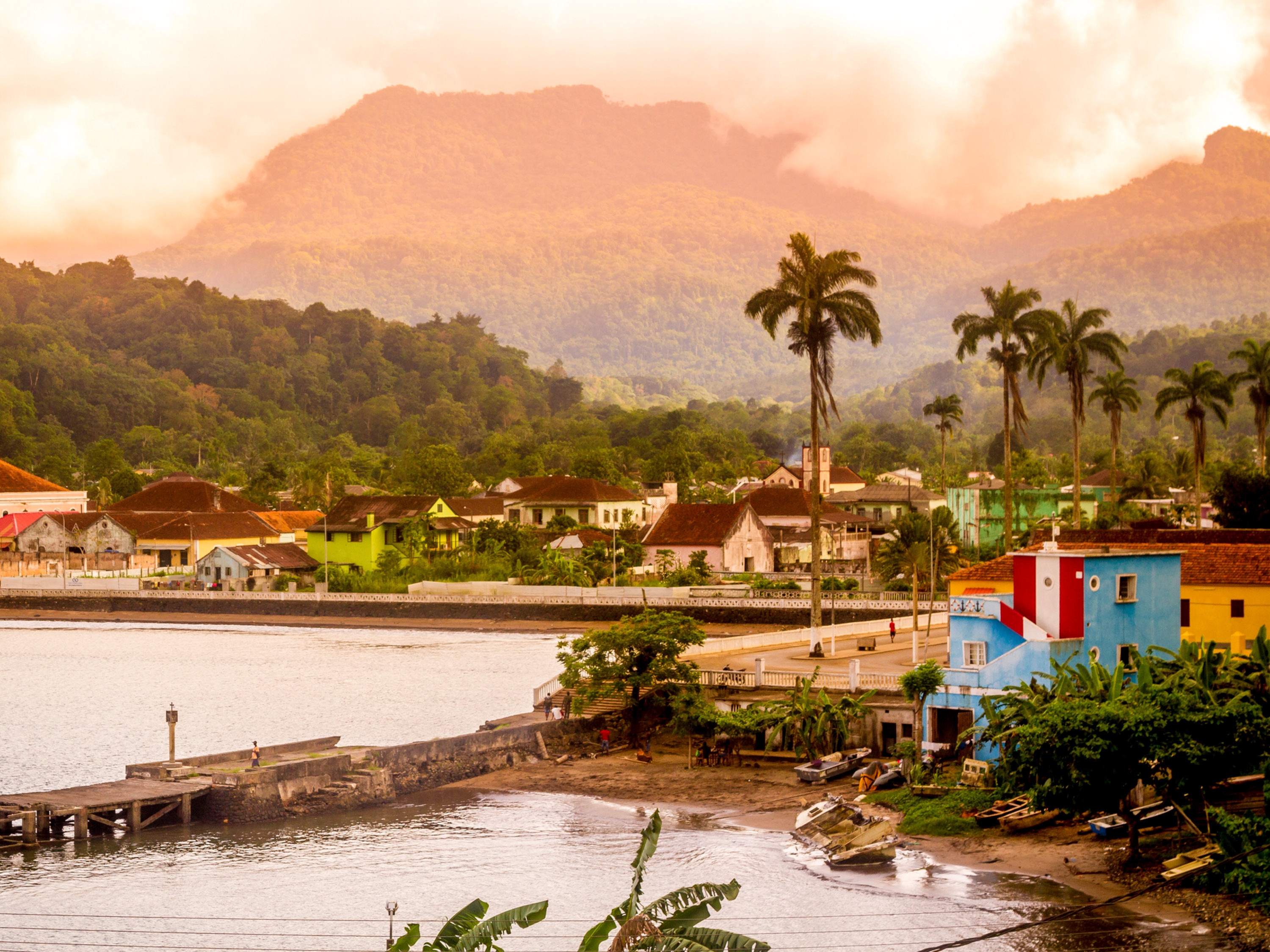
São Tomé and Príncipe is an island country located off the west coast of Africa in the Gulf of Guinea. It is made up of 2 main islands. The larger island is São Tomé and the smaller, located about 90 miles to the northeast, is Príncipe. The capital city, São Tomé, is located on the larger island.

São Tomé and Príncipe is about one fourth the size of Rhode Island. There is 1 time zone, Greenwich Mean Time (GMT). It does not observe daylight saving time. The country is 5 hours ahead of Washington, D.C. during Standard Time and 4 hours ahead during Daylight Saving Time.

Travel requirements

Tourist visa requirements

  • No visa is required for 15 days or less.

Vaccinations

  • Yellow fever: You must present proof of yellow fever vaccination to enter São Tomé & Príncipe.

Valid passport requirements

  • Must have 6 months’ validity beyond your arrival date.
  • 1 blank page available per stamp.

Currency on entry and exit

  • Entry maximum: None
  • Exit maximum: A report is required when exiting with 10,000 Euros or more. You need to show financial statements. These must prove that you entered the country with more money than you plan to leave with.

Tips from the U.S. embassy

  • Booking your accommodation and flights well in advance is strongly encouraged. São Tomé and Príncipe has limited tourism infrastructure.
  • Proof of a yellow fever vaccination is required upon entry to the country.
  • São Tomé and Príncipe has a cash-based economy. However, international credit cards (Visa only) can be used at ATMs and some large stores and restaurants. Main hotels accept other international cards.
EMBASSY UPDATE

Message failed to load


We are unable to load the message. Visit the main U.S. embassy or consulate website for updates.

Get embassy updates right to your inbox
Enroll In Step
Review how STEP works

Travel guidance for São Tomé and Príncipe

Explore our travel guidance topics to prepare for your trip abroad.

Select a topic

Entry, exit, and visa requirements

Helpful resources

Review our information on Dual Nationality.


Traveling with children

  • Always bring a copy of each child’s birth certificate or other evidence of your legal relationship to each child.
  • All minors, including dual U.S. citizens, must have notarized, written permission from a parent or guardian to travel without that parent or guardian.
  • Each traveler will need their own passport and proof of yellow fever vaccine.
  • If you have concerns that your child may be abducted abroad by their other parent or guardian, review our information on how to prevent an international parental child abduction. You can also review our information on Parental Child Abduction in São Tomé and Príncipe.
  • Review our information on Traveling with Minors.


Safety and security

Emergency numbers

Local authorities are responsible for investigating and prosecuting crimes and providing emergency services.


Crime

  • Burglary and pickpocketing happen sometimes. Home invasions have occurred on the islands but they are uncommon.
  • The crime rate is low across the country. But for your safety, avoid visiting remote areas alone, including beaches.

Scams

Follow the Department of State guidelines to protect yourself from scams.

If you are a victim of a scam, learn how the FBI can help.

Financial scams and internet romance scams are not common in São Tomé and Príncipe. However, be careful of anyone asking for money, especially those who start a "romantic" relationship online or claim local authorities want money. Scams often begin through online posts, emails, or letters. Scammers pretend to be U.S. citizens in need of help.

Common scams include:

  • People claiming to be U.S. military personnel
  • People claiming to be detained or hospitalized abroad
  • Romance and online dating 
  • Money transfers
  • Grandparent and relative targeting
  • Free trip or luggage
  • Lotteries
  • Inheritance notices
  • Work permits and job offers

Dating apps or websites are not widely used in São Tomé and Príncipe. However, keep these safety tips in mind if using them: 

  • Criminals may use dating apps to target potential victims for robbery or assault.
  • Let your friends and family know where you are and consider sharing your location on your phone.         
  • Meet in a popular public place.
  • Tell your family or friends all the details about the person you are meeting and how you met them (which app).
  • Set up and talk using a video call before agreeing to meet in person.
  • Avoid locations where you can be isolated, like hotel rooms, private apartments or houses.
  • Never leave food or drinks unattended at a bar or restaurant.
  • Observe the preparation of your food or drink order when possible.
  • Refuse offers of food or drinks from strangers.
  • Have a communication plan with friends or family. Send updates to them on an agreed schedule.

Victims of crime

If you are the victim of an attempted robbery or carjacking, you are encouraged to give up your property to avoid injury. Report all incidents to the police and the U.S. Embassy to Angola and São Tomé and Príncipe. Police response time can be slow.

Local authorities are responsible for investigating and prosecuting crimes. You may report crimes to the police by dialing 222-22-22.

Review our information for Victims of Crime.

The U.S. Embassy to Angola and São Tomé & Príncipe can:

  • Replace a stolen or lost passport.
  • Help you find medical care.
  • Assist you in how to report a crime to the police.
  • Contact relatives or friends with your written consent.
  • Provide general information regarding the criminal justice system.
  • Provide a list of local attorneys. We do not endorse or recommend any specific attorneys.
  • Provide information on victim’s compensation programs in the United States.
  • Provide an emergency loan for repatriation to the United States or limited medical support in cases of need.
  • Help you find accommodation and options to travel home.


Technology use abroad

Mobile devices are vulnerable to compromise, theft, and damage anywhere in the world. Follow these safe practices:

  • Update all software (operating system and apps) before leaving the United States.
  • Use reputable, U.S.-based VPN or VoIP applications.
  • Don’t connect to public Wi-Fi networks.
  • Research the safety of routes recommended by GPS. The fastest route is not always the safest.
  • Be cautious using dating apps abroad, as scammers often target U.S. citizens.

GPS

Prior to using GPS abroad:

  • Research the route recommended by the GPS to make sure it’s safe.
  • The fastest path may not be the safest.

Tourism safety

The tourism industry is not well regulated:

  • Safety inspections for equipment and facilities are rare.
  • Dangerous areas and activities are not always marked with signs.
  • Staff may not be trained or certified.
  • If you get injured, you will likely need to travel to a major city for appropriate medical care.
  • First responders cannot reach remote areas in case of emergencies.
  • U.S. citizens are encouraged to have medical evacuation insurance. 

Review our information on Travel Insurance.

Local laws and customs

Criminal penalties

  • U.S. citizens must follow local laws. If you break local laws, even by mistake, you could be deported, arrested, or imprisoned.
  • There are severe penalties for all drug offenses. Pack all luggage yourself. Do not carry anything through customs for anyone else.
  • You may be prosecuted in the United States for crimes committed abroad regardless of the local law. Review the information provided by the U.S. Department of Justice about crimes against minors abroad.
  • Before you start a business or a profession in São Tomé and Príncipe seek information from the local authorities about what permits or licenses are required.

Arrest notification

If you are arrested or detained, ask officials to notify the U.S. Embassy to Angola and São Tomé and Príncipe immediately.


Detention Conditions

Prisons in São Tomé and Príncipe are in poor condition. Poor conditions include: 

  • overcrowding
  • deteriorating infrastructure
  • poor sanitation
  • poor medical care
  • poor food quality

Counterfeit and pirated goods

Counterfeit and pirated goods are common in many destinations.

  • They may be illegal according to local laws.
  • Counterfeit and pirated goods may pose significant risks to consumer health and safety.
  • You may be subject to fines or have to surrender counterfeit and pirated goods to authorities if you bring them back to the United States.

Learn more about U.S. restrictions on counterfeit and pirated goods:


Faith-based travelers

Faith-based travel includes pilgrimages, service projects, and mission work. Prepare for your travel using these resources:


Gay and lesbian travelers

  • There are no legal restrictions on consensual same-sex sexual relations, the provision of information or services to persons on the basis of real or perceived sexual orientation, or the organization of events focused on sexual orientation in São Tomé and Príncipe.
  • Some societal discrimination does exist, and there are no legal protections for gay and lesbian individuals against discrimination.
  • São Tomé and Príncipe is generally safe for gay and lesbian travelers. But be extra cautious due to societal conservatism. Avoid public displays of affection. 
  • Review our information for Gay and Lesbian Travelers.

Travelers with disabilities or accessibility needs

  • The law in São Tomé and Príncipe does not prohibit discrimination against people with any disability.
  • People with disabilities face challenges in accessing education and healthcare. 
  • Law 7/2012, which supports people with disabilities, is now in effect. As a result, hospitals and health centers are updating their facilities. 
  • Access to proper transportation is still a challenge for people with disabilities. 
  • Expect accessibility to be limited in lodging, communication and information, and general infrastructure.
  • People rarely report discrimination.

Review our information on Accessibility Needs.


Students


Women travelers

Domestic violence is a crime. However, it is common throughout the country.  

  • Domestic violence is punishable with up to 8 years in prison when it does not cause death.
  • Domestic violence is punishable with up to 16 years in prison when it causes death.
  • Review our information for Women Travelers.
  • Review our information on Marriage.
  • Review our information for Victims of Crime.

Human rights

There have been reports of significant human rights abuses in São Tomé and Príncipe that include: 

  • Arbitrary or unlawful killings.
  • Restrictions on freedom of expression and media freedom. This includes politically motivated retaliation and censorship against journalists.
  • Presence of child labor.

The government of São Tomé and Príncipe has taken steps to identify and punish officials who committed human rights abuses.

Review our information for Journalists working abroad.

Review the Department of State’s Human Rights Report for your destination prior to traveling.

Health


Emergency numbers

Dial 222-22-22 for emergency medical services in São Tomé and Príncipe.


Ambulance services

Ambulance services are: 

  • Not widely available. Training and response time of emergency responders may be poor.
  • Not equipped with advanced medical equipment.
  • Not staffed with trained paramedics. They often have little or no medical equipment.

Injured or very ill travelers might prefer to take a taxi or their own car to the nearest major hospital. This option can be faster than waiting for an ambulance.


Medical payments and insurance

Make sure you know if your health insurance plan covers any medical expenses coverage abroad. Most U.S. plans do not.

  • The U.S. government does not pay medical bills.
  • U.S. Medicare and Medicaid do not cover expenses or bills abroad.
  • Most hospitals and doctors abroad do not accept U.S. health insurance.
  • Medical care is not free in Sao Tome and Principe. If you require medical attention, you will incur expenses, even if you are treated in a public healthcare facility. 
  • Most hospitals and medical professionals require cash payment.
  • Both public and private hospitals often need payment up front or proof of good insurance before providing treatment or admitting a patient.
  • Make sure you know if your health insurance plan provides coverage abroad or reimbursement of payments. The CDC provides more information on types of insurance. If you purchase medical travel insurance, you are responsible for seeking reimbursement from your medical insurance. Be sure to follow their guidance and instructions for filing claims.
  • We strongly recommend supplemental insurance to cover medical evacuation.

Vaccinations

Proof of yellow fever vaccination is required upon entry to the country.

Stay up to date with the vaccines recommended by the U.S. Centers for Disease Control and Prevention.


Healthcare facilities

  • Medical facilities in São Tomé and Príncipe are extremely limited.
  • Adequate medical treatment, as well as access to routine and emergency procedures, is often unavailable, and even minor health issues could require medical evacuation. The only hospital in the country is on São Tomé: Hospital Central Ayres de Menezes. They have general surgery, general medicine, and an intensive care unit. 
  • Access to medicines, including antibiotics, can be limited.
  • Facilities are old and lack basic equipment.
  • Most clinics only provide very basic services.
  • Payment in cash is almost always expected before treatment. 
  • The availability of medicine in local stores or pharmacies is very limited. 
  • You should carry prescription medication in its original packaging, along with your doctor’s prescription.
  • Medical staff may speak little or no English.
  • Patients must cover all costs for transfers to or between hospitals.
  • Psychological and psychiatric services are limited, even in larger cities.

Prescription medications

  • Always carry your prescription medication in original packaging, along with your doctor’s prescription.
  • Be sure to bring enough of your prescriptions (as well as over-the-counter medications) to last the duration of your trip.
  • Exercise caution when purchasing medication abroad. Pharmaceuticals are usually easy to buy with few controls.

U.S. Customs and Border Protection (CBP) and the Food and Drug Administration (FDA) have rules for bringing medication back into the United States. If you buy medications abroad, the medications must meet CBP’s and the FDA’s requirements to bring them back legally.

The medications must also be for personal use and approved for use in the United States.

For more information:


Water quality and food safety

  • In all areas of São Tomé and Príncipe, tap water is not safe to drink.
  • Tap water is not available every day throughout the country.
  • Bottled water and beverages are generally safe. Use major brands and ensure the seal is intact.
  • You may want to request no ice in your drinks since it may be made using tap water.
  • Eating uncooked vegetables and fruits can make you sick.
  • Make water safe by filtering, boiling, disinfecting, or distilling.
  • Impure water can cause diseases like typhoid, cholera, hepatitis, and dysentery.

Air quality

Air pollution can be a significant problem in many destinations abroad.

  • Check NASA’s Air Quality Forecast. It uses Artificial Intelligence (AI), historical data, and global pollution modeling to generate a 3-day forecast of expected air quality in São Tomé and Príncipe.
  • For information about common air pollutants, check the CDC’s Air Quality page.
  • For information about the U.S. Air Quality Index and health guidance, check out the EPA’s AirNow.
  • For general health information, visit the Medicine and Health page.

Transportation

Road conditions and safety

  • Most roads do not have sidewalks. This forces pedestrians and livestock to use the roadways both day and night.
  • Secondary roads are often dark and damaged. Driving can be tough from September to May due to rain, especially for cars without 4-wheel drive.
  • Motor vehicle accidents are the most common cause of death among travelers to São Tomé and Príncipe.
  • Safety dangers include the lack of road shoulders, potholes, pedestrians, bicyclists, and livestock.
  • You should drive defensively. Avoid road travel outside cities at night.
  • Road support networks for stranded drivers do not exist.
  • Fuel shortages for both diesel and gasoline may occur. Travelers should plan accordingly.
  • Do not travel by foot along roadways.
  • Road signs for changes in texture, curves, and other traffic cues are often missing.

Traffic laws

  • Police checkpoints are common. However, properly documented drivers usually pass quickly and without problems. 
  • Never drive under the influence of alcohol or drugs. 
  • An international driving permit and a valid government-issued driver’s license is required to drive in São Tomé and Príncipe.

Taxis and ride-shares 

There are only shared taxis (hiaces).

  • You can request individual transportation at your hotel. You can also hail shared taxis on the street.
  • Many reputable hotels provide their own transportation to and from the airport as well as to tourist destinations.

Public and commercial transportation

There are no public transportation options other than shared taxis. 

Review our information on Driving and Transportation Safety Abroad.


Aviation safety oversight

The U.S. Federal Aviation Administration (FAA) has not assessed São Tomé and Príncipe’s Civil Aviation Authority for compliance with international standards for aviation safety oversight. FAA's website includes more information on its assessment program.


Flights between islands

Flights between São Tomé and the island of Príncipe are limited. Check out São Tomé International Airport to learn which airlines operate flights between the islands and review the available flights. 


Maritime travel

Mariners planning travel to São Tomé and Príncipe should check the following:

The U.S. Coast Guard determined São Tomé and Príncipe ports do not have effective anti-terrorism measures. Vessels that arrive in U.S. ports from São Tomé and Príncipe ports must meet additional U.S. Coast Guard conditions of entry as described in the current Port Security Advisory, International Port Security Program - Port Security Advisory

Mariners and passengers in São Tomé and Príncipe ports should be careful and use stronger security measures.

Weather and natural disasters

  • Long rainy season – From March to May. It causes coastal and river flash floods, severe storms, and landslides.
  • Short rainy season – From September to November. There is a small possibility of floods. There are limited local resources to help during these events.
  • The southern part of São Tomé and the island of Príncipe can experience heavy rains.

U.S. citizens living abroad

Embassies and consulates

The address of the Permanent Mission of the Democratic Republic of São Tomé and Príncipe in New York is:

866 Second Avenue
9th Floor, Suite A 
New York, NY 10017 

Phone: +1 9297335940
Email: missaony.onu@mne.gov.st

It is located at same building with the Portuguese Representation.

You can also contact the Embassy of São Tomé & Príncipe in Brussels.


U.S. Embassy Luanda

Rua Presidente Houari Boumedienne #32
Miramar Luanda
Angola

Main telephone:

+244-923-640-154

Emergency after-hours:

+244-222-64-1112  or +244-923-64-0154

Last Updated: October 27, 2025

Owned by Overseas Citizens Services