- Crime (C)
There were no changes to the advisory level or risk indicators. Advisory summary was updated.
Review the latest State Department Travel Advisory about Guyana. You can plan for safe travel by following the entry and exit requirements, reviewing local laws, and other travel guidance from the U.S. embassy or consulate.
Visit gy.usembassy.gov
Learn more about U.S. and Guyana relations at State.gov
Learn more about Travel Advisory levels
to Guyana due to crime.
Violent crime is common, especially at night. Crimes include murder and armed robbery. Local police often lack the resources to respond effectively to serious criminal incidents.
Learn more about Travel Advisory levels
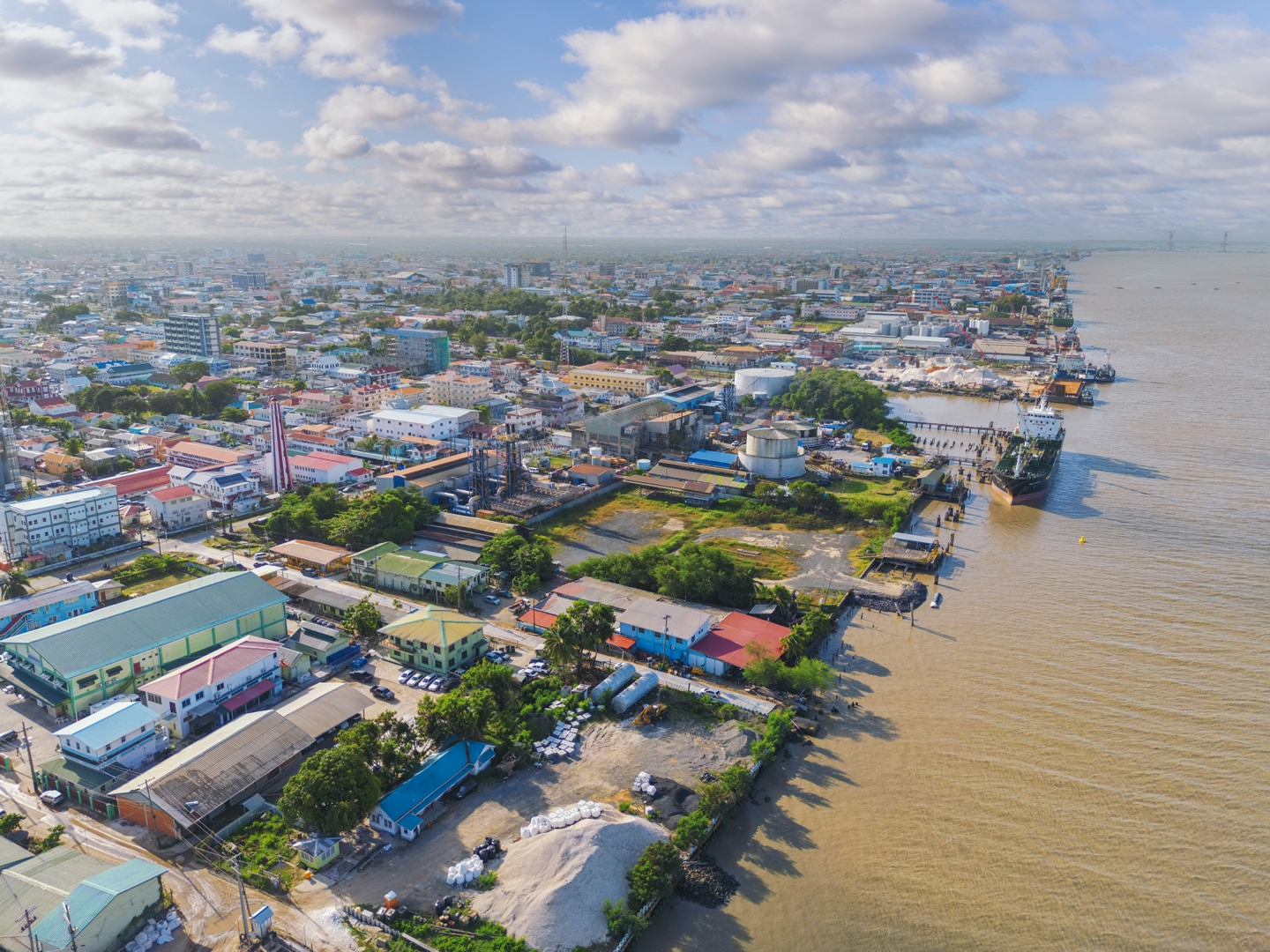
Guyana is located in South America, in the Northern and Western Hemispheres. It has a maritime border with the Atlantic Ocean. It also shares land borders with Venezuela, Suriname, and Brazil.
It is slightly smaller than Idaho. There is 1 time zone, Guyana Time. It does not observe daylight saving time. Guyana and Washington, D.C. are in the same time zone from March to November (while the U.S. is on Daylight Saving Time), and Guyana is 1 hour ahead from November to March.
100 Young and Duke Streets
Georgetown, Guyana
+592-225-4900, ext. 9
Online Navigator: U.S. Citizen Services
Message failed to load
We are unable to load the message. Visit the main U.S. embassy or consulate website for updates.
Explore our travel guidance topics to prepare for your trip abroad.
Date issued: August 06, 2026
Always bring a copy of each child’s birth certificate or other evidence of your legal relationship to each child.
Local authorities are responsible for investigating and prosecuting crimes and providing emergency services.
Demonstrations are not frequent but, when they occur, may quickly become volatile. They may take place in response to political or economic issues. Demonstrations can be unpredictable. Avoid areas around protests and other demonstrations.
Follow the Department of State guidelines to protect yourself from scams.
If you are a victim of a scam, learn how the FBI can help.
Financial scams/internet romance scams occur in Guyana. Be careful of anyone asking for money, especially those who start a “romantic” relationship online. Also be cautious when investing or starting business relationships, as it may be difficult to recover investments if defrauded. The U.S. Embassy’s Department of Commerce office can be of assistance in vetting potential business partners.
Local authorities are responsible for investigating and prosecuting crime. You may report crimes to the local police by dialing 911 or +592-225-2700.
Review our information for Victims of Crime.
The U.S. embassy or consulate can:
U.S. citizen victims of sexual assault and domestic violence are encouraged to contact the U.S. embassy and the sexual and domestic violence hotline by dialing 914 for assistance.
Verbal sexual harassment is common. It usually takes the form of catcalling and using lewd and sexually suggestive language to describe women’s dress and appearance.
Mobile devices are vulnerable to compromise, theft, and damage anywhere in the world. Follow these safe practices:
The tourism industry is not well regulated:
Counterfeit and pirated goods are common in many destinations.
Learn more about U.S. restrictions on counterfeit and pirated goods:
Faith based travel includes pilgrimages, service projects, and mission work. Prepare for your travel using these resources:
Consensual same-sex sexual relations between men are criminalized in Guyana.
The law in Guyana prohibits discrimination against people with physical, sensory, or mental disabilities. The laws are inconsistent and weakly enforced.
Ambulance services are not widely available, especially in remote parts of the country. Training and response time of emergency responders may be poor.
Make sure you know if your health insurance plan covers any medical expenses abroad. Most U.S. plans do not.
Stay up to date with the vaccines recommended by the U.S. Centers for Disease Control and Prevention.
Health facilities are of inconsistent quality throughout Guyana. It may be harder to find adequate health care in rural areas.
Always carry your prescription medication in original packaging, along with your doctor’s prescription.
U.S. Customs and Border Protection (CBP) and the Food and Drug Administration (FDA) have rules for bringing medication back into the United States. If you buy medications abroad, the medications must meet CBP’s and the FDA’s requirements to bring them back legally.
The medications must also be for personal use and approved for use in the United States.
For more information:
Air pollution can be a significant problem in many destinations abroad.
Road conditions in Guyana are very different from those in the United States.
You can drive a car in Guyana with just a U.S. driver’s license. However, for stays extending beyond 60 days, you must apply for a temporary Foreign Driver’s Permit at the Guyana Revenue Authority.
Local ride-share apps are beginning to be used in Georgetown but are not used across the rest of Guyana.
Small buses, called “mini buses” are privately owned, often crowded, and tend to travel at excessive speeds.
The U.S. Federal Aviation Administration (FAA) has not assessed Guyana’s Civil Aviation Authority for compliance with international standards for aviation safety oversight. FAA's website includes more information on its assessment program.
There is no direct commercial air service to the United States by carriers registered in Guyana, but several U.S. airlines travel to and from Guyana daily.
Mariners and passengers planning travel to Guyana should check the following:
Wildfire season runs during the dry season months of February to April. Air quality gets worse during this time. This leads to reduced visibility and disrupted travel.
Flooding is common during the two rainy seasons from May to mid-August, and from November to January. Coastal areas, Georgetown, and other low-lying areas are particularly vulnerable to flooding.
Tropical storm season runs from May to August. Tropical storms rarely affect Guyana, as it is located mostly to the south of the hurricane belt. However, the country still experiences heavy storms during these months. Travelers should take appropriate precautions.
If you live outside the United States for a long time, you or your family may experience various life events, wish to exercise U.S. citizenship rights, or need to meet U.S. legal obligations while abroad.
100 Young and Duke Streets
Georgetown, Guyana
+592-225-4900, ext. 9
Online Navigator: U.S. Citizen Services
There were no changes to the advisory level or risk indicators. Advisory summary was updated.
Invalid Input
Last Updated: August 06, 2026
Owned by Overseas Citizens Services
An official website of the Department of State - Bureau of Consular Affairs