Travel.State.Gov US Department of State Homepage

Travel advisory - Bolivarian Republic of Venezuela

Level 3 - Reconsider travel

4
Date issued: March 19, 2026 -

Reconsider travel

to Venezuela due to risk of crime, kidnapping, terrorism, and poor health infrastructure. Some areas have increased risk. Read the entire Travel Advisory. 

Do Not Travel to:

  • Venezuela-Colombia border region (20 miles from the border) due to the risk of crime, kidnapping, and terrorism
  • Amazonas state due to the risk of terrorism
  • Apure state due to risk of terrorism
  • Aragua state outside of Maracay due to the risk of crime and kidnapping
  • Bolivar state rural areas due to the risk of crime and kidnapping
  • Guarico state due to the risk crime and kidnapping
  • Tachira state due to the risk of crime and terrorism

Advisory summary

U.S. embassy operations
In January 2026, the U.S. Department of State began a phased approach to resuming embassy operations in Venezuela. The Venezuela Affairs Unit located in Embassy Bogotá will continue to serve as the remote mission to Venezuela until the resumption of operations at the U.S. Embassy in Caracas. 

  • Given the embassy’s suspended operations, U.S. government employees need special authorization to travel to Venezuela. They need authorization to travel outside of Caracas due to the safety risks.
  • Routine consular services remain suspended in Venezuela.
  • The Venezuela Affairs Unit cannot provide emergency services to U.S. citizens outside of Caracas.
  • Most consular services are still provided through the U.S. Embassy in Bogotá, Colombia.  

Crime and kidnapping

  • While the situation is improving, conditions in some parts of Venezuela remain dangerous. Violent crimes such as homicide, armed robbery, and kidnapping occur.  
  • Travelers face increased risk using unregulated taxis from Maiquetía Simón Bolívar International Airport serving Caracas. Security risks are also present when using ATMs near the airport.
  • Nighttime travel between cities or between the Maiquetía Simón Bolívar International Airport and Caracas is risky.
  • Irregular armed groups can carry out acts of violence against citizens without warning. Reliable crime statistics are unavailable.

Terrorism
There is risk of terrorist violence, including terrorist attacks and other activity in Venezuela. Visit the U.S. Department of State’s country reports on terrorism to learn more.

  • The Foreign Terrorist Organizations Tren de Aragua and Cartel de los Soles started in Venezuela and continue to operate.
  • Terrorist groups operate in Venezuela’s border areas with Colombia, Brazil, and Guyana.

Health Infrastructure
Venezuela’s healthcare system is recovering from a state of severe crisis.

  • There are critical shortages of medicines, broken equipment, and crumbling infrastructure in rural areas and in some neighborhoods.
  • Public hospitals in isolated areas frequently lack running water and electricity.
  • There are shortages of medical staff.
  • These issues have led to high mortality rates.
  • The Centers for Disease Control (CDC) recommends medicine to prevent malaria. Other mosquito-borne diseases, including chikungunya, zika, dengue, oropouche, and yellow fever, are common.
  • Contaminated water is a source of significant gastrointestinal infection in Venezuela.

If going outside urban centers, travelers should consider a health check before going to Venezuela to minimize the need for medical care while traveling.

Risks in specific areas

Expand all

Level: 4 - Do not travel

Venezuela-Colombia border region

Do not travel to the Venezuela-Colombia border region (20 miles from the border) due to the risk of crime, kidnapping, and terrorism.

  • Given the embassy’s suspended operations, U.S. government employees need special authorization to travel to Venezuela and need authorization to travel outside Caracas due to the safety risks.
  • Terrorist groups and criminal groups operate in the border region.
  • Do not travel here for any reason.
Amazonas state

Do not travel to the Amazonas state due to the risk of terrorism.

  • Given the embassy’s suspended operations, U.S. government employees need special authorization to travel to Venezuela and need authorization to travel outside Caracas due to the safety risks.
  • Terrorist groups operate in Amazonas state.
  • Do not travel here for any reason.
Apure state

Do not travel to the Apure state due to risk of terrorism.

  • ·Given the embassy’s suspended operations, U.S. government employees need special authorization to travel to Venezuela and need authorization to travel outside Caracas due to the safety risks.
  • Terrorist groups and criminal groups operate in Apure state.
  • Do not travel here for any reason.
Aragua state outside of Maracay

Do not travel to the Aragua state outside of Maracay due to the risk of crime and kidnapping.

  • Given the embassy’s suspended operations, U.S. government employees need special authorization to travel to Venezuela and need authorization to travel outside Caracas due to the safety risks.
  • Criminal groups operate in Aragua state.
  • Do not travel here for any reason.
Bolivar state rural areas

Do not travel to rural areas of the Bolivar state due to the risk of crime and kidnapping.

  • Given the embassy’s suspended operations, U.S. government employees need special authorization to travel to Venezuela and need authorization to travel outside Caracas due to the safety risks.
  • Criminal groups operate in the rural areas of the Bolivar state.
  • Do not travel here for any reason.
Guarico state

Do not travel to the Guarico state due to the risk crime and kidnapping.

  • Given the embassy’s suspended operations, U.S. government employees need special authorization to travel to Venezuela and need authorization to travel outside Caracas due to the safety risks.
  • Criminal groups operate in Guarico state.
  • Do not travel here for any reason.
Tachira state

Do not travel to the Tachira state due to the risk of crime and terrorism.

  • Given the embassy’s suspended operations, U.S. government employees need special authorization to travel to Venezuela and need authorization to travel outside Caracas due to the safety risks.
  • Terrorist groups and criminal groups operate in Tachira state.
  • Do not travel here for any reason.

If you decide to travel to Venezuela:

  • Enroll in the Smart Traveler Enrollment Program (STEP) to get important updates and alerts from the U.S. government. Enrolling helps the U.S. government contact you or your emergency contact in an emergency.
  • The U.S. government is extremely limited in its ability to offer emergency services to U.S. citizens, especially outside Caracas due to its limited presence and the safety risks.
  • A visa is required to enter Venezuela. Visas are not available on arrival. Travelers risk detention for entering without a valid Venezuelan visa.
  • The U.S. government cannot assist U.S. citizens in Venezuela in replacing lost or expired Venezuelan travel documents or getting Venezuelan entry or exit stamps.
  • If you are a business traveler, you should consult with your company's security department on ways to stay safe. This may include hiring a professional security organization.
  • Do not physically resist any robbery attempt.
  • Do not display signs of wealth, like expensive watches or jewelry.
  • Develop a communication plan with family, your employer, or host organization. This helps them monitor your safety and location as you travel through high-risk areas. Specify how you'll confirm you are safe (text, calls, etc.), how often, and who you will contact first to share the information.
  • Establish a proof-of-life protocol with your loved ones. If you are taken hostage, your loved ones will know specific questions (and answers) to ask the hostage-takers to confirm that you are being held captive and alive.
  • Review our information on Travel to High Risk Areas, U.S. Citizens Missing Abroad, Crime Abroad, Terrorism, and for Victims of Crime.
  • Make sure your insurance includes medical evacuation coverage.
  • Check with your healthcare provider about required vaccines for high-risk exposure before you go to Venezuela. Review the Health section in the Travel Guidance for Venezuela.
  • Bring enough supplies of over the counter and prescription medicines to cover the duration of the trip.
  • Have a plan to depart in an emergency that does not depend on U.S. government help. Review our information on Crisis and Evacuations.
  • Enroll in the Smart Traveler Enrollment Program (STEP) to get important updates and alerts from the U.S. embassy. Enrolling helps the U.S. embassy contact you or your emergency contact in an emergency.
  • Review the Country Security Report for Venezuela.
  • Visit the Centers for Disease Control and Prevention (CDC) website for the latest Travel Health Information for Venezuela.
  • Whether you are a first time or frequent traveler, use the International Travel Checklist.
  • We highly recommend that you buy travel insurance before you travel. Check with your travel insurance provider about evacuation assistance, medical insurance, and trip cancelation coverage.
Scroll to review full advisory
Travel advisory levels
Learn more about
  1. Exercise normal precautions
  2. Exercise increased caution
  3. Reconsider travel
  4. Do not travel

About Venezuela

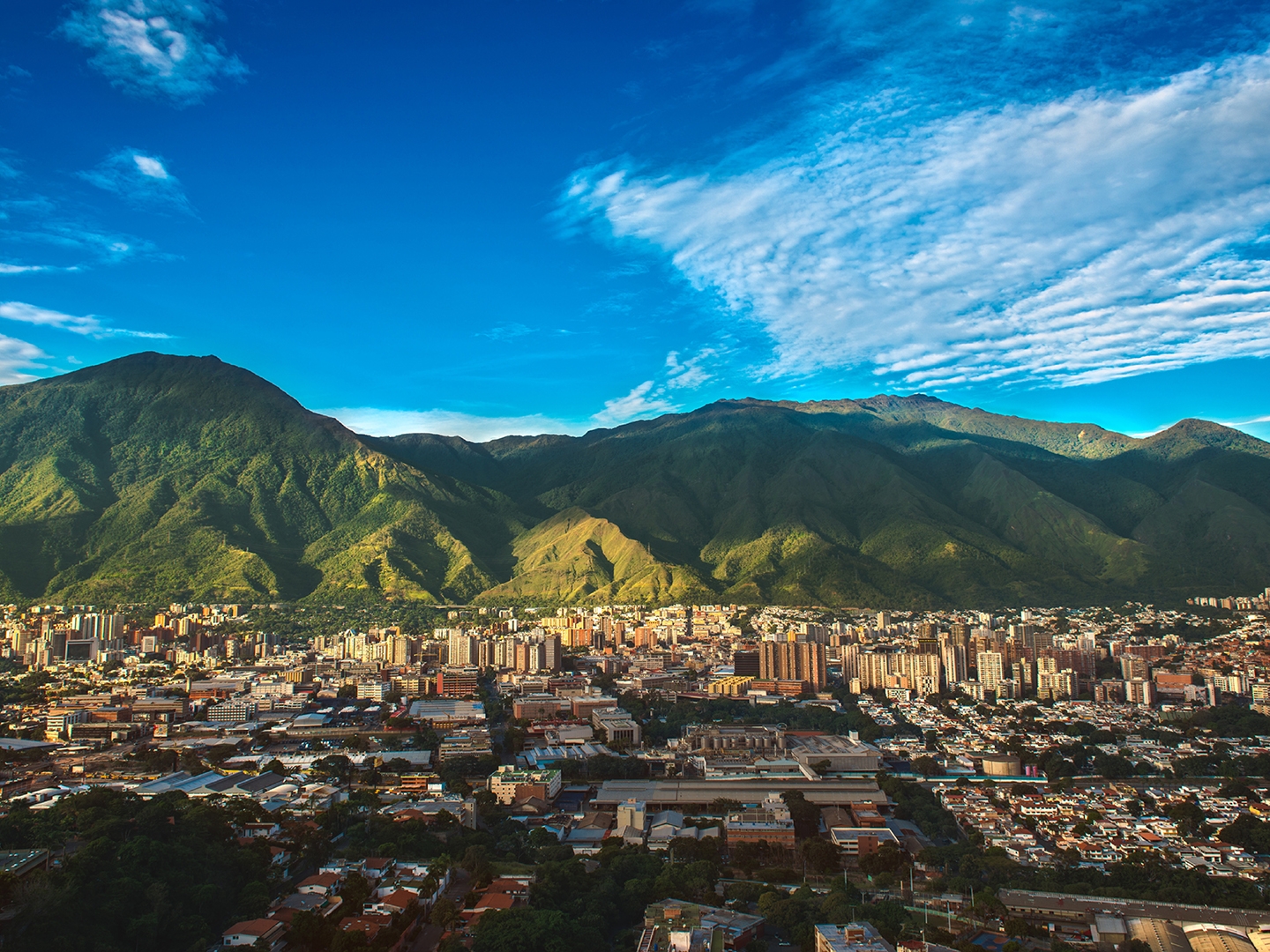
Venezuela is located in South America, in the Western Hemisphere. It has maritime borders with the Caribbean Sea and the Atlantic Ocean. It also shares land borders with Colombia, Brazil, and Guyana.

It is slightly larger than Texas. There is 1 time zone, known as Venezuela Time (UTC-4). It does not have daylight savings time. Venezuela is 1 hour ahead of Washington, D.C. during Eastern Standard Time.

Travel requirements

Tourist visa requirements

  • A visa is required. You must apply for a visa before you travel.
  • You can apply for an electronic visa through the Venezuelan e-Visa system.
  • No visas are available on arrival. U.S. travelers face refusal of admission, expulsion, or detention for entering Venezuela without a valid Venezuelan visa.

Vaccinations

  • Yellow fever: Vaccination required if coming from or transiting for more than 12 hours through Brazil.
  • Carry your International Certificate of Vaccination (or yellow card) with you upon arrival or departure. 

Valid passport requirements

  • Your passport must be valid at the time of entry.
  • Must have 6 months’ validity beyond your arrival date.
  • 2 blank pages required for entry and visa stamp.

Currency on entry and exit

  • Entry maximum: USD 10,000 (or equivalent) or more
  • Exit maximum: USD 10,000 (or equivalent) or more 

Tips from the U.S. embassy

  • Do not pack valuable items or documents in checked luggage.
  • Make advance plans for transportation from the airport to your destination using a trusted party or dispatch taxi service.
  • Do not attempt to bring any narcotics or controlled substances into Venezuela, or substances that may be confused with illegal drugs. Do not accept packages from anyone. Always keep your luggage with you.
  • Do not attempt to bring any firearms or ammunition. Check your luggage before packing to ensure it is completely clear of these prohibited items.
  • The area within 20 miles of the entire Venezuela and Colombian border is extremely dangerous. Cross-border violence, kidnapping, drug trafficking, and smuggling are common. 
EMBASSY UPDATE

Message failed to load


We are unable to load the message. Visit the main U.S. embassy or consulate website for updates.

Get embassy updates right to your inbox
Enroll In Step
Review how STEP works

Travel guidance for Venezuela

Explore our travel guidance topics to prepare for your trip abroad.

Select a topic

Entry, exit, and visa requirements

Helpful resources


Entry requirements

To enter Venezuela, you must have:

  • A valid U.S. passport in good condition with at least 6 months of validity.
  • A valid Venezuelan visa. Visas are not available upon arrival.
  • You can apply for an electronic visa through the Venezuelan e-Visa system

If you do not have the proper Venezuelan visa or documentation, you will face refusal of admission, expulsion, or detention.

  • Immigration officials often require proof of accommodation while in Venezuela, adequate means of support, an invitation letter, and an onward departure itinerary.
  • Use only official crossing points when entering Venezuela. You must obtain an entry stamp upon entry.

Residents

  • If you reside in Venezuela as a non-citizen, you must obtain legitimate Venezuelan residency documentation. Renew your residency visa well in advance of expiration.
  • Do not use intermediaries to purchase resident visas or work permits.

Dual nationality

Venezuelan law requires that Venezuelan citizens enter and depart the country using Venezuelan passports.

  • If you hold dual U.S. and Venezuelan nationality, you must plan to travel between the United States and Venezuela with valid U.S. and Venezuelan passports.
  • Dual-national minors can only depart Venezuela with both parents present or with a legal authorization signed in a family court by the absent parent.

Traveling with children

  • Venezuela’s child protection law mandates that minors (under 18) of any nationality who are traveling alone, with only 1 parent, or with a third party, must present detailed, specific, and notarized documentation granting permission for travel. Consult the nearest Venezuelan embassy or consulate for further information.
  • Always bring a copy of each child’s birth certificate or other evidence of your legal relationship to each child.
  • If you have concerns that your child may be abducted abroad by their other parent or guardian, review our information on how to prevent an international parental child abduction. You can also review our information on Parental Child Abduction in Venezuela.
  • Review our information on Traveling with Minors.

HIV and AIDS restrictions

  • The U.S. Department of State is unaware of any HIV and AIDS entry restrictions for visitors to or foreign residents of Venezuela.
  • HIV and AIDS medications, like other medications, are often not available in Venezuela

Currency

  • The Bolivar is the official currency of Venezuela, although U.S. dollars are accepted in most cities.
  • International credit card use is limited in Venezuela. Be prepared to pay bills in cash.
  • ATMs do not accept U.S. debit or credit cards, and malfunctions are common. Many ATMs do not have cash.
  • Wire transfers cannot be used reliably as a source of emergency funds, and receipt of funds is generally restricted to Venezuelan citizens and residents.
  • Black market currency exchanges often offer significantly favorable exchange rates. However, these are prohibited under Venezuelan foreign exchange controls. If you use them, you could be detained by Venezuelan authorities and face criminal penalties.

Safety and security

Emergency phone numbers

Local authorities are responsible for investigating and prosecuting crimes and providing emergency services.


Terrorism

Terrorists and their supporters may target U.S. citizens abroad.

Terrorists may target:

  • Large public events (sporting contests, political rallies, demonstrations, holiday events, celebratory gatherings, etc.)
  • Popular hotels, clubs, and restaurants
  • Places of worship
  • Schools
  • Parks
  • Shopping malls and markets
  • Public transportation (subways, buses, trains, and commercial flights)

Terrorist groups

The Foreign Terrorist Organizations Tren de Aragua and Cartel de los Soles started in Venezuela and continue to operate.

Other terrorist groups that have expanded in Venezuela in recent years include:

  • The Revolutionary Armed Forces of Colombia People’s Army (FARC-EP)
  • Segunda Marquetalia
  • The National Liberation Army (ELN)

We are aware of reports of cooperation between FARC dissidents and the ELN in the areas of road and border checkpoints, forced displacement of communities, and narcotics trafficking.


Demonstrations 

Demonstrations are common. They may take place in response to political or economic issues. They may also occur on significant holidays, and during large events.

  • Demonstrations can be unpredictable. Avoid areas around protests and other demonstrations.
  • Venezuelan law prohibits foreign nationals from participating in the internal political affairs of the country. Do not participate in demonstrations or protests. Check local media for updates and traffic advisories.

Crime

The safety situation has improved in the major cities, but conditions in some parts of Venezuela remain dangerous. Violent crimes such as homicide, armed robbery, and kidnapping occur.

If you are in Venezuela:

  • Be alert of your surroundings at all times. Take personal security precautions to avoid becoming a victim of crime.
  • Maintain a low profile.
  • Travel in groups when possible.
  • Provide family or friends with your itineraries prior to departure.
  • Avoid police activity. Corruption within the police forces is a concern.

Scams

Follow the U.S. Department of State guidelines to protect yourself from scams.

If you are a victim of a scam, learn how the FBI can help.

Internet financial and romance scams are common. Be careful of anyone asking for money, especially those who start a “romantic” relationship online or claim local authorities want money. Scams often begin through online posts, emails, or letters. Scammers pretend to be U.S. citizens in need of help.

Common global scams include:

  • People claiming to be U.S. military personnel
  • People claiming to be detained or hospitalized abroad
  • Romance and online dating
  • Money transfers
  • Grandparent and relative targeting
  • Free trip or luggage
  • Lotteries
  • Inheritance notices
  • Work permits and job offers

If using dating apps or websites in Venezuela: 

  • Criminals may use dating apps to target potential victims for robbery or assault.
  • Let your friends and family know where you are and consider sharing your location on your phone.
  • Meet in a popular public place.
  • Tell your family or friends all the details about the person you are meeting and how you met them (which app).
  • Set up and talk using a video call before agreeing to meet in person. 
  • Avoid locations where you can be isolated, like hotel rooms, private apartments, or houses.
  • Never leave food or drinks unattended at a bar or restaurant.
  • Observe the preparation of your food or drink order when possible.
  • Refuse offers of food or drinks from strangers.
  • Have a communication plan with friends or family. Send updates to them on an agreed schedule. 

Victims of crime

  • Review our information for Victims of Crime.
  • Local authorities are responsible for investigating and prosecuting crime. You may report crimes to the local police by dialing 911.

Although the U.S. Embassy in Caracas announced reopening operations in March 2026, most consular services are still provided through the U.S. Embassy in Bogotá, Colombia.

U.S. citizen victims of crime are encouraged to contact the U.S. Embassy in Bogota by completing our online form or dialing +57-1-275-2000 or +57-1-275-4021 after hours.

The U.S. embassy can:

  • Replace a stolen or lost passport.
  • Help you find medical care.
  • Assist you in how to report a crime to the police.
  • Contact relatives or friends with your written consent.
  • Provide general information regarding the criminal justice system.
  • Provide a list of local attorneys. We do not endorse or recommend any specific attorneys.
  • Provide information on victim’s compensation programs in the United States.
  • Provide an emergency loan for repatriation to the United States or limited medical support in cases of need.
  • Help you find accommodation and options to travel home.

Sexual assault and domestic violence

  • U.S. citizen victims of sexual assault or domestic violence are encouraged to contact the U.S. Embassy in Bogota and local law enforcement for assistance. 

Technology use abroad

Mobile devices are vulnerable to compromise, theft, and damage anywhere in the world. Follow these safe practices:

  • Update all software (operating system and apps) before leaving the United States.
  • Use reputable, U.S.-based VPN or VoIP applications.
  • Don’t connect to public Wi-Fi networks.
  • Research the safety of routes recommended by GPS. The fastest route is not always the safest.
  • Be cautious using dating apps abroad, as scammers often target U.S. citizens.
  • Civilian drone use in Venezuela is heavily restricted and tightly controlled, especially for foreigners. You should assume that flying a drone without prior authorization is likely to be illegal or treated as a serious security concern.

Tourism safety

Limited formal tourism industry infrastructure is in place outside of major cities:

  • Tourists participate in activities at their own risk. 
  • Emergency response and medical treatment may not be available. 
  • U.S. citizens are encouraged to purchase medical evacuation insurance. 
  • Review our information on Travel Insurance

Adventure travel

  • Review the U.S. Centers for Disease Control and Prevention (CDC) tips for Adventure Travel.

Local laws and customs

Criminal penalties

  • U.S. citizens must follow local laws.
  • If you break local laws, even by mistake, you could be deported, arrested, or imprisoned.
  • Travelers who accidentally break local laws have been detained. Sometimes, this can be for a long time. They may also face criminal charges and even be convicted of a crime.
  • Before you start a business or a profession in Venezuela seek information from the local authorities about what permits or licenses are required. Americans have been jailed for disputes between business partners.
  • It is illegal to take pictures of sensitive buildings, including the presidential palace, military bases, government buildings, and airports.
  • Drug trafficking is a serious problem in Venezuela and treated as such by Venezuelan authorities. Convicted traffickers receive long prison sentences.
  • You may be prosecuted in the United States for crimes committed abroad regardless of the local law. Review the information provided by the U.S. Department of Justice about crimes against minors abroad.

Arrest notification

  • If you are arrested or detained, ask officials to notify the U.S. Embassy in Bogota immediately. See our webpage for further information.
  • The U.S. Department of State may not be informed of your detention, particularly if you also hold Venezuelan citizenship. Refer to our Travel Advisory for Venezuela for additional information.

Counterfeit and pirated goods

Venezuela is not traditionally a producer of counterfeit goods. However, these products, including unlicensed software, accessories, clothing, and cosmetics, remain widely available.

  • Goods marked with fake logos of well-known brands are commonly found at retail stores and shopping centers.
  • Counterfeited and pirated goods may be illegal and pose significant risks to consumer health and safety.
  • The National Integrated Service of Customs and Tax Administration (SENIAT) is the primary agency responsible for enforcing customs and trade laws in Venezuela.
  • Violations – including counterfeiting – may result in fines or penalties, including surrendering these items if you bring them back to the United States.

  Learn more about U.S. restrictions on counterfeit and pirated goods:


Faith-based travelers

Faith-based travel includes pilgrimages, service projects, and mission work. Prepare for your travel using these resources:


Gay and lesbian travelers

  • There are no legal restrictions on consensual same-sex sexual relations, the provision of information or services to persons on the basis of real or perceived sexual orientation, or the organization of events focused on sexual orientation in Venezuela.
  • Review our information for Gay and Lesbian Travelers.

Travelers with accessibility needs

  • The law in Venezuela prohibits discrimination against persons with physical and mental disabilities. The law is not enforced.
  • Expect accessibility to be limited in public transportation, lodging, communication or information, and general infrastructure.
  • Accessibility is more prevalent in Caracas than in the rest of the country. 
  • The availability of rental, repair, and replacement parts for aids, equipment, and devices is limited. This is also the case with service providers, such as sign language interpreters or personal assistants.
  • Review our information on Accessibility Needs.

Students


Women travelers


Human rights

  • The human rights situation continues to improve, but there are still significant challenges.
  • Review the Department of State’s Human Rights Report or your destination prior to traveling.

Health

Health resources


Emergency phone numbers

  • Dial 911 for emergency medical services in Venezuela. 

Ambulance services

  • Ambulance services are not widely available or reliable in terms of training and response time of emergency responders.
  • Ambulances are not equipped with advanced medical equipment.
  • Injured or seriously ill travelers may prefer to take a taxi or private vehicle to the nearest major hospital as this option can be faster than waiting for an ambulance.
  • Direct emergency medical evacuation flights between the United States and Venezuela may not be possible.

Medical payments and insurance

Make sure you know if your health insurance plan covers any medical expenses abroad. Most U.S. plans do not.

  • The U.S. government does not pay medical bills.
  • U.S. Medicare and Medicaid do not cover expenses or bills abroad.
  • Most hospitals and doctors abroad do not accept U.S. health insurance.
  • Medical care is not free in Venezuela. If you require medical attention, you will incur expenses, even if you are treated in a public healthcare facility.
  • Most care providers in Venezuela only accept cash payments.
  • Credit card payment is not always available.
  • Before traveling to Venezuela with prescription medications, research current Customs and Immigration restrictions in place at Venezuelan ports of entry. Medications containing controlled substances may be subject to additional requirements for entry.
  • Make sure you know if your health insurance plan provides coverage abroad or reimbursement of payments. The CDC provides more information on types of insurance.
  • We strongly recommend supplemental insurance to cover medical evacuation.
  • If you purchase supplemental insurance, you are responsible for seeking reimbursement from the insurance provider. Follow their instructions for filing claims. 

Vaccinations

Stay up to date with the vaccines recommended by the U.S. Centers for Disease Control and Prevention.


Healthcare facilities

  • Do not depend on health care facilities in Venezuela for medical care. Serious medical issues require costly medical evacuation.
  • The U.S. Embassy maintains a list of doctors and hospitals. We do not endorse or recommend any specific medical provider or clinic.
  • Public medical clinics lack basic resources and supplies, including soap and water. In recent years, hospital infrastructure has deteriorated significantly, and medical staff are in short supply.
  • Patients frequently must bring their own water, medication, and medical instruments to receive care.
  • Adequate health facilities are available in Caracas and other major cities. It may be harder to find adequate health care in rural areas. Many public hospitals and clinics may be overcrowded and may experience shortages of public utilities such as electricity and running water.
  • Some private hospitals and doctors require cash payment up-front before service or admission.
  • Credit card payment and online transfers are rarely available. If you cannot provide an up-front payment, you may be referred to a public institution.
  • Medical staff may speak little to no English.
  • Generally, in public hospitals only minimal staff is available overnight. Consider hiring a private nurse. Another option is to have family stay the night with the patient, especially a child.
  • Patients may be required to bear costs for transfer to or between hospitals.
  • Psychological and psychiatric services are limited, even in larger cities.

Medical tourism and elective surgery

  • U.S. citizens have suffered serious complications or died during or after having cosmetic or other elective surgery abroad.
  • Visit the CDC’s Medical Tourism website for information on medical tourism. Find out about the risks of medical tourism and what you can do to prepare before traveling to Venezuela.
  • We strongly recommend supplemental insurance to cover medical evacuation in the event of unforeseen medical complications.
  • Your legal options in case of malpractice may be limited in Venezuela. 

Prescription medications

  • Always carry your prescription medication in original packaging, along with your doctor’s prescription.
  • Some medical supplies are unavailable. You should not expect to find all necessary medications in Venezuela.
  • Carry enough over the counter and prescription drugs to cover the entire duration of your trip.
  • Exercise caution when purchasing medication abroad. Pharmaceuticals are usually easy to buy with few controls.
  • Counterfeit medication is common and may not work, have the wrong strength, or have dangerous ingredients. You should buy medication with the help of a medical professional and from trusted places.

U.S. Customs and Border Protection (CBP) and the Food and Drug Administration (FDA) have rules for bringing medication back into the United States. If you buy medications abroad, the medications must meet CBP’s and the FDA’s requirements to bring them back legally.

The medications must also be for personal use and approved for use in the United States.

For more information:


Assisted Reproductive Technology (ART) and surrogacy

  • There is no legal framework for foreigners or same-sex couples to pursue surrogacy in Venezuela.
  • According to Venezuelan law, the birth mother of a child born in Venezuela is the legal mother. Surrogacy agreements between foreign or same-sex intending parents and gestational mothers are not enforced by Venezuelan courts.
  • If you decide to pursue parenthood in Venezuela via ART with a gestational mother, be prepared for long and unexpected delays in documenting your child’s citizenship. Be aware that individuals who attempt to circumvent local law risk criminal prosecution.
  • If you are considering traveling to Venezuela to have a child through use of ART or surrogacy, please see our ART and Surrogacy Abroad Page.

Water quality and food safety

  • Tap water is not potable, even in major cities.
  • Expect frequent shortages in running water.
  • Bottled water and beverages are generally safe. Use major brands and ensure the seal is intact.
  • You should specifically request bottled water at restaurants and hotels.
  • You may want to request no ice in your drinks since it may be made using tap water.
  • Gastrointestinal illnesses such as severe diarrhea are common throughout the country.
  • Eating uncooked vegetables and fruits can make you sick.
  • Make water safe by filtering, boiling, disinfecting, or distilling.
  • Impure water can cause diseases like typhoid, cholera, hepatitis, and dysentery.

Air quality

Air pollution can be a significant problem in many destinations abroad.

  • Check NASA’s Air Quality Forecast. It uses Artificial Intelligence (AI), historical data, and global pollution modeling to generate a 3-day forecast of expected air quality in Venezuela.
  • For information about common air pollutants, check the CDC’s Air Quality page.
  • For information about the U.S. Air Quality Index and health guidance, check out the EPA’s AirNow.
  • Review our  Medicine and Health page,  for general health information.

Transportation

Road conditions and safety

  • Consider contracting a local driver. If you decide to drive, do so defensively. Many drivers do not obey rules.
  • Bottlenecks can be used for criminal attacks. Avoid obstacles in the road.
  • Do not drive at night outside major cities. Police and national guard checkpoints are mandatory. Criminals often set up fake checkpoints during nighttime to rob or kidnap victims.
  • Outside of major cities, roads may be unpaved or undermaintained. During rainy season some roads outside of major cities may degrade further or be flooded. Exercise caution and check weather before traveling.
  • Major cities have adequate signs, but more rural areas may have little to no signs. Road damage is not clearly marked.
  • Carry spare tires and emergency kits in all vehicles.
  • Venezuela experiences shortages in gasoline and diesel. Plan accordingly, especially when traveling to distant or rural areas. 

Traffic laws

  • A U.S. Driver's License is valid in Venezuela for only 90 days. Carry a copy of your passport with your driver’s license.
  • Driving in Venezuela, particularly in Caracas, requires a high level of defensive driving and constant situational awareness. The culture is significantly different from standard U.S. driving patterns.
  • Drivers frequently ignore lane marking. They may move through traffic or create extra lanes where space allows.
  • During daylight hours, traffic lights are generally respected. However, drivers do not stop at red lights at night for safety. Proceed with caution.
  • Official speed limit is 80km per hour on highways and 40km per hour on city streets.

In case of an accident

  • Dial 911 for emergency services.
  • Remain at the scene unless there is an immediate safety risk. Leaving may have legal consequences.
  • Contact traffic police and wait for them to complete an official report. This is important for insurance and legal purposes.
  • While waiting, document the scene with photos, exchange identification and insurance information with the other driver, and gather witness details if possible.
  • Do not move your vehicle unless it represents a hazard.
  • Avoid informal cash settlements. These can create complications later. If driving a rental car, notify the rental company immediately and follow their guidance.

Taxis and ride-shares

  • U.S. government employees are prohibited from using taxis or ride share applications.
  • Do not use any taxis hailed on the street. Use only radio-dispatched taxis from taxi services, hotels, restaurants, and airline staff. 

Public and commercial transportation


Aviation safety oversight

  • The U.S. Federal Aviation Administration (FAA) has found that Venezuela’s Civil Aviation Authority does not meet international standards for aviation safety oversight. FAA's website includes more information on its assessment program. 

Maritime travel

Mariners and passengers planning travel to Venezuela should check the following:

The U.S. Coast Guard determined Venezuelan ports do not have effective anti-terrorism measures. Vessels that arrive in U.S. ports from Venezuelan ports must meet additional U.S. Coast Guard conditions of entry as described in the current Port Security Advisory, International Port Security Program - Port Security Advisory.

Mariners and passengers in Venezuelan ports should be careful and use stronger security measures. 

Weather and natural disasters

Helpful resources

  • Protección Civil (civil protection).
  • Check updates on radio, television, and mobile platforms (including WhatsApp and social media).
  • Always verify information is from an official source.

Weather conditions

Rainy season

Main hazards occur from June to July and October to November. They include:

  • Heavy rainfall
  • Flooding in rivers and cities
  • Landslides and mudslides on hillsides

The most affected areas include the Central plains (Llanos), major cities, hillside neighborhoods in Caracas and Maracay, mountain regions (Mérida, Táchira, Trujillo), and the northern and eastern coasts and islands during the Atlantic hurricane season.

Dry season

Occurs between December to April.

  • Main hazards include extreme heat and humidity, drought, water shortages and wildfires.
  • The hottest and driest is between February to April. The most wildfires occur between January to March.

The most affected areas include low-lying regions like Zulia, the Central plains (Llanos), and coastal lowlands. There can be limited drinking water, power outages and crop and livestock losses

U.S. citizens living abroad

Living abroad resources

If you live outside the United States for a long time, you or your family may experience various life events, wish to exercise U.S. citizenship rights, or need to meet U.S. legal obligations while abroad.

Embassies and consulates


U.S Embassy in Caracas - Emergency Services Only

Calle F con Calle Suapure
Urb. Colinas de Valle Arriba
Caracas, Venezuela

Emergency after-hours:

U.S. Embassy in Colombia: +57-1-275-2000
Emergency Helpline: 1-888-407-4747
toll-free in the United States and Canada or 1-202-501-4444 from other countries.

Email:

ACSBogota@state.gov

U.S. Embassy Caracas: https://ve.usembassy.gov/

U.S. Embassy Colombia: https://co.usembassy.gov/

Online Navigator: Avaliable through the U.S. Embassy in Bogota

Last Updated: April 20, 2026

Owned by Overseas Citizens Services