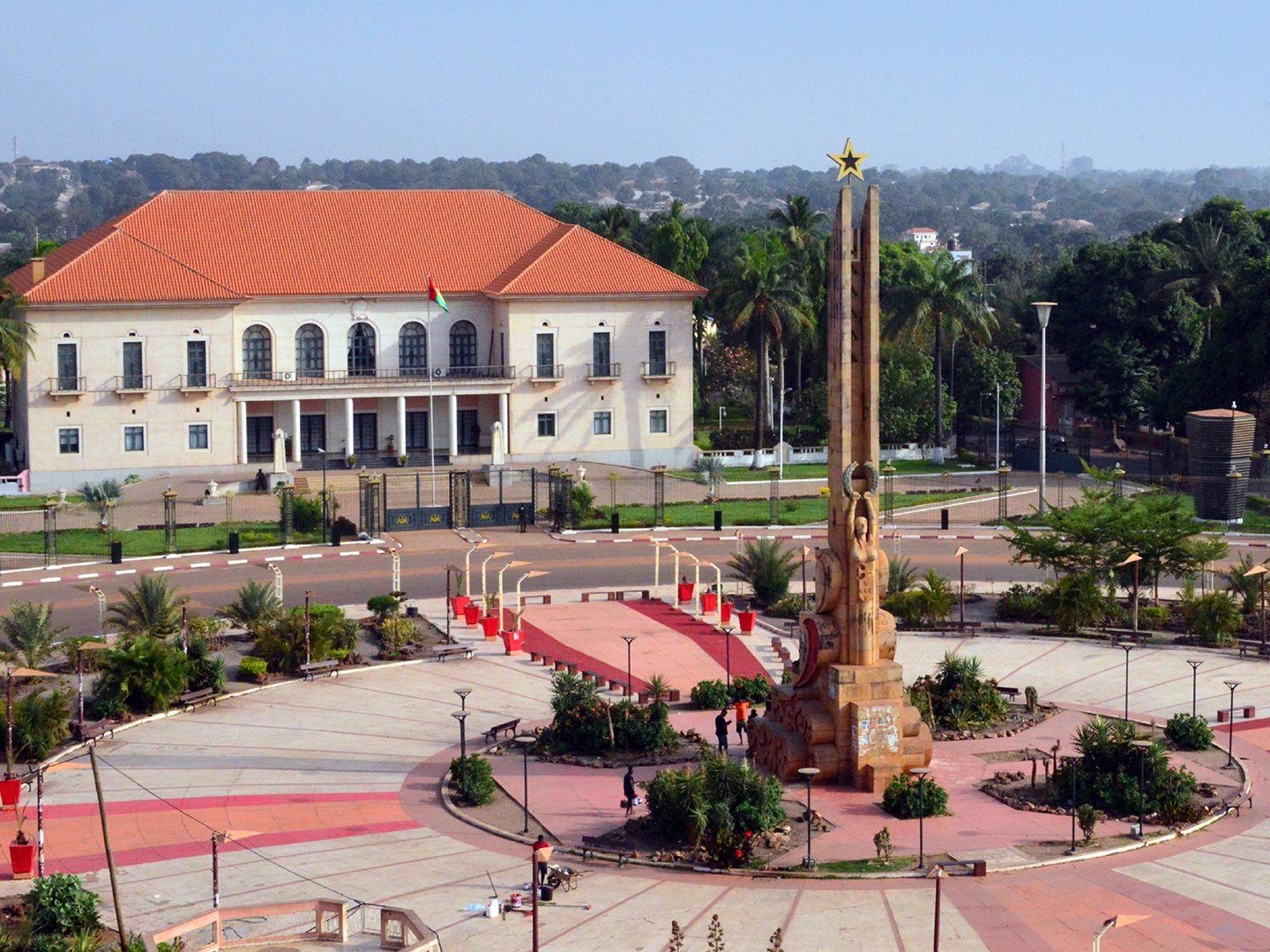
Travel.State.Gov US Department of State Homepage

Travel advisory - Republic of Guinea-Bissau

Level 3 - Reconsider travel

Date issued: December 11, 2025 -
  • Unrest (U)
  • Health (H)
  • Other (O)

Reconsider travel

to Guinea-Bissau due to unrest, inadequate health infrastructure, and landmines.

Advisory summary

There is no U.S. embassy or consulate in Guinea-Bissau. The U.S. government has limited ability to provide emergency services to U.S. citizens. Consular services are provided by the U.S. embassy in Dakar, Senegal.

Unrest
Guinea-Bissau has had periods of political instability for decades, including political unrest in November 2025. Large-scale demonstrations related to the local political situation may occur with little notice. Demonstrations may disrupt transportation and other essential services.

Health
Guinea-Bissau’s health infrastructure is inadequate. Health services, hygiene, and quality control do not meet U.S. standards of care. Pharmacies are not well regulated. Locally available medications are limited and may be unsafe. Even a minor health issue may require medical evacuation at your own expense.

Landmines
Landmines and unexploded ordnance from prior conflicts exist throughout Guinea-Bissau. Areas of greatest risk are Bafata, Oio, Biombo, Quinara, and Tombali. The locations of landmines and unexploded ordnance are often not known, marked, or easy to recognize.

If you decide to travel to Guinea-Bissau:

  • Review our information on Travel to High-Risk Areas.
  • Have a plan to leave in an emergency that does not depend on U.S. government help. Review our information on Crisis and Evacuations.
  • Be aware of your surroundings.
  • Do not physically resist any robbery attempt.
  • Avoid demonstrations and crowds.
  • Use caution when walking or driving at night.
  • Refer to our list of medical providers.
  • Make sure your insurance includes medical evacuation coverage.
  • Do not visit locations where landmines are known to exist. Be alert to signs that mark unexploded landmines. Stay on main roads and do not travel at night.
  • Enroll in the Smart Traveler Enrollment Program (STEP) to get important updates and alerts from the U.S. embassy or consulate. Enrolling helps the U.S. embassy or consulate contact you or your emergency contact in an emergency.
  • Review the Country Security Report for Guinea-Bissau.
  • Visit the Centers for Disease Control and Prevention (CDC) website for the latest Travel Health Information for Guinea-Bissau, including which vaccines are recommended prior to your travel.
  • Whether you’re a first time or frequent traveler, use the International Travel Checklist.
  • We highly recommend that you buy travel insurance before you travel. Check with your travel insurance provider about evacuation assistance, medical insurance, and trip cancelation coverage.
Scroll to review full advisory
Travel advisory levels
Learn more about
  1. Exercise normal precautions
  2. Exercise increased caution
  3. Reconsider travel
  4. Do not travel

About Guinea-Bissau

Guinea-Bissau is located in West Africa, in the Northern Hemisphere. It has a maritime border with the Atlantic Ocean. It shares land borders with Guinea and Senegal.

Guinea-Bissau is slightly larger than Maryland. There is 1 time zone, Greenwich Mean Time. It does not observe daylight savings time. Guinea-Bissau is 5 hours ahead of Washington, D.C. during Eastern Standard Time and 4 hours ahead during daylight savings time.

Travel requirements

Tourist visa requirements

  • A visa is required. You can get it on arrival. You can also apply for a visa in advance at a Bissau-Guinean embassy. 
  • The embassy of Guinea-Bissau in the United States does not offer visa services. Most flight routes to Guinea-Bissau must pass through Dakar, Senegal or Lisbon, Portugal. Visitors can apply for a visa to Guinea-Bissau at the Bissau-Guinean embassies in those countries.

Vaccinations

  • Yellow fever: Vaccine is required for all arriving travelers 1 year or older. Proof of vaccination (yellow card) is required.
  • CDC recommendations: Vaccine is recommended for all travelers 9 months or older.

Valid passport requirements

  • Your passport must be valid at the time of entry.
  • Must have 6 months’ validity beyond your arrival date.
  • 1 blank page available for entry stamp.

Currency on entry and exit

  • Entry maximum: If you are arriving from within the Economic Community of West African States (ECOWAS) region, you must declare currency over 5,000,000 fCFA (approx. $8,700). If you are arriving from outside the ECOWAS region, you must declare currency over $10,000 or the equivalent in fCFA.
  • Exit maximum: Travelers to destinations within the ECOWAS region must declare currency over 5,000,000 fCFA (approx. $8,700 USD). If you are traveling to destinations outside the ECOWAS region, you must declare currency over $10,000 or the equivalent in fCFA.

Tips from the U.S. embassy

  • There is no permanent U.S. diplomatic or consular presence in Guinea-Bissau. The U.S. Liaison Office in Bissau does not offer consular services. Consular services are provided by the U.S. embassy in Dakar, Senegal.
  • Medical facilities are extremely limited. We are unable to help U.S. citizens as there is no U.S. embassy.
EMBASSY UPDATE

Message failed to load


We are unable to load the message. Visit the main U.S. embassy or consulate website for updates.

Get embassy updates right to your inbox
Enroll In Step
Review how STEP works

Travel guidance for Guinea-Bissau

Explore our travel guidance topics to prepare for your trip abroad.

Select a topic

Entry, exit, and visa requirements


Traveling with children

  • Always bring a copy of each child’s birth certificate or other evidence of your legal relationship to each child.
  • When 1 parent is traveling with a child, a notarized consent letter is required from the absent parent. Otherwise, you must show proof of sole custody.
  • Parents and guardians should prepare a notarized, written permission letter. It should allow their minor children to travel to or from Guinea-Bissau alone or with someone else.
  • All Bissau-Guinean minors, including dual U.S. citizens, must have notarized, written permission from a parent or guardian to travel without that parent or guardian.
  • Bissau-Guinean authorities have sometimes blocked minors from leaving when traveling without a parent or guardian.
  • If you have concerns that your child may be abducted abroad by their other parent or guardian, review our information on how to prevent an international parental child abduction. You can also review our information on Parental Child Abduction in Guinea-Bissau.
  • Review our information on Traveling with Minors.

HIV and AIDS restrictions

The U.S. Department of State is unaware of any HIV and AIDS entry restrictions for visitors to or foreign residents of Guinea-Bissau.


Currency

  • The franc of the Communauté Financière d'Afrique (fCFA) is the official currency of Guinea-Bissau.
  • Only a few establishments accept credit cards. Be prepared to pay bills in cash.
  • Bissau has ATMs that accept U.S.-issued bankcards. But ATMs are not always reliable and should be used with caution. 
  • Money transfers are available at Western Union branch offices.

Safety and security

Emergency numbers

Local authorities are responsible for investigating and prosecuting crimes and providing emergency services.


Demonstrations

Demonstrations are common. They may take place in response to political or economic issues. They may also occur on significant holidays, and during large events.

  • Demonstrations can be unpredictable. Avoid areas around protests and other demonstrations.
  • Past demonstrations have turned violent.
  • Check local media for updates and traffic advisories.

Crime

Foreigners are sometimes targeted for crimes of opportunity. This includes petty theft, pickpocketing, theft from vehicles, and minor assaults.

  • Street criminals, aggressive vendors, and panhandlers frequently target foreigners in crowded areas. They also target them at markets, including Bandim Market, the Mindara and Reino neighborhoods, and when exiting the Bissau airport.
  • Risk of crime increases at night. Guinea-Bissau has limited security infrastructure and a lack of street and building lighting. Do not walk alone after dark or in remote areas.
  • Emergency staff are poorly trained and lack resources to respond to crime and emergency situations effectively. 
  • Narcotics trafficking is linked to criminal activity. Aggressive assaults in rural areas of Guinea-Bissau are common. 

Safety tips

  • Keep a high level of security awareness, particularly in public places, tourist areas, and crowded locations.
  • Always carry identification, like a certified copy of passport or residence permit.

Scams

Follow the Department of State guidelines to protect yourself from scams.

If you are a victim of a scam, learn how the FBI can help.

Financial and romance scams are common in Guinea-Bissau. Be careful of anyone asking for money, especially those who start a "romantic" relationship online or claim local authorities want money. Scams often begin through online posts, emails, or letters. Scammers pretend to be U.S. citizens in need of help.

Common scams include:

  • People claiming to be U.S. military personnel
  • People claiming to be detained or hospitalized abroad
  • Romance and online dating
  • Money transfers
  • Gold and gem purchases
  • Grandparent and relative targeting
  • Free trip or luggage
  • Lotteries
  • Inheritance notices
  • Work permits and job offers

Safety tips

Be careful when using dating apps or online dating websites while abroad. Scammers may target U.S. citizens. 

  • Tell your friends and family where you are. 
  • Meet in a popular public place. 
  • Avoid consuming suspicious food or drinks. 
  • Avoid traveling alone to bars or nightclubs.

Victims of crime

Local authorities are responsible for investigating and prosecuting crime. You may report crimes to the local police by dialing 112

Review our information for Victims of Crime.

The nearest U.S. embassy or consulate can:

  • Replace a stolen or lost passport.
  • Help you find medical care.
  • Assist you in how to report a crime to the police.
  • Contact relatives or friends with your written consent.
  • Provide general information regarding the criminal justice system.
  • Provide a list of local attorneys. We do not endorse or recommend any specific attorneys.
  • Provide information on victim’s compensation programs in the United States.
  • Provide an emergency loan for repatriation to the United States or limited medical support in cases of need.
  • Help you find accommodation and options to travel home.

Sexual assault and domestic violence

  • U.S. citizen victims of sexual assault are encouraged to contact local law enforcement for assistance.
  • U.S. citizen victims of domestic violence are encouraged to contact the U.S. Embassy in Senegal for assistance.

Technology use abroad

Mobile devices are vulnerable to compromise, theft, and damage anywhere in the world. Follow these safe practices:

  • Update all software (operating system and apps) before leaving the United States.
  • Use reputable, U.S.-based VPN or VoIP applications.
  • Don’t connect to public Wi-Fi networks.
  • Research the safety of routes recommended by GPS. The fastest route is not always the safest.
  • Be cautious using dating apps abroad, as scammers often target U.S. citizens.

Tourism safety

No formal tourism industry infrastructure is in place:

  • Tourists participate in activities at their own risk.
  • Emergency response and medical treatment is not available.
  • U.S. citizens are encouraged to purchase medical evacuation insurance.
  • Review our information on Travel Insurance.

Adventure travel

  • Review the U.S. Centers for Disease Control and Prevention (CDC) website for more information about Adventure Travel.

Local laws and customs

Criminal penalties

U.S. citizens must follow local laws. If you break local laws, even by mistake, you could be deported, arrested, or imprisoned.

  • Penalties for possessing, using, or trafficking in illegal drugs in Guinea-Bissau are severe. Convicted offenders can expect long jail sentences and big fines.  
  • You may be prosecuted in the United States for crimes committed abroad regardless of the local law. Review the information provided by the U.S. Department of Justice about crimes against minors abroad.
  • Before you start a business or a profession in Guinea-Bissau, seek information from the local authorities about what permits or licenses are required.

Arrest notifications


Detention conditions

  • Jails are extremely overcrowded and lack basic resources.
  • Due to deteriorating buildings, the rainy season brings additional health risks to inmates. 
  • Medical resources in prison infirmaries are limited.

Counterfeit and pirated goods

Counterfeit and pirated goods are common in many destinations.

  • They may be illegal according to local laws.
  • Counterfeit and pirated goods may pose significant risks to consumer health and safety.
  • You may be subject to fines or have to surrender counterfeit and pirated goods to authorities if you bring them back to the United States.

Learn more about U.S. restrictions on counterfeit and pirated goods:


Faith-based travelers

Faith based travel includes pilgrimages, service projects, and mission work. Prepare for your travel using these resources:


Gay and lesbian travelers

  • There are no legal restrictions on consensual same-sex sexual relations, the provision of information or services to persons on the basis of real or perceived sexual orientation, or the organization of events focused on sexual orientation in Guinea-Bissau.
  • However, there is strong societal discrimination against gay and lesbian people. Cases of violence often go unreported due to stigma or fear of retaliation.
  • Review our information for Gay and Lesbian Travelers.

Travelers with accessibility needs

  • The law in Guinea-Bissau prohibits discrimination against persons with physical, sensory, intellectual, or mental disabilities, but the law is not enforced.
  • Expect accessibility to be limited in public transportation, most lodging facilities, communication/information, and general infrastructure.
  • General public sentiment around disability is not as accepting as in the United States.
  • The availability of rental, repair, or replacement parts for aids, equipment, and devices is very limited, if not impossible to find.
  • Sign language interpreters or personal assistants are not available.
  • Review our information on Accessibility Needs.

Students


Women travelers

  • Rape, including spousal rape, is a crime in Guinea-Bissau. It is punishable with 2-6 years in prison. Laws against domestic violence are rarely enforced.
  • Female genital mutilation or cutting (FGM/C) is illegal in Guinea-Bissau. But it is commonly practiced in the north of the country.  
  • Review our information for Women Travelers.
  • Review our information on Marriage.
  • Review our information on Female genital mutilation and cutting (FGM/C).
  • Review our information for Victims of Crime.

Human rights

  • Review the Department of State’s Human Rights Report for your destination prior to traveling.

Health

Health resources


Emergency numbers


Ambulance services

  • Ambulance services are not present or are unreliable in most areas except Bissau. Response time of emergency responders may be poor.
  • Existing ambulances are not staffed with trained paramedics and often have little or no medical equipment.  
  • Injured or very ill travelers might prefer to take a taxi or their own car to the nearest major hospital. This option can be faster than waiting for an ambulance

Medical payments and insurance

Make sure you know if your health insurance plan covers any medical expenses coverage abroad. Most U.S. plans do not.

  • The U.S. government does not pay medical bills.
  • U.S. Medicare and Medicaid do not cover expenses or bills abroad.
  • Most hospitals and doctors abroad do not accept U.S. health insurance.
  • Medical care is not free in Guinea-Bissau. If you require medical attention, you will incur expenses, even if you are treated in a public healthcare facility.
  • Most care providers overseas only accept cash payments. Credit card payment is not always available.
  • Private hospitals often need payment up front or proof of good insurance before providing treatment or admitting a patient.
  • Make sure you know if your health insurance plan provides coverage abroad or reimbursement of payments. The CDC provides more information on types of insurance.
  • We strongly recommend supplemental insurance to cover medical evacuation.

Vaccinations

Stay up to date with the vaccines recommended by the U.S. Centers for Disease Control and Prevention.


Healthcare facilities

  • There are no modern medical facilities in Guinea-Bissau. Do not rely on the facilities that are available unless you cannot avoid it.
  • Little to no emergency services are available in Guinea-Bissau. More acceptable levels of medical care are available in Senegal.
  • The U.S. Embassy in Senegal maintains a list of doctors and hospitals. We do not endorse or recommend any specific medical provider or clinic.
  • Public medical clinics lack basic resources and supplies.
  • Hospitals and doctors usually require payment upfront prior to service or admission.
  • Medical staff may speak little or no English.
  • Generally, in public hospitals only minimal staff is available overnight in non-emergency wards. Consider hiring a private nurse. Another option is to have family stay the night with the patient, especially a child.
  • Patients must cover all costs for transfer to or between hospitals.
  • Psychological and psychiatric services are limited, even in larger cities.

Prescription medications

  • Always carry your prescription medication in original packaging, along with your doctor’s prescription.
  • Exercise caution when purchasing medication abroad. Pharmaceuticals are usually easy to buy with few controls.
  • Counterfeit medication is common and may not work, have the wrong strength, or have dangerous ingredients. You should buy medication with the help of a medical professional and from trusted places.

U.S. Customs and Border Protection (CBP) and the Food and Drug Administration (FDA) have rules for bringing medication back into the United States. If you buy medications abroad, the medications must meet CBP’s and the FDA’s requirements to bring them back legally.

The medications must also be for personal use and approved for use in the United States.

For more information: 


Non-traditional medicine

U.S. citizens have had serious complications or died while getting care from non-traditional “healers” and practitioners in Guinea-Bissau. 

  • We strongly recommend seeking specialized healthcare assistance as other options put individuals at risk. 
  • Make sure you have access to licensed emergency medical facilities in such cases.

Assisted Reproductive Technology and Surrogacy (ART)

  • If you are considering traveling to Guinea-Bissau to have a child through use of assisted reproductive technology (ART) or surrogacy, please review our information on ART and Surrogacy Abroad.
  • Surrogacy is largely unregulated in Guinea-Bissau with no clear legal protections for foreign intended parents. Surrogacy agreements may not be enforced by Guinea-Bissau courts.
  • If you decide to pursue parenthood in Guinea-Bissau via ART with a surrogate, consider hiring a reputable local attorney and be prepared for long and unexpected delays in documenting your child’s birth with local authorities and/or citizenship status. Be aware that individuals who attempt to circumvent local law risk legal consequences.

Water quality and food safety

  • Tap water is Guinea-Bissau is not safe to drink.
  • Bottled water and beverages are generally safe. Use major brands and ensure the seal is intact.
  • Many restaurants and hotels serve tap water unless bottled water is specifically requested.
  • You may want to request no ice in your drinks since it may be made using tap water.
  • Make water safe by filtering, boiling, disinfecting, or distilling.
  • Impure water can cause diseases like typhoid, cholera, hepatitis, and dysentery.

Air quality

Air pollution can be a significant problem in many destinations abroad. 

  • Check NASA’s Air Quality Forecast. It uses Artificial Intelligence (AI), historical data, and global pollution modeling to generate a 3-day forecast of expected air quality in Guinea-Bissau. 
  • For information about common air pollutants, check the CDC’s Air Quality page.
  • For information about the U.S. Air Quality Index and health guidance, check out the EPA’s AirNow.
  • For general health information, visit the Medicine and Health page.

Transportation

Road conditions and safety

Urban and rural road conditions are poor. Roadside assistance is limited.

  • Many landmines remain from prior conflicts in Guinea-Bissau, especially in Bafata, Oio, Biombo, Quinara, and Tombali. 
  • Do not drive outside Bissau at night. 
  • Do not leave designated roads and pathways.

Traffic laws

  • Visitors may drive on an international driver’s license for the duration of their visa. A resident must obtain either a driver’s license from Guinea-Bissau or a temporary license from the State Protocol Office.
  • International road signs and protocols are not commonly followed.
  • In the event of a traffic accident, you should follow all police instructions.
  • Large crowds often form at the scene of an accident. They threaten the safety of the driver. If you feel in danger, go to the nearest police station for safety.
  • Emergency response to vehicular accidents outside Bissau can be slow to nonexistent.

Taxis and ride-shares

  • Exercise caution if using taxis. Many are in poor condition.
  • Taxis often act as buses and pick up additional passengers during a trip. If you take a taxi, for your safety, inform the driver that you do not want additional passengers.

Public and commercial transportation

  • Avoid using the informal buses in Bissau, known as “Bus Rapides” or “Toca-Tocas.”

Aviation oversight

  • The U.S. Federal Aviation Administration (FAA) has not assessed Guinea-Bissau’s Civil Aviation Authority for compliance with international standards for aviation safety oversight. FAA's website includes more information on its assessment program.

Maritime travel

Mariners planning travel to Guinea-Bissau should check the following:

The U.S. Coast Guard determined Guinea-Bissau ports do not have effective anti-terrorism measures. Vessels that arrive in U.S. ports from Guinea-Bissau ports must meet additional U.S. Coast Guard conditions of entry as described in the current Port Security Advisory, International Port Security Program - Port Security Advisory. Mariners and passengers in Guinea-Bissau ports should be careful and use stronger security measures.

Weather and natural disasters

Weather conditions

  • Heavy rainfall – Common during the rainy season from May to November. It can cause flooding and landslides in Guinea-Bissau.
  • Harmattan – This is a dry, dusty wind from the Sahara Desert. It affects Guinea-Bissau from November to April. This wind can reduce visibility and cause respiratory issues.

U.S. citizens living abroad

Living abroad resources

If you live outside the United States for a long time, you or your family may experience various life events, wish to exercise U.S. citizenship rights, or need to meet U.S. legal obligations while abroad.

  • Learn how to prepare for voting in U.S. elections, the birth of a child, or getting married.
  • Ensure you have a plan for healthcare and medical insurance abroad.
  • Even abroad, you still have certain obligations such as paying your U.S. taxes or registering for military selective service.
  • Review information on federal benefits, such as Social Security and Veterans Affairs benefits.

Embassies and consulates

U.S. Embassy Dakar

Route des Almadies
Dakar, Senegal

Main telephone:

+221-33-879-4000

Emergency after-hours:

+221-33-879-4000

Online Navigator: U.S. Citizen Services Assistant


Last Updated: December 18, 2025

Owned by Overseas Citizens Services