Travel.State.Gov US Department of State Homepage

Travel advisory - Republic of Ecuador

Level 2 - Exercise increased caution

3 4
Date issued: October 14, 2025 -
  • Unrest (U)
  • Crime (C)
  • Kidnapping or Hostage Taking (K)
  • Terrorism (T)

Exercise increased caution

in Ecuador due to risk of crimeterrorismunrest, and kidnapping. Some areas have increased risk. Read the entire Travel Advisory. 

Do Not Travel to these areas due to terrorism and crime:

  • Guayaquil, south of Portete de Tarqui Avenue.
  • The cities of Huaquillas and Arenillas in the province of El Oro.
  • The cities of Quevedo, Quinsaloma, and Pueblo Viejo in the province of Los Rios.
  • The canton of Duran, in the province of Guayas.
  • Esmeraldas City and all areas north of Esmeraldas City in Esmeraldas province.
  • The area north of Esmeraldas City to the Colombian border and east to Carchi province.

Reconsider Travel to these areas due to terrorism and crime:

  • Guayaquil north of Portete de Tarqui Avenue.
  • El Oro province outside the cities of Huaquillas and Arenillas.
  • Los Rios province outside the cities of Quevedo, Quinsaloma, and Pueblo Viejo.
  • All areas south of Esmeraldas city in Esmeraldas province.
  • The provinces of Sucumbios, Manabi, Santa Elena, and Santo Domingo.

Advisory summary

Crime and kidnapping

Crime is a widespread problem in Ecuador. Violent crime typically associated with narcotrafficking is common. It includes murder, assault, kidnapping, and armed robbery.  Areas with transnational criminal organizations see much higher rates of violent crime. U.S. citizens and LPRs have been victims of kidnapping and extortion.

Terrorism

There is risk of terrorist violence, including terrorist attacks and other activity in Ecuador. Visit the U.S. Department of State's country reports on terrorism to learn more. 

Demonstrations

  • Demonstrations happen across the country.
  • They are usually driven by political or economic reasons.
  • Demonstrators often block local roads and major highways without warning, disrupting access to important infrastructure.  

Local and U.S. Government Assistance

  • Most of Ecuador’s land is empty and remote, especially outside big towns and cities.
  • Local and U.S. government help may be very limited in remote areas. This may cause delays for U.S. citizens in remote areas.

Land Border Restrictions

  • Foreign citizens entering the country by land from Colombia or Peru must show a certificate of no criminal record. This certificate must be apostilled. You can find more information on the Ministry of Tourism’s webpage and at Ecuador.Travel.
  • The U.S. Embassy and Consulate General in Ecuador cannot help you get the necessary documents for crossing a land border.
  • U.S. citizens planning to enter Ecuador via a land border should check the State Department’s Office of Authentications webpage and Criminal Records Check webpage. These pages have information on getting a criminal record check and apostille from the United States.

Risks in specific areas

Expand all

Level: 4 - Do not travel

Guayaquil, south of Portete de Tarqui Avenue

Do not travel to Guayaquil, south of Portete de Tarqui Avenue for any reason due to terrorism and crime.

Review our information on Crime Abroad and for Victims of Crime.

Terrorists, Transnational Criminal Groups, and Local Gangs

  • Terrorist and other criminal organizations often commit violent acts in this area, including sudden attacks in public places, often without warning.
  • Violent crimes can involve murder, targeted assassinations, armed robberies, bombings, kidnappings, and assaults.
  • Violence in this areas has risen both in frequency and brutality recently, posing a security risk to U.S. citizens.
  • U.S. government employees working in Ecuador must get special permission to travel to this area. 
  • The U.S. government has limited ability to provide emergency services to U.S. citizens in this area.
Huaquillas city in the Province of El Oro

Do not travel to Huaquillas city in the Province of El Oro for any reason due to terrorism and crime.

Review our information on Crime Abroad and for Victims of Crime.

Terrorists, Transnational Criminal Groups, and Local Gangs

  • Terrorist and other criminal organizations often commit violent acts in this area, including sudden attacks in public places, often without warning.
  • Violent crimes can involve murder, targeted assassinations, armed robberies, bombings, kidnappings, and assaults.
  • Violence in this areas has risen both in frequency and brutality recently, posing a security risk to U.S. citizens.
  • U.S. government employees working in Ecuador must get special permission to travel to this area. 
  • The U.S. government has limited ability to provide emergency services to U.S. citizens in this area.
Arenillas city in the Province of El Oro

Do not travel to Arenillas city in the Province of El Oro for any reason due to terrorism and crime.

Review our information on Crime Abroad and for Victims of Crime.

Terrorists, Transnational Criminal Groups, and Local Gangs

  • Terrorist and other criminal organizations often commit violent acts in this area, including sudden attacks in public places, often without warning.
  • Violent crimes can involve murder, targeted assassinations, armed robberies, bombings, kidnappings, and assaults.
  • Violence in this areas has risen both in frequency and brutality recently, posing a security risk to U.S. citizens.
  • U.S. government employees working in Ecuador must get special permission to travel to this area. 
  • The U.S. government has limited ability to provide emergency services to U.S. citizens in this area.
Quevedo city in the Province of Los Rios

Do not travel to Quevado city in the Province of Los Rios for any reason due to terrorism and crime.

Review our information on Crime Abroad and for Victims of Crime.

Terrorists, Transnational Criminal Groups, and Local Gangs

  • Terrorist and other criminal organizations often commit violent acts in this area, including sudden attacks in public places, often without warning.
  • Violent crimes can involve murder, targeted assassinations, armed robberies, bombings, kidnappings, and assaults.
  • Violence in this areas has risen both in frequency and brutality recently, posing a security risk to U.S. citizens.
  • U.S. government employees working in Ecuador must get special permission to travel to this area. 
  • The U.S. government has limited ability to provide emergency services to U.S. citizens in this area.
Quinsaloma city in the Province of Los Rios

Do not travel to Quinsaloma city in the Province of Los Rios for any reason due to terrorism and crime.

Review our information on Crime Abroad and for Victims of Crime.

Terrorists, Transnational Criminal Groups, and Local Gangs

  • Terrorist and other criminal organizations often commit violent acts in this area, including sudden attacks in public places, often without warning.
  • Violent crimes can involve murder, targeted assassinations, armed robberies, bombings, kidnappings, and assaults.
  • Violence in this areas has risen both in frequency and brutality recently, posing a security risk to U.S. citizens.
  • U.S. government employees working in Ecuador must get special permission to travel to this area. 
  • The U.S. government has limited ability to provide emergency services to U.S. citizens in this area.
Pueblo Viejo city in the province of Los Rios

Do not travel to Pueblo Viejo city in the Province of Los Rios for any reason due to terrorism and crime.

Review our information on Crime Abroad and for Victims of Crime.

Terrorists, Transnational Criminal Groups, and Local Gangs

  • Terrorist and other criminal organizations often commit violent acts in this area, including sudden attacks in public places, often without warning.
  • Violent crimes can involve murder, targeted assassinations, armed robberies, bombings, kidnappings, and assaults.
  • Violence in this areas has risen both in frequency and brutality recently, posing a security risk to U.S. citizens.
  • U.S. government employees working in Ecuador must get special permission to travel to this area. 
  • The U.S. government has limited ability to provide emergency services to U.S. citizens in this area.
Duran canton, in the province of Guayas

Do not travel to Duran canton for any reason due to terrorism and crime.

Review our information on Crime Abroad and for Victims of Crime.

Terrorists, Transnational Criminal Groups, and Local Gangs

  • Terrorist and other criminal organizations often commit violent acts in this area, including sudden attacks in public places, often without warning.
  • Violent crimes can involve murder, targeted assassinations, armed robberies, bombings, kidnappings, and assaults.
  • Violence in this areas has risen both in frequency and brutality recently, posing a security risk to U.S. citizens.
  • U.S. government employees working in Ecuador must get special permission to travel to this area. 
  • The U.S. government has limited ability to provide emergency services to U.S. citizens in this area.
Esmeraldas city and all areas north of Esmeraldas city in Esmeraldas province

Do not travel to Esmeraldas city and all areas north of Esmeraldas city in Esmeraldas province for any reason due to terrorism and crime.

Review our information on Crime Abroad and for Victims of Crime.

Terrorists, Transnational Criminal Groups, and Local Gangs

  • Terrorist and other criminal organizations often commit violent acts in this area, including sudden attacks in public places, often without warning.
  • Violent crimes can involve murder, targeted assassinations, armed robberies, bombings, kidnappings, and assaults.
  • Violence in this areas has risen both in frequency and brutality recently, posing a security risk to U.S. citizens.
  • U.S. government employees working in Ecuador must get special permission to travel to this area. 
  • The U.S. government has limited ability to provide emergency services to U.S. citizens in this area.

Level: 3 - Reconsider travel

Guayaquil, north of Portete de Tarqui Avenue

Reconsider travel to Guayaquil, north of Portete de Tarqui Avenue due to terrorism and crime.

Review our information on Crime Abroad and for Victims of Crime.

  • Terrorist and other criminal organizations have engaged in violent activity in this area. Recently, this violence has increased.
  • U.S. government personnel must be very careful and stay alert when traveling in and around this area.
  • The U.S. government has limited ability to provide emergency services to U.S. citizens in this area.
El Oro province outside the cities of Huaquillas and Arenillas

Reconsider travel to El Oro province outside the cities of Huaquillas and Arenillas due to terrorism and crime.

Review our information on Crime Abroad and for Victims of Crime.

  • Terrorist and other criminal organizations have engaged in violent activity in this area. Recently, this violence has increased.
  • U.S. government personnel must be very careful and stay alert when traveling in and around this area.
  • The U.S. government has limited ability to provide emergency services to U.S. citizens in this area.
Los Rios province outside the cities of Quevedo, Quinsaloma, and Pueblo Viejo

Reconsider travel to Los Rios province outside the cities of Quevedo, Quinsaloma, and Pueblo Viejo due to terrorism and crime.

Review our information on Crime Abroad and for Victims of Crime.

  • Terrorist and other criminal organizations have engaged in violent activity in this area. Recently, this violence has increased.
  • U.S. government personnel must be very careful and stay alert when traveling in and around this area.
  • The U.S. government has limited ability to provide emergency services to U.S. citizens in this area.
All areas south of Esmeraldas city in Esmeraldas province

Reconsider travel to all areas south of Esmeraldas city in Esmeraldas province due to terrorism and crime.

Review our information on Crime Abroad and for Victims of Crime.

  • Terrorist and other criminal organizations have engaged in violent activity in this area. Recently, this violence has increased.
  • U.S. government personnel must be very careful and stay alert when traveling in and around this area.
  • The U.S. government has limited ability to provide emergency services to U.S. citizens in this area.
Sucumbios Province

Reconsider travel to Sucumbios Province due to terrorism and crime.

Review our information on Crime Abroad and for Victims of Crime.

  • Terrorist and other criminal organizations have engaged in violent activity in this area. Recently, this violence has increased.
  • U.S. government personnel must be very careful and stay alert when traveling in and around this area.
  • The U.S. government has limited ability to provide emergency services to U.S. citizens in this area.
Manabi Province

Reconsider travel to Manabi Province due to terrorism and crime.

Review our information on Crime Abroad and for Victims of Crime.

  • Terrorist and other criminal organizations have engaged in violent activity in this area. Recently, this violence has increased. 
  • U.S. government personnel must be very careful and stay alert when traveling in and around this area. 
  • The U.S. government has limited ability to provide emergency services to U.S. citizens in this area.
Santa Elena Province

Reconsider travel to Santa Elena Province due to terrorism and crime.

Review our information on Crime Abroad and for Victims of Crime.

  • Terrorist and other criminal organizations have engaged in violent activity in this area. Recently, this violence has increased.
  • U.S. government personnel must be very careful and stay alert when traveling in and around this area.
  • The U.S. government has limited ability to provide emergency services to U.S. citizens in this area.
Santo Domingo Province

Reconsider travel to Santo Domingo Province due to terrorism and crime.

Review our information on Crime Abroad and for Victims of Crime.

  • Terrorist and other criminal organizations have engaged in violent activity in this area. Recently, this violence has increased.
  • U.S. government personnel must be very careful and stay alert when traveling in and around this area.
  • The U.S. government has limited ability to provide emergency services to U.S. citizens in this area.

If you decide to travel to Ecuador:

  • Enroll in the Smart Traveler Enrollment Program (STEP) to get important updates and alerts from the U.S. embassy or consulate. Enrolling helps the U.S. embassy or consulate contact you or your emergency contact in an emergency. 
  • Review our information on Terrorism and Travel to High-Risk Areas.
  • Monitor local media for breaking news. Be prepared to adjust your plans.
  • Stay aware of your surroundings.
  • Establish a proof of life protocol with your loved ones. If you are taken hostage, your loved ones will know specific questions (and answers) to ask the hostage-takers to confirm that you are being held captive and alive.
  • Keep travel documents up to date and easily accessible.
  • Avoid demonstrations and crowds. 
  • Check local media for breaking news.
  • Review the Country Security Report for Ecuador.
  • Prepare a plan for emergency situations. Review the Traveler’s Checklist.
  • Visit the Centers for Disease Control and Prevention (CDC) website for the latest Travel Health Information for Ecuador.
  • We highly recommend that you buy insurance before you travel.  Check with your travel insurance provider about evacuation assistance, medical insurance, and trip cancellation coverage.
  • Review our information on U.S. Citizens Missing Abroad and for Victims of Crime.
  • Review Travel to High-Risk Areas.
Scroll to review full advisory
Travel advisory levels
Learn more about
  1. Exercise normal precautions
  2. Exercise increased caution
  3. Reconsider travel
  4. Do not travel

About Ecuador

Ecuador is located in South America. It shares a maritime border with the Pacific Ocean and land borders with Colombia and Peru. The Galapagos Islands are part of Ecuador.

Ecuador is slightly smaller than Nevada. There are two time zones; the main time zone is Ecuador Time, UTC-5, with the Galapagos Islands observing Galapagos Time, UTC-6. Ecuador does not observe daylight saving time and is one hour behind Washington, D.C., during daylight saving time in the United States.

Travel requirements

Tourist visa requirements

  • A visa is required for stays longer than a total of 90 days in any consecutive 12-month period. Please note the 12 months are not bound to a calendar year, and the dates do not need to be consecutive. 
  • You must have an approved visa before you travel.

Vaccinations

Valid passport requirements

  • Your passport must have 6 months’ validity beyond your arrival date.
  • 1 blank page available per stamp.
  • Additional information available on the Ecuador Migration website.

Currency on entry and exit

Tips from the U.S. embassy

  • You must carry identification, including proof of U.S. citizenship. Always carry a photocopy of your passport, including the entry stamp or visa.
  • U.S. citizens born in Ecuador are required to show an Ecuadorian passport or national ID card upon entering and exiting Ecuador.
EMBASSY UPDATE

Message failed to load


We are unable to load the message. Visit the main U.S. embassy or consulate website for updates.

Get embassy updates right to your inbox
Enroll In Step
Review how STEP works

Travel guidance for Ecuador

Explore our travel guidance topics to prepare for your trip abroad.

Select a topic

Entry, exit, and visa requirements

Entry, exit, and visa requirements


Helpful Resources


Traveling with children

  • Always bring a copy of each child’s birth certificate or other evidence of your legal relationship to each child.
  • When one parent is traveling with a child, a birth certificate and notarized consent letter is required from the absent parent. Otherwise, you must show proof of sole custody or a notarized death certificate for the absent parent.  This requirement does not apply to U.S. citizen minors staying less than 90 days in Ecuador. It does apply to dual Ecuadorian nationals no matter the length of stay or purpose of travel. 
  • Ecuadorian authorities have sometimes blocked U.S. citizen minors from leaving when traveling without a parent or guardian.
  • If you have concerns that your child may be abducted abroad by their other parent or guardian, review our information on how to prevent an international parental child abduction. You can also review our information on Parental Child Abduction in Ecuador.
  • Review our information on Traveling with Minors.

HIV and AIDS restriction

  • The U.S. Department of State is unaware of any HIV and AIDS entry restrictions for visitors to or foreign residents of Ecuador.

Currency

  • The U.S. dollar is the official currency of Ecuador.
  • Most establishments accept debit/credit cards and digital payment form (Google Pay/Apple Pay). You may need to ask if the price is different when using credit/debit/digital payment types. Be prepared to pay bills in cash, particularly in remote areas or small towns. Large denominations of bills are not commonly accepted.
  • Ecuador has ATMs that accept U.S.-issued bankcards but may charge high fees. Use ATMs in well-protected indoor areas when possible.

Safety and security

Emergency phone numbers

  • Local authorities are responsible for investigating and prosecuting crimes and providing emergency services.
  • Dial 911 for emergency services in Ecuador. Operators speak Spanish, but you may ask for an English-speaking operator to help you. You can also ask to be transferred to “Policía Turismo” (Tourist Police).

Terrorism

Terrorists and their supporters may target U.S. citizens abroad. Ecuador has experienced terrorist-related attacks via vehicle-borne and drone-delivered improvised explosive devices, killing civilians and damaging infrastructure, as well as the extortion of local business owners. These groups have also carried out targeted political assassinations. Since 2022, there has been a higher incidence of these events in the port city of Guayaquil and in coastal regions where Foreign Terrorist Organizations and gangs operate.

Terrorists may target:

  • Large public events and other public spaces (sporting contests, political rallies, demonstrations, holiday events, celebratory gatherings, etc.)
  • Popular hotels, clubs, and restaurants
  • Police Stations
  • Prisons
  • Places of worship
  • Schools
  • Parks
  • Shopping malls and markets
  • Public transportation (subways, buses, trains)
  • Media Outlets
  • Commercial flights

Demonstrations

Demonstrations occur occasionally.  They may take place in response to political or economic issues. They may also occur on politically significant holidays and during large events.

  • Demonstrations can be unpredictable. Avoid areas around protests and demonstrations.  
  • Past demonstrations have turned violent.
  • Monitor local media for updates and traffic advisories.
  • Some demonstrations may limit the transportation or travel between provinces in Ecuador. 

Crime

U.S. citizens and Legal Permanent Residents have been victims of crime in Ecuador. Crime has increased in recent years and is widespread.

  • U.S. citizens have been victims of kidnapping, extortion, and murder.
  • Narcotrafficking fuels violent crime throughout Ecuador, particularly in the coastal region.
  • Pick-pocketing, robbery, motorcycle/automobile theft, burglary, and hotel room theft are the most common crimes. Tourists have been robbed at gunpoint on beaches, along hiking trails, and even exiting the arrivals areas at the Quito and Guayaquil airports.
  • While traveling on public transportation, avoid leaving your backpack or bags on the upper storage area. Carry them with you at all times, maintain physical contact with your belongings, and avoid putting your passport inside your bag.
  • Use hotel safes if available. Avoid wearing expensive jewelry or clothing. Carry only the cash or credit cards that you need.  
  • Stay alert in crowds and on public transportation. Be aware thieves might create distractions to target you.
  • Criminals may enter a taxi and force victims to withdraw money from ATMs. Avoid hailing taxis on the street. Order taxis by phone, use app-based transportation services, or use a service affiliated with major hotels.  Avoid withdrawing large amounts of cash at one time. Use ATMs in well-protected indoor areas.
  • To avoid carjacking or theft from your car while you are stopped at intersections, drive with your doors locked and windows rolled up. Do not leave valuables in plain view.
  • Do not let your credit card out of your sight to avoid credit card “skimming”.
  • Sexual assaults and rapes can occur, even in tourist areas. Travel in groups.  Do not leave food or drinks unattended, and never accept drinks from a stranger.
  • Incapacitating drugs, such as Rohypnol and scopolamine, have been used to facilitate violent and non-violent robberies and sexual assaults. Males are targeted on dating applications and on weekends in popular nightlife areas.

Scams

Financial scams/internet romance scams are common in Ecuador. Be careful of anyone asking for money, especially those who start a “romantic” relationship online or claim local authorities want money. Scams often begin through online posts, emails, or letters. Scammers pretend to be U.S. citizens in need of help.

  • Follow Department of State guidelines to protect yourself from scams.
  • If you are a victim of a scam, learn how the FBI can help.

Common scams include:

  • People claiming to be U.S. military personnel
  • People claiming to be detained or hospitalized abroad
  • Romance and online dating
  • Money transfers
  • Grandparent and relative targeting
  • Free trip or luggage
  • Lotteries
  • Inheritance notices
  • Work permits and job offers

If using dating apps or websites in Ecuador:

  • Criminals may use dating apps to target potential victims for robbery or assault.
  • Let your friends and family know where you are. Consider sharing your location on your phone.
  • Meet in a popular public place.
  • Tell your family or friends all the details about the person you are meeting and how you met them (on which app).
  • Set up a video call to talk before agreeing to meet in person.
  • Avoid locations where you can be isolated, like hotel rooms, private apartments, or houses.
  • Never leave food or drinks unattended at a bar or restaurant.
  • Observe the preparation of your food or drink order when possible.
  • Refuse offers of food or drinks from strangers.
  • Have a communication plan with friends or family. Send updates to them on an agreed schedule.
  • Limit personal details: Avoid sharing your full name, address, workplace or travel plans early on.

Victims of crime

Local authorities are responsible for investigating and prosecuting crimes.

The U.S. embassy or consulate can:

  • Replace a stolen or lost passport.
  • Provide a list of medical professionals and institutions.
  • Assist you in how to report a crime to the police.
  • Contact relatives or friends with your written consent.
  • Provide general information regarding the criminal justice system.
  • Provide a list of local attorneys. The U.S. embassy and consulate do not endorse or recommend any specific attorney.
  • Provide information on victim’s compensation programs in the United States.
  • Explain financial assistance options, including to return to the United States.

Sexual assault and domestic violence

  • U.S. citizen victims of sexual assault and domestic violence are encouraged to contact the U.S. embassy or consulate and local law enforcement for assistance.

Technology use abroad

Mobile devices are vulnerable to compromise, theft, and damage anywhere in the world. Follow these safe practices:

  • Update all software (operating system and apps) before leaving the United States.
  • Use reputable, U.S.-based VPN or VoIP applications.
  • Don’t connect to public Wi-Fi networks. U.S. citizens are encouraged to download offline maps of the regions they plan to visit before traveling abroad.
  • Research the safety of routes recommended by Global Positioning System (GPS). The fastest route is not always the safest. Information and Communications Technology (ICT) and Audio-Visual (A/V) equipment is regulated, and their use is restricted. Research Ecuadorian regulations for drones and satellite phones before bringing them to Ecuador.

Tourism safety

The tourism industry is not well regulated:

  • Safety inspections for equipment and facilities are rare.
  • Dangerous areas and activities are not always marked with signs.
  • Staff may not be trained or certified.
  • If you get injured, you will likely need to travel to a major city for appropriate medical care.
  • First responders cannot reach remote areas in case of emergencies.
  • U.S. citizens are encouraged to have medical evacuation insurance, particularly if traveling to the Galapagos Islands, where healthcare resources are extremely limited.
  • Review our information on Travel Insurance.

Adventure travel

  • View the U.S. Centers for Disease Control and Prevention (CDC) tips for Adventure Travel.

Local laws and customs

Criminal penalties

  • U.S. citizens must follow local laws. If you break local laws, even by mistake, you could be deported, arrested, or imprisoned.  
  • Penalties for possessing, using, or trafficking illegal drugs in Ecuador are severe. Offenders can expect long jail sentences and heavy fines.
  • Never agree to carry a suitcase or package through customs for anyone. You may be prosecuted in the United States for crimes committed abroad, regardless of the local law.  Review the information provided by the U.S. Department of Justice about crimes against minors abroad.  
  • Before you start a business or a profession in Ecuador, seek information from the local authorities about what permits or licenses are required.

Arrest notification

  • If you are arrested or detained, let the officials know that you are a U.S. citizen and ask officials to notify the U.S. embassy or consulate immediately.

Detention conditions

Prison conditions are inadequate:

  • Most of Ecuador’s prisons are controlled by criminal organizations.
  • Most prisons lack adequate food and basic medicine.
  • Prison riots and violence among inmates and guards are common. This limits in-person consular assistance for incarcerated U.S. citizens in Ecuador. 

Counterfeit and pirated goods

Counterfeit and pirated goods are common in many destinations.

  • They may be illegal according to local laws.
  • Counterfeit and pirated goods may pose significant risks to consumer health and safety.
  • You may be subject to fines or must surrender counterfeit and pirated goods if you bring them back to the United States.

Learn more about U.S. restrictions on counterfeit and pirated goods:


Faith-based travelers

Faith based travel includes pilgrimages, service projects, and mission work. Prepare for your travel using these resources:


Gay and lesbian travelers

  • There are no legal restrictions on same-sex sexual relations, the provision of information or services to persons based on real or perceived sexual orientation, or the organization of events focused on sexual orientation in Ecuador.
  • Review our information for Gay and Lesbian Travelers.

Travelers with accessibility needs

The law in Ecuador prohibits discrimination against persons with physical, sensory, psychosocial, intellectual, or mental disabilities. Despite this legal framework, there are gaps in implementation.

  • The most common types of accessibility include wheelchair ramps and curb cuts, reserved or priority seating, accessible restrooms and wider doorways, and lifts or elevators in modern buildings.
  • Expect accessibility to be limited in public transportation, lodging, communication, and general infrastructure in public spaces, especially outside of metropolitan areas.
  • Public transportation lacks full accessibility features. This includes urban and inter-provincial buses, small lodgings, informal markets, rural clinics, and older public infrastructure.

Practical tips for travelers with disabilities:

  • Documentation: Carry documentation of any assistive needs. Contact hotels or transportation providers in advance to confirm the availability of accessibility features.
  • Government assistance: For support or information on disability-related programs while in Ecuador, reach out to the Ministry of Economic and Social Inclusion or the National Council for Disabilities.
  • Accessibility outside major cities: Accessibility may be uneven outside large urban areas. Coordinate ground logistics with locally based accessible service providers.

Women Travelers

Women travelers must take precautions and may face extra health and security risks.  

  • Women and girls may experience verbal or physical harassment in public spaces, especially on public transportation.  
  • Sexual assault, domestic violence, and femicide are common.  Women travelers should exercise enhanced precautions when traveling alone, at night, and in isolated locations.
  • Be aware of local cultural norms, including a tradition of male-dominated gender norms.  While friendliness is common, unwanted attention or commentary may occur.  Be ready to assert boundaries and be confident in saying “no” or moving away from the harasser.
  • Review our information for Women Travelers.
  • Review our information for Victims of Crime

Human rights

  • Review the Department of State’s Human Rights Report for your destination prior to traveling.

Health


Emergency phone numbers

  • Dial 911 for emergency medical services.

Ambulance services

Ambulance services are not present or unreliable in most areas, except major cities.

  • Ambulances, including in major cities, are usually not equipped with advanced medical equipment and can take a long time to arrive.  If you are traveling with private insurance, reach out to the insurance provider for private ambulance options.
  • Injured or very ill travelers might prefer to take a taxi or their own car to the nearest major hospital if stable enough to do so.  This option can be faster than waiting for an ambulance.

Medical payments and insurance

Make sure you know if your health insurance plan covers any medical expenses coverage abroad. Most U.S. plans do not.

  • The U.S. government does not pay medical bills.
  • U.S. Medicare and Medicaid do not cover expenses or bills abroad.
  • Most hospitals and doctors abroad do not accept U.S. health insurance.
  • Medical care is not entirely free in Ecuador. If you require medical attention, you will incur expenses, even if you are treated in a public healthcare facility.
  • Credit card payment is not always available.
  • Most hospitals and medical professionals require cash or local bank transfer payment.
  • Private and public hospitals often need payment up front before providing treatment or admitting a patient.
  • Make sure you know if your health insurance plan provides coverage abroad or reimbursement of payments abroad. We strongly recommend supplemental medevac insurance to cover medical evacuation, as health insurance policies generally do not cover this.

Vaccinations

Stay up to date with the vaccines recommended by the U.S. Centers for Disease Control and Prevention.


Healthcare facilities

  • Well-resourced health care facilities are available in Quito, Guayaquil, and some major cities like Cuenca. Health care facilities equivalent to U.S. standards are generally not available in rural areas or in the Galapagos Islands. It is strongly recommended to bring all prescribed and over-the-counter medications as well as first aid supplies when visiting rural areas and the Galapagos.
  • Review the U.S. Mission in Ecuador list of doctors and hospitals. We do not endorse or recommend any specific medical provider or clinic.
  • Public medical clinics lack basic resources and supplies.
  • Hospitals and doctors often require payment up front prior to service or admission.
  • Medical staff may speak little or no English.
  • Patients must cover all costs for transfer to or between hospitals.

Medical tourism and elective surgery

  • Medical tourism is a fast-growing industry. If you choose to access healthcare abroad, know that overseas medical systems are different from those in the United States. They do not follow the same rules and may have vastly different safety and infection control protocols. Before you travel for medical reasons, talk to your doctor.
  • Review the CDC’s Medical Tourism information on medical tourism. Find out about the risks of medical tourism and what you can do to prepare before traveling to Ecuador.
  • It is strongly recommended to secure supplemental insurance to cover medical evacuation in the event of unforeseen medical complications.
  • Your legal options in case of malpractice may be limited in Ecuador.
  • Although Ecuador has many facilities offering elective or cosmetic surgery, the quality of care varies widely. If you plan to undergo surgery in Ecuador, make sure emergency medical facilities are available, professionals are accredited and qualified, and the facility has adequate safety and infection control protocols.

Prescription medications

U.S. Customs and Border Protection (CBP) and the Food and Drug Administration (FDA) have rules for bringing medication back into the United States. If you buy medications abroad, the medication must meet CBP’s and the FDA’s requirements to bring them back legally.

  • Always carry your prescription medication in original packaging, along with your doctor’s prescription.
  • Keep your medication in your carry-on luggage to avoid loss.
  • Bring enough medication for the entire duration of your stay.
  • Check with the Ecuador Ministry of Public Health to ensure the medication is legal in Ecuador.
  • Exercise caution when purchasing medication in Ecuador. Pharmaceuticals are usually easy to purchase with few controls.
  • Counterfeit medication is common and may not work, have the wrong strength, or have dangerous ingredients.  You should buy medication with the help of a medical professional and from reputable pharmacies.
  • The medication must also be for personal use and approved for use in the United States.

For more information:


Non-traditional medicine

Traditional hallucinogens, often referred to as “ayahuasca” or “San Pedro,” are often marketed to tourists as “spiritual cleansing.” These typically contain dimethyltryptamine (DMT), a strong hallucinogen that is illegal in the United States and many other countries.

  • This industry is unregulated in Ecuador. However, some facilities may falsely claim they are certified to administer hallucinogens by Ecuador’s Ministry of Health.
  • Health risks are not well understood but can be significant, especially for individuals with underlying physical or mental health conditions. Some people may suffer serious illness or death after taking these drugs.
  • Intoxicated travelers have been assaulted and robbed. These incidents often occur at a great distance from medical facilities, making the risks even greater.
  • In some cases, retreat operators have exploited vulnerable participants.  They have withheld passports and demanded additional payment.

Assisted Reproductive Technology (ART) and surrogacy

  • If you are considering traveling to Ecuador to have a child through use of assisted reproductive technology (ART) or surrogacy, please review our information on ART and Surrogacy Abroad.
  • The Constitutional Court of Ecuador does not recognize the legality of in vitro fertilization (IVF). The use of IVF lies in a legal gray area.
  • If you decide to pursue parenthood in Ecuador via ART with a surrogate, consider hiring a reputable local attorney and be prepared for long and unexpected delays in documenting your child’s birth with local authorities or citizenship status. Be aware that individuals who attempt to circumvent local law risk legal consequences.

Water quality and food safety

  • Tap water is not safe to drink.
  • Bottled water and beverages are generally safe. Use major brands and ensure the seal is intact.
  • Restaurants and hotels may serve tap water unless bottled water is specifically requested.
  • You may want to request your drinks without ice, since it may be made using tap water.
  • Eating uncooked vegetables and fruits that have not been properly cleaned is a common cause of illness.
  • Make water safe to drink by filtering, boiling, disinfecting, or distilling it.
  • Impure water, undercooked meats, and incorrectly cleaned fruits and vegetables are a common cause of a variety of diseases including traveler’s diarrhea, typhoid, cholera, hepatitis, and dysentery.

Altitude

  • Many cities in Ecuador, such as Quito, Cuenca, and Riobamba, are at high altitude.
  • Be aware of the symptoms of altitude sickness and take precautions before you travel. If you are unsure whether you are at high risk of altitude sickness, consult with your doctor prior to travel.
  • Visit the CDC website for more information about Travel to High Altitudes.

Air quality

Air pollution can be a significant problem in many destinations abroad.

  • Check NASA’s Air Quality Forecast. It uses Artificial Intelligence (AI), historical data, and global pollution modeling to generate a 3-day forecast of expected air quality in Ecuador.  
  • For information about common air pollutants, check the CDC’s Air Quality page.
  • For information about the U.S. Air Quality Index and health guidance, check out the EPA’s AirNow
  • For general health information, visit the Medicine and Health page.

Transportation

Road conditions and safety

  • Some roads are poorly maintained. They may lack crash barriers, guard rails, signs, and streetlights. Heavy fog and rain make conditions more dangerous.
  • Due to a lack of sidewalks, many roads are also used by pedestrians.
  • Slow-moving buses and trucks frequently stop in the middle of the road unexpectedly.
  • In rural areas, you may encounter livestock in the road.
  • Many vehicles are poorly maintained, and breakdowns are common.
  • When traveling between provinces, it is recommended to travel during daylight.

Traffic laws

A valid U.S. driver’s license is recognized for up to 90 days. For longer stays, contact the National Transit Agency to obtain a valid driver’s license.

  • Drivers often disobey traffic laws and signals. They rarely yield to pedestrians and cyclists.
  • If you are involved in an accident, even if you are not at fault, you may be taken into police custody and your vehicle may be impounded. This is especially true if there are injuries or if you do not have insurance. If the injuries or damage are serious, you may face criminal charges.
  • You might encounter intoxicated drivers. Chances of a drunk-driving accidents are higher on weekends and Ecuadorian holidays.
  • If you want to import a vehicle, contact Ecuador’s National Customs Service for local regulations. You must pay for local liability insurance, called SPPAT.

Taxis and ride-shares

  • Book taxis through your hotel or an authorized taxi stand or “sitio.”  
  • Ride-sharing apps like Uber are available and generally safe to use.   
  • If you are using a taxi or ride sharing app, confirm the driver’s license plate number and vehicle type to make sure you are getting into the right vehicle. 
  • In Guayaquil, U.S. government employees and their family members are not permitted to use public buses due to safety and security concerns. Buses are often in poor condition and have been frequent targets of armed robberies. You should take the same precautions.
  • U.S. government employees are also not permitted to hail taxis from the street. Travelers should instead use taxis from major hotels with dispatchers such as the Hilton, Marriott, Sheraton, or Oro Verde. These hotel taxis are registered, and dispatchers maintain records of drivers, passengers, routes, and fares.
  • App-based services are available and can be used with caution, though reliability varies.

Public and commercial transportation

  • Intra- and inter-city bus passengers are often targets of crime. This includes robbery and sexual assault.
  • Armed criminals have been known to board local city buses and rob passengers. U.S. citizens are regularly victims of crime on buses.
  • Numerous bus accidents occur every year in Ecuador. Buses are overcrowded, poorly maintained, and lack safety features such as seat belts.
  • Visit the website of Ecuador's national tourist office and national authority responsible for road safety.
  • Review our information on Driving and Transportation Safety Abroad

Aviation safety oversight


Maritime travel

Mariners and passengers planning travel to Ecuador should check the following:

Weather and natural disasters

Volcanoes and earthquakes

There are numerous active volcanoes and earthquakes are common.

  • Earthquakes can trigger deadly tsunamis. Visit Ecuador’s National Risk Management Secretariat and the Ecuadorian Geophysical Institute for more information.
  • Tungurahua volcano in Baños: Mud or lava flows from this volcano could pose a significant and immediate threat to travelers.
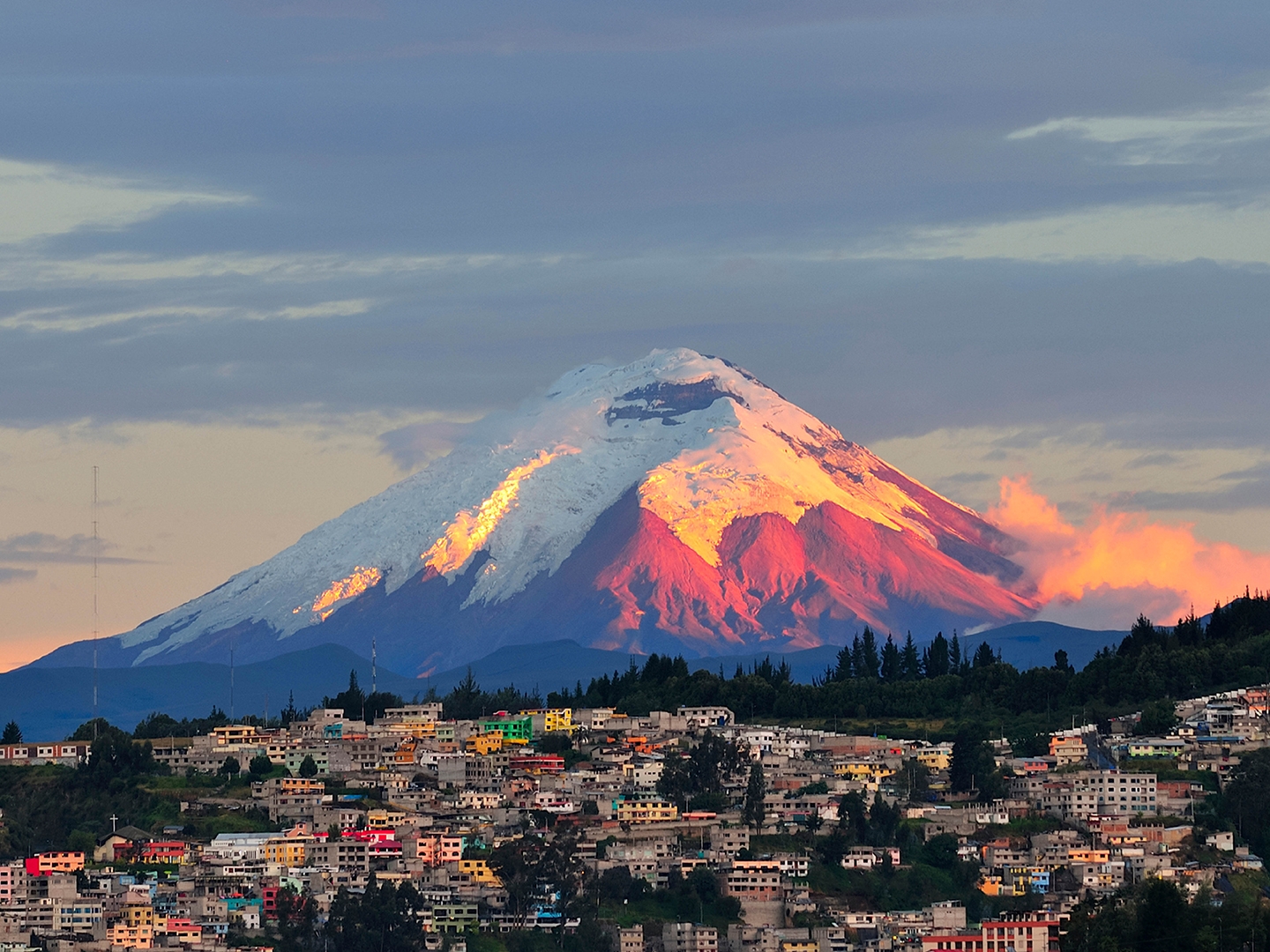
  • Cotopaxi volcano in Latacunga: Latacunga is directly in the path of potential mud or lava flow from the Cotopaxi volcano. Even small emissions from the volcano can trigger avalanches and landslides. Low lying areas in the greater Quito area could also be affected if Cotopaxi erupts.
  • Reventador volcano in Napo province: This is one of the most active volcanoes in the country.
  • Sangay volcano in Morona Santiago province: This is an active volcano. Local authorities advise against approaching the volcano and the nearby Upano river.

Safety tips:


Galápagos Islands

Many Ecuadorian tour vessels operating in the Galápagos do not meet international safety standards. Ask about safety features when boarding vessels. Verify that vessels are operated by licensed companies.

  • The two hospitals on Santa Cruz and San Cristobal Islands do not perform major medical procedures.
  • Serious injury or illness in the Galapagos typically requires medical evacuation to the Ecuadorian mainland or the United States. This can cost 60,000 USD or more and take significant time to arrange. We strongly recommend you purchase travel insurance that includes health coverage and air evacuation.
  • There are limited decompression facilities for scuba divers.
  • The Ecuadorian government restricts the entry of certain items into the Galapagos. Visit the Agency for Biosecurity and Quarantine Regulation and Control for the Galapagos for more information.
  • Internet and phone coverage are limited and unreliable. U.S. citizens should inform relatives or friends of their itinerary and expected return dates.

U.S. citizens living abroad

Living abroad resources

If you live outside the United States for a long time, you or your family may experience various life events, wish to exercise U.S. citizenship rights, or need to meet U.S. legal obligations while abroad.

Embassies and consulates

U.S. Embassy Quito

Avigiras E12-170 y
Eloy Alfaro
Quito, Ecuador

Main telephone:

+593-2-398-5000

Emergency after-hours:

+593-2-398-5000

Consulates
U.S. Consulate General Guayaquil
Santa Ana St. and Jose Rodriguez Bonin Ave.
San Eduardo Sector Guayaquil, Ecuador
Telephone: 593-4-371-7000
Emergency After-Hours Telephone: 593-4-371-7000 

U.S. Citizen Services Assistant:
Consular Navigator (English)
Navegador Consular(Español)

Last Updated: February 18, 2026

Owned by Overseas Citizens Services