Travel.State.Gov US Department of State Homepage

Travel advisory - Republic of Mauritius

Level 2 - Exercise increased caution

Date issued: December 08, 2025 -
  • Crime (C)

Exercise increased caution

in Mauritius due to crime.

Advisory summary

Crime
Most crimes against foreigners are crimes of opportunity. This includes pickpocketing, purse snatchings, and petty thefts. 

Petty crime occurs in crowded outdoor shopping areas, beaches, and other tourist spots. It also happens near ATMs.

Other serious crimes in Mauritius include:

  • Break-ins
  • Violent crimes (serious assaults, murder, rape)
  • Verbal harassment and other crimes towards women traveling alone
  • Review our information on Crime Abroad and for Victims of Crime.

If you decide to travel to Mauritius:

  • Do not physically resist any robbery attempt.
  • Use caution when walking or driving at night.
  • Stay aware of your surroundings.
  • Do not display signs of wealth, like expensive watches or jewelry.
  • Do not answer your door at your hotel or residence unless you know who it is. 
  • Stay alert in tourist spots. 
  • Stay alert when visiting banks or ATMs.
  • Enroll in the Smart Traveler Enrollment Program (STEP) to get important updates and alerts from the U.S. embassy or consulate. Enrolling helps the U.S. embassy or consulate contact you or your emergency contact in an emergency. 
  • Review the Country Security Report for Mauritius.
  • Visit the Centers for Disease Control and Prevention (CDC) website for the latest Travel Health Information for Mauritius.
  • Whether you’re a first time or frequent traveler, use the International Travel Checklist.
  • We highly recommend that you buy travel insurance before you travel. Check with your travel insurance provider about evacuation assistance, medical insurance, and trip cancelation coverage.
Scroll to review full advisory
Travel advisory levels
Learn more about
  1. Exercise normal precautions
  2. Exercise increased caution
  3. Reconsider travel
  4. Do not travel

About Mauritius

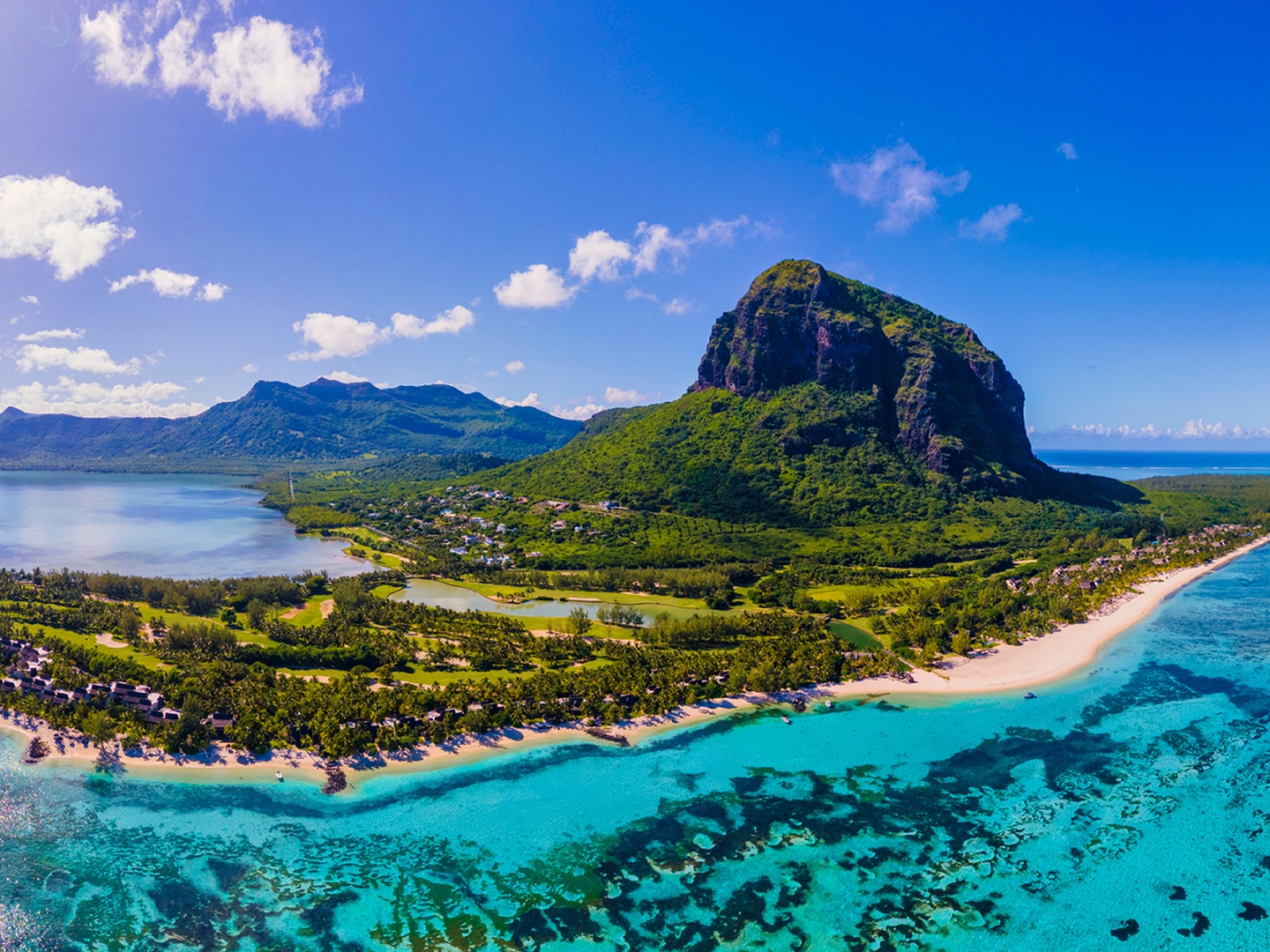
The Republic of Mauritius is located in Southern Africa, in the Southern Hemisphere. It is an island nation in the Indian Ocean. The Republic of Mauritius includes the Agalega Islands, Saint Brandon, and the island of Rodrigues.

It is about half the size of Rhode Island. There is 1 time zone, which is Mauritius Time (MUT). It does not observe daylight saving time. Mauritius is 8 hours ahead of Washington, D.C. during Eastern Standard Time (EST).

Travel requirements

Tourist visa requirements

  • No visa is required for 60 days or less.
  • You must have a valid passport.
  • You must have proof of onward travel and sufficient funds.

Vaccinations

  • Yellow Fever: Vaccination is required if travelling from a country with risk of Yellow Fever Virus transmission and ≥ 1 year of age and for travelers who have been in transit more than 12 hours in an airport located in a country with risk of Yellow Fever Virus transmission.

Valid passport requirements

  • Your passport must be valid for the duration of your stay.
  • 1 blank page available per stamp.

Currency on entry and exit

  • Entry maximum: Travelers must declare cash to customs if carrying over 500,000 Mauritian rupees (approx. USD 11,000).
  • Exit maximum: Travelers must declare cash to customs if carrying over 500,000 Mauritian rupees (approx. USD 11,000) .
  • Declarations can be made online with the Mauritius Revenue Authority.

Tips from the U.S. embassy

  • Drugs are prohibited in Mauritius, including cannabis, cannabis oil, and some prescription medications. Drug convictions can result in prison sentences up to 35 years and big fines.
  • Travelers carrying controlled medications must have a valid prescription. You must declare the medication to customs upon arrival. Review our Health Travel Guidance on prescription medications
  • Traffic congestion and difficult road conditions may delay emergency response times
EMBASSY UPDATE

Message failed to load


We are unable to load the message. Visit the main U.S. embassy or consulate website for updates.

Get embassy updates right to your inbox
Enroll In Step
Review how STEP works

Travel guidance for Mauritius

Explore our travel guidance topics to prepare for your trip abroad.

Select a topic

Entry, exit, and visa requirements


Requirements for entry

  • Valid passport with at least 1 blank page
  • Evidence of onward and return travel
  • Proof of sufficient funds
  • All foreign national travelers must complete the Mauritius All-in-One Travel Digital Form within 72 hours prior to arrival. Travelers are recommended to print a copy to carry on arrival.

Customs

  • Violations of import regulations are criminal offenses. They can result in long pre-trial prison time.
  • Please check the Mauritius Revenue Authority for detailed information.

Mauritius prohibits the following items:

  • Drugs, including cannabis, cannabis oil, and drug paraphernalia and common psychiatric stimulants such as Adderall.
  • E-cigarettes, vapes, water pipes and assorted products, rolling paper
  • Spear fishing equipment
  • Plants and fruits
  • Pepper spray, mace, and similar substances
  • Guns
  • Sex toys

You must declare the following to Customs when entering or exiting Mauritius:

  • More than 500,000 Mauritian rupees (approx. USD 11,000) in cash or its equivalent in any foreign currency
  • More than 500,000 Mauritian rupees (approx. USD 11,000) in bearer negotiable instruments (BNI)
  • Precious stones and metals (diamonds, gold, jewelry)
  • Works of art
  • Any goods of high value

Medicines
If you are carrying prescription medicines or controlled drugs you should:

  • Check with the Ministry of Health and Wellness to ensure the medication is legal in Mauritius and obtain approval from the Government Pharmacist of the Ministry of Health and Wellness for controlled medicines.
  • Have a (legible) prescription from your physician advising that the medicine is being used under a doctor’s direction and is necessary for your physical well-being
  • Carry the drugs in their original containers
  • Have sufficient quantity not exceeding a three-month supply for prescription medicines or a one-month supply for controlled drugs
  • For further information on the clearance of pharmaceutical products contact the Chief Pharmacist at phone +230 201 1334, +230 201 1367, +230 201 1927 or fax +230 201 3326.
  • Contact the Embassy of Mauritius and the Mauritius Revenue Authority for more information on customs.

Pets

There is a minimum 5-day mandatory quarantine for domesticated animals entering Mauritius. This quarantine may extend up to 1 month.

  • Importing a pet to Mauritius involves mandatory blood tests, vaccinations, microchipping, quarantine, and significant documentation and transportation expenses.
  • All pets, regardless of their weight or size, must travel as cargo when entering the country. 
  • Contact a professional pet shipping company to obtain the most up-to-date information and regulations on importing a pet to Mauritius. These companies specialize in navigating import requirements such as documentation, vaccinations, quarantine procedures, and transportation logistics.
  • Professional pet shipping companies follow Mauritian laws and make sure you have a smooth process for your pet's arrival.

For more information, contact the Division of Veterinary of the Ministry of Agro-Industry.


Traveling with children

  • Always bring a copy of each child’s birth certificate or other evidence of your legal relationship to each child.
  • If a child is traveling alone or with only one parent, parents and guardians should prepare a notarized, written permission letter that authorizes their minor children to travel to or from Mauritius alone or with the sole parent. All Mauritian minors, including dual U.S. citizens must have this written permission.
  • Mauritian authorities have sometimes blocked U.S. citizen minors from leaving when traveling without a parent or guardian.
  • If you have concerns that your child may be abducted abroad by their other parent or guardian, review our information on how to prevent an international parental child abduction. You can also review our information on Parental Child Abduction in Mauritius.
  • Review our information on Traveling with Minors.

HIV and AIDS restrictions

  • The Department of State is unaware of any HIV and AIDs entry restrictions for visitors to or foreign residents of Mauritius.
  • Travelers applying for work permits, study permits, and residency permits longer than 90 days may need to follow testing and medical certification requirements.
  • You can verify this information with the Embassy of Mauritius before you travel. 

Currency

  • The Mauritian Rupee (MUR) is the official currency of Mauritius. U.S. dollars and Euros are also accepted at major tourist hotels or shops.
  • ATMs are at the international airport and key tourist spots. They only dispense Mauritian Rupees.
  • Credit cards like Visa and MasterCard are accepted at all resorts. They are also widely used in cities and tourist spots.

Safety and security

Emergency phone numbers

Local authorities are responsible for investigating and prosecuting crimes and providing emergency services.


Crime

Most crimes against foreigners are crimes of opportunity. This includes pickpocketing, purse snatchings, and petty thefts.

Petty crime occurs in crowded outdoor shopping areas, beaches, and tourist spots. It also happens near ATMs.

Other serious crimes in Mauritius include:

  • Break-ins
  • Violent crimes (serious assaults, murder, rape)
  • Verbal harassment and criminal targeting of women walking alone

Safety tips:

  • Keep valuables locked in a hotel room safe.
  • Keep hotel room and windows locked, even if you are in your room.
  • Be aware of surroundings, especially at night.
  • Avoid demonstrations. Even events intended to be peaceful can turn violent.
  • Be careful at public gatherings and tourist spots.
  • Follow the instructions of local authorities, monitor local media, and the Embassy’s Facebook page and website.

Scams

Follow the Department of State guidelines to protect yourself from scams.

If you are a victim of a scam, learn how the FBI can help.

  • Tourists should watch out for small scams from street vendors.
  • Watch out for exorbitant "tourist prices" at markets, beachside food trucks, and sellers on the shoreline.
  • Taxis often raise prices for tourists. Research taxi rates ahead of time and confirm pricing before getting in.

If using dating apps or websites in Mauritius: 

  • Criminals may use dating apps to target potential victims for robbery or assault.
  • Let your friends and family know where you are and consider sharing your location on your phone.
  • Meet in a popular public place.
  • Tell your family or friends all the details about the person you are meeting and how you met them (which app).
  • Set up and talk using a video call before agreeing to meet in person. 
  • Avoid locations where you can be isolated, like hotel rooms, private apartments or houses.
  • Never leave food or drinks unattended at a bar or restaurant.
  • Observe the preparation of your food or drink order when possible.
  • Refuse offers of food or drinks from strangers.
  • Have a communication plan with friends or family. Send updates to them on an agreed schedule. 

Victims of crime

Local authorities are responsible for investigating and prosecuting crime. You may report crimes to the local police by dialing 999.

Review our information for Victims of Crime.

The U.S. embassy or consulate can:

  • Replace a stolen or lost passport.
  • Help you find medical care.
  • Assist you in how to report a crime to the police.
  • Contact relatives or friends with your written consent.
  • Provide general information regarding the criminal justice system.
  • Provide a list of local attorneys. We do not endorse or recommend any specific attorneys.
  • Provide information on victim’s compensation programs in the United States.
  • Provide an emergency loan for repatriation to the United States or limited medical support in cases of need.
  • Help you find accommodation and options to travel home.

Sexual assault and domestic violence

The U.S. embassy can provide critical support to victims. This includes:

  • Helping access local resources, medical care, and legal information.
  • Navigating the local criminal justice system.
  • Sharing updates on the status of their case.

However, the embassy cannot offer legal advice. The victim must decide on whether to report the crime to local authorities.

U.S. citizen victims of sexual assault are encouraged to contact the U.S. embassy and local law enforcement for assistance. The embassy can coordinate with local authorities regarding safety issues at the victim’s request.

U.S. citizen victims of domestic violence are encouraged to contact the nearest U.S. embassy and local law enforcement for assistance.


Technology use abroad

Cellular phones are popular on the main islands of Mauritius. However, some remote areas lack coverage. You can buy local tourist SIM cards at the airport or at telecom offices in major malls and urban areas. Just make sure your phone is compatible.

Mobile devices are vulnerable to compromise, theft, and damage anywhere in the world. Follow these safe practices:

  • Update all software (operating system and apps) before leaving the United States.
  • Use reputable, U.S.-based VPN or VoIP applications.
  • Don’t connect to public Wi-Fi networks.
  • Research the safety of routes recommended by GPS. The fastest route is not always the safest.
  • Be cautious using dating apps abroad, as scammers often target U.S. citizens.
  • Drone use in Mauritius is subject to regulations. Visit the Department of Civil Aviation website for more information. See their page on drone requirements.

GPS

Prior to using GPS abroad:

  • Research the route recommended by the GPS to make sure it’s safe.
  • The fastest path may not be the safest.
  • Roads are often narrow. Some apps may provide poor navigation instructions. 

Tourism safety

The tourism industry is regulated:

  • Rules and safety inspections are regularly enforced. 
  • Dangerous areas and activities are marked with signs.
  • Trained and certified staff are usually there to help with organized activities.
  • If you get injured, you can usually get medical help on the main island of Mauritius.
  • In rural areas, it might take longer for medical help to arrive and help.
  • Visitors to other islands may require evacuation to the main island of Mauritius for urgent medical care.
  • U.S. citizens are encouraged to have medical evacuation insurance.
  • Review our information on Travel Insurance.

Adventure travel

International tourists and locals have suffered serious injury or death during activities like scuba diving, parasailing, and hiking.

  • The surf can be treacherous with shallow coral reefs.
  • Research adventure activities carefully. Consider your physical condition, the equipment needed, and risk tolerance.
  • Review the U.S. Centers for Disease Control and Prevention (CDC) tips for Adventure Travel.

Local laws and customs


Criminal penalties

  • U.S. citizens must follow local laws. If you break local laws, even by mistake, you could be deported, arrested, or imprisoned.
  • Drugs are prohibited in Mauritius, including cannabis, cannabis oil, and some prescription medications. Convictions of possessing, using, or trafficking in illegal drugs can result in prison sentences up to 35 years and large fines.
  • Medications that can be purchased over the counter in other countries may be illegal in Mauritius.
  • Nudism is not permitted. Topless sunbathing is acceptable on almost all beaches.
  • You may be prosecuted in the United States for crimes committed abroad regardless of the local law. Review the information provided by the U.S. Department of Justice about crimes against minors abroad.
  • Before you start a business or a profession in Mauritius seek information from the local authorities about what permits or licenses are required.

Arrest notification


Detention conditions

Prisons in Mauritius have old and overcrowded buildings.

  • Rats and bedbugs are common.
  • Detainees in Mauritius report problems with sanitation and sewage.

U.S. citizens detained in Mauritius cannot receive money directly from family and friends. Family and friends can send funds to the U.S. embassy to purchase basic items, such as clothing and toiletries. For more information, review our page on Emergency Financial Assistance.

Detainees in Mauritius often lack access to medications and medical care.

When traveling to Mauritius, avoid activities or behaviors that break local laws. This can lead to arrest and detention. Be mindful of potential violations of law and practice good behavior.


Counterfeit and pirated goods

Counterfeit and pirated goods are common in many destinations.

  • They may be illegal according to local laws.
  • Counterfeit and pirated goods may pose significant risks to consumer health and safety.
  • You may be subject to fines or required to surrender counterfeit and pirated goods to authorities if you bring them back to the United States.

Learn more about U.S. restrictions on counterfeit and pirated goods:


Faith-based travelers

Faith based travel includes pilgrimages, service projects, and mission work.

Prepare for your travel using these resources:


Gay and lesbian travelers

  • There are no legal restrictions on consensual same-sex sexual relations, the provision of information or services to persons on the basis of real or perceived sexual orientation, or the organization of events focused on sexual orientation in Mauritius.
  • However, same-sex marriage in Mauritius is not legal.
  • Public displays of affection are not recommended.
  • Review our information for Gay and Lesbian Travelers.

Travelers with accessibility needs

  • The law in Mauritius prohibits discrimination against people with physical, sensory, intellectual, and mental disabilities. The law is enforced.
  • Expect accessibility to be limited in public transportation, lodging, and public buildings.
  • There are few sidewalks in Mauritius.
  • Road shoulders can be nonexistent. Most buildings lack functional elevators.
  • Accessibility is common in major tourist hotels.

The U.S. embassy recommends that travelers with disabilities planning to go to Mauritius take the following actions:

  • Research and contact accommodations, transportation providers, and tour operators to confirm accessibility features.
  • Consider travel insurance that covers medical emergencies and other disability-related needs.
  • Reach out to local disability organizations or advocacy groups for advice and support during your stay.
  • While Mauritius offers a warm and inclusive environment, travelers with disabilities should prepare for potential challenges related to accessibility.
  • Review our information on Accessibility Needs.

Students


Women travelers


Human rights

Human rights issues in Mauritius include the following:

  • Arbitrary arrests and prolonged detentions before trial.
  • Restrictions on freedom of expression and media freedom.
  • Journalists traveling to Mauritius should review our information on journalism abroad
  • Review the Department of State’s Human Rights Report for Mauritius prior to traveling.

Health

Health resources


Emergency numbers


Ambulance services

Ambulance services are widely available. However, training and response times of emergency responders are poor. Injured or very ill travelers might prefer to take a taxi or their own car to the nearest major hospital. This option can be faster than waiting for an ambulance. There is a big difference between public and private service ambulances.


Medical payments and insurance

Make sure you know if your health insurance plan covers any medical expenses coverage abroad. Most U.S. plans do not.

  • The U.S. government does not pay medical bills.
  • U.S. Medicare and Medicaid do not cover expenses or bills abroad.
  • Most hospitals and doctors abroad do not accept U.S. health insurance.
  • Medical care is not free in Mauritius. If you require medical attention, you will incur expenses, even if you are treated in a public healthcare facility.
  • Lack of payment may bar future travel to Mauritius.
  • Credit card payment is not always available.
  • Most hospitals and medical professionals require cash payment.
  • Both private and public hospitals need payment up front or proof of good insurance before admitting a patient.
  • Make sure you know if your health insurance plan provides coverage abroad or reimbursement of payments. The CDC provides more information on types of insurance. If you purchase medical travel insurance, you are responsible for seeking reimbursement from your medical insurance. Be sure to follow their guidance and instructions for filing claims.
  • We strongly recommend supplemental insurance to cover medical evacuation.

Vaccinations

Stay up to date with the vaccines recommended by the U.S. Centers for Disease Control and Prevention.


Healthcare facilities

  • Health facilities are available on the main island of Mauritius. It may be harder to find adequate health care in rural areas.
  • The U.S. embassy maintains a list of doctors and hospitals. We do not endorse or recommend any specific medical provider or clinic.
  • Public medical clinics lack some resources and supplies. Private medical clinics generally provide good basic care.
  • Private and public hospitals often need payment up front before providing treatment or admitting a patient.
  • Some hotels have exclusive agreements with medical providers. This may limit your choices in seeking emergency medical attention.
  • Medical staff in rural areas may speak little or no English. Medical staff at private hospitals and clinics generally speak fluent English.
  • Patients must cover all costs for transfer to or between hospitals.
  • Psychological and psychiatric services are limited, even in larger cities.
  • Research local facilities to ensure access to timely and effective care.

Prescription medications

  • Always carry your prescription medication in original packaging, along with your doctor’s prescription.
  • Check with the Ministry of Public Health to ensure the medication is legal in Mauritius.
  • Exercise caution when purchasing medication abroad. Pharmaceuticals are usually easy to buy with few controls.
  • Counterfeit medication is common and may not work, have the wrong strength, or have dangerous ingredients. You should buy medication with the help of a medical professional and from trusted places.
  • Mauritius does not allow the importation of Adderall, even with prescription. Travelers should avoid carrying Adderall. Please review information from the Ministry of Public Health about the most current list of prohibited medications with specific rules. You may call the Pharmacy Board at +230-490-4200.

U.S. Customs and Border Protection (CBP) and the Food and Drug Administration (FDA) have rules for bringing medication back into the United States. If you buy medications abroad, the medications must meet CBP’s and the FDA’s requirements to bring them back legally.

The medications must also be for personal use and approved for use in the United States.

For more information:


Assisted Reproductive Technology and Surrogacy (ART)

  • If you are considering traveling to Mauritius to have a child through use of assisted reproductive technology (ART) or surrogacy, please review our information on ART and Surrogacy Abroad.

Water quality and food safety

  • Tap water is not safe to drink.
  • In some locations, tap water is not available every day.
  • Bottled water and beverages are generally safe. Use major brands and ensure the seal is intact.
  • Many restaurants and hotels serve tap water unless bottled water is specifically requested.
  • You may want to request no ice in your drinks since it may be made using tap water.
  • Eating uncooked vegetables and fruits can make you sick.
  • Make water safe by filtering, boiling, disinfecting, or distilling.
  • Impure water can cause diseases like typhoid, cholera, hepatitis, and dysentery.

Air quality

Air pollution can be a significant problem in many destinations abroad. Mauritius has consistently met the World Health Organization's (WHO) air quality guidelines in recent years.

  • Check NASA’s Air Quality Forecast. It uses Artificial Intelligence (AI), historical data, and global pollution modeling to generate a 3-day forecast of expected air quality in Mauritius.
  • For information about common air pollutants, check the CDC’s Air Quality page.
  • For information about the U.S. Air Quality Index and health guidance, check out the EPA’s AirNow.
  • For general health information, visit the Medicine and Health page.

Transportation

Road conditions and safety

  • Most roads are narrow and uneven, lack signs and guardrails, and are bordered by deep ditches.
  • Night driving can be risky, especially on country roads. Poor street lighting, narrow roads, and cyclists without lights make it even more dangerous.
  • Pedestrians in dark clothes and dogs are common on smaller roads.
  • Motorbikes are popular. Motor vehicles are expected to maintain clearance for the motorbikes on both sides of the vehicles.
  • Buses are common. They will often veer suddenly to avoid obstructions rather than braking.
  • You must carry safety triangles, chalk to mark tire location in an accident, and accident forms.

Traffic laws

  • A valid U.S. driver's license can be used to drive in Mauritius for up to 4 weeks. Travelers planning to stay longer in Mauritius should get an International Driving Permit.
  • Cars in Mauritius drive on the left side of the road.
  • The speed limit is 40 km/h in towns, 80 km/h outside towns, and 110 km/h on select segments of highways.
  • Drivers and passengers in cars must wear seatbelts.
  • Babies and toddlers must be placed in child seats.
  • Drivers and passengers on motorcycles must wear helmets.
  • It is illegal to use your phone and drive.
  • Mauritius has fixed and mobile speed cameras. Many police patrols carry out targeted checks.
  • Mauritius has a zero-tolerance policy for drinking and driving. Penalties include significant fines, license suspension, and imprisonment. Authorities give regular breathalyzer tests.
  • If there’s an accident and no one is hurt, drivers can swap information. They should also report the details to the authorities using the form that comes in the rental car. Foreigners should stay at the scene and ask local law enforcement for help if needed. 

Taxis and ride-shares

  • Booking taxis in advance is recommended, especially if traveling at night.
  • Ride-shares are not available in Mauritius.

Public and commercial transportation


Aviation safety oversight

The U.S. Federal Aviation Administration (FAA) has not assessed Mauritius’s Civil Aviation Authority for compliance with international standards for aviation safety oversight. FAA's website includes more information on its assessment program.


Maritime travel

Mariners and passengers planning travel to Mauritius should check the following:

Weather and natural disasters

Weather conditions

Mauritius has a warm tropical climate. It enjoys mild temperatures all year. There are two main seasons: wet and dry. The island experiences high humidity, moderated by trade winds.

The wet summer lasts from November to April. It's hot and humid. The dry winter runs from May to October and is cooler.

  • Cyclones: Cyclones in Mauritius usually happen from November to April. The busiest time is from January to March. Cyclones bring heavy rainfall, strong winds, and storm surges.
  • Heavy rainfall: Heavy rainfall usually happens from November to April. It can cause flash floods.
  • Landslides: In hilly areas, heavy rain from November to April often causes landslides.
  • Drought: Droughts happen from May to October. They can impact water supplies and agriculture.

U.S. citizens living abroad

Living abroad resources

If you live outside the United States for a long time, you or your family may experience various life events, wish to exercise U.S. citizenship rights, or need to meet U.S. legal obligations while abroad.

Embassies and consulates

U.S. Embassy Port Louis

4th Floor, Rogers House
John Kennedy Street
Port Louis, Mauritius

Main telephone:

+230-202-4400

Emergency after-hours:

+230-202-4400

Fax:

+230-208-9534

Last Updated: December 08, 2025

Owned by Overseas Citizens Services